Skiing in Italy: The Dolomites Are Unlike Anything Else on Earth
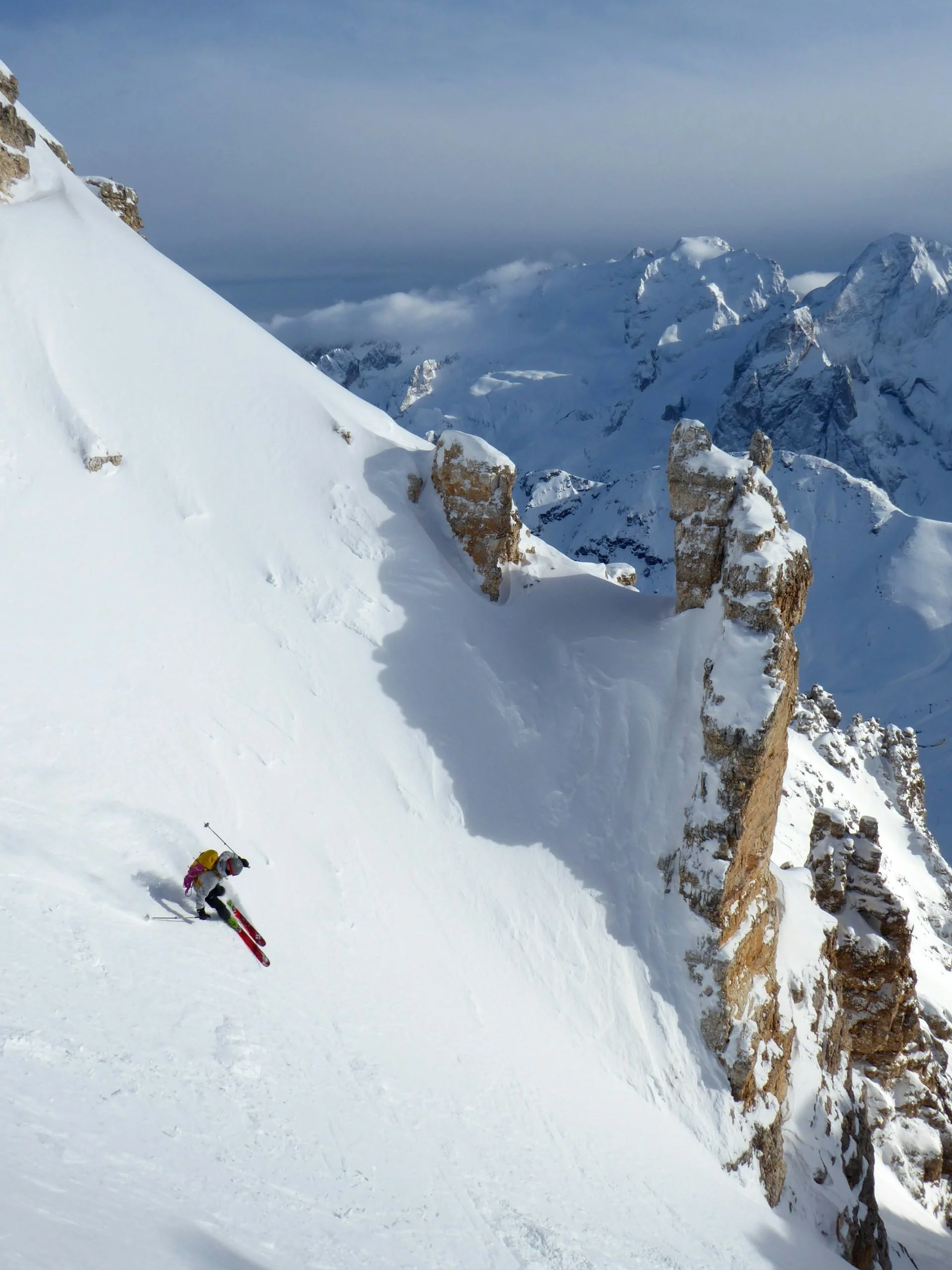
There is a version of Italy that most travelers never see. It is not the Italy of marble piazzas and espresso bars, though those things are wonderful. It is the Italy of the north: a world of jagged limestone peaks, ancient Ladin valleys, and mountain villages where the aperitivo ritual happens at 4,000 meters above sea level.
The Dolomites are one of the great travel secrets hiding in plain sight. Skiers who have spent their winters in Aspen, Vail, or Whistler come to the Italian Alps and simply stop. Nothing quite prepares you for the scale of what is here: twelve interconnected valleys, hundreds of kilometers of piste, mountain huts serving canederli and polenta with Sudtirol wine, and a landscape so dramatic it has been declared a UNESCO World Heritage Site.
At Italy With Bella, we have spent a great deal of time in this corner of the country, and we want to share what we have learned. This is not a beginner's overview of Italian ski resorts. This is the guide we give our own clients before they go.
Why the Dolomites? A Quick Word on What Makes This Place Different
Most European ski destinations are one thing: a mountain, a village, a lift system. The Dolomites are a different proposition entirely. The Dolomiti Superski area connects twelve valleys and over 1,200 kilometers of runs under a single ski pass. In practice, this means that no two days of a ski week need to feel remotely alike.
The region also carries something that no other ski area quite replicates: an Italian rhythm. You are not simply clicking into bindings and pointing downhill. You are skiing from village to village, stopping at rifugi for a glass of Lagrein, and watching the alpenglow turn the peaks from white to rose to gold as the afternoon deepens. The Italians have a word for it, Enrosadira, for the way the Dolomite rock seems to glow from within at dusk. Once you have seen it, you will understand why people come back.
Three Experiences Worth Building a Trip Around
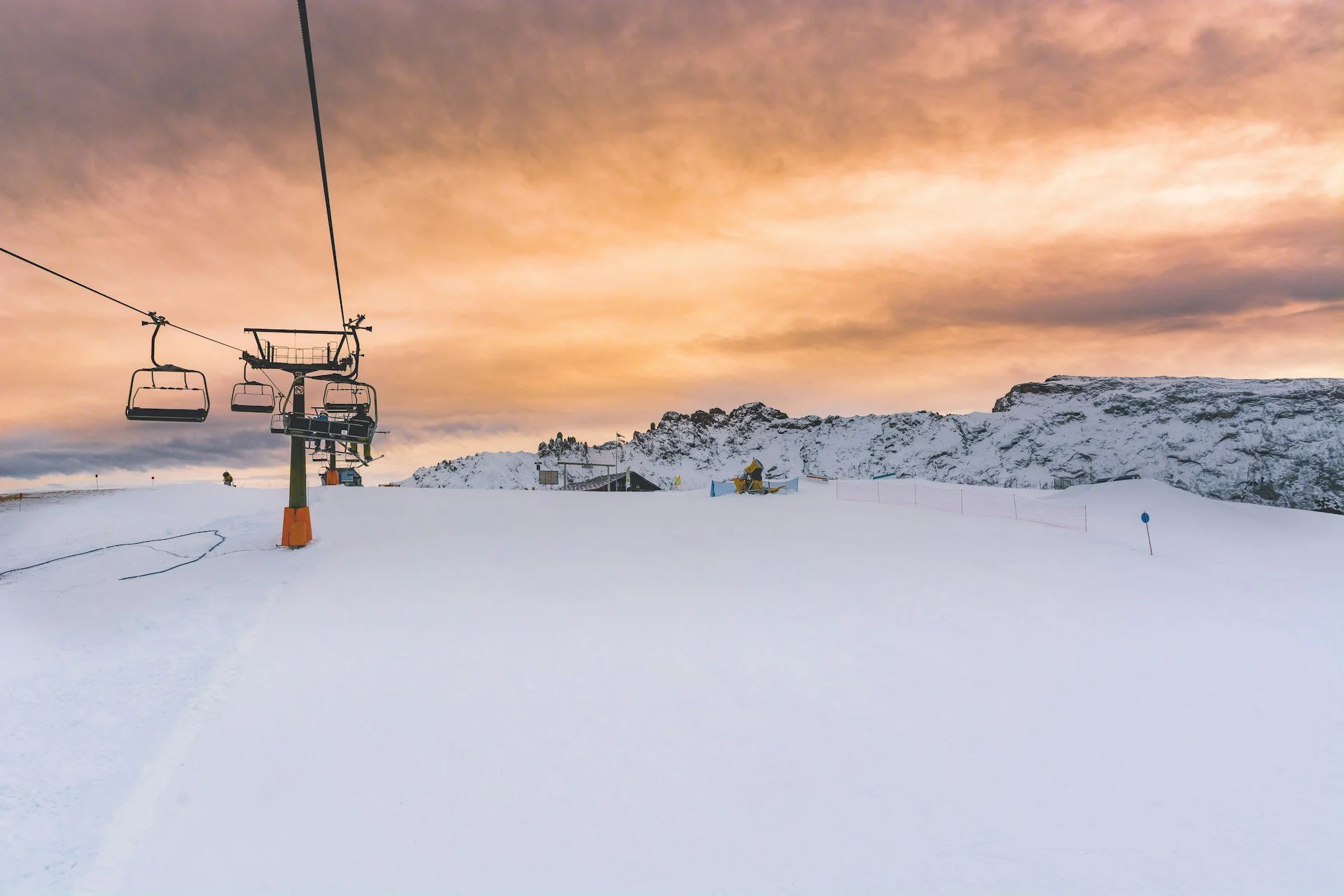
We think about skiing in the Dolomites in terms of three distinct alpine emotions. Which one draws you in shapes everything else about the trip.
The Brenta Dolomites: Elegance, Italian Rhythm, Seamless Skiing
The area around Madonna di Campiglio, Pinzolo, and Val di Sole is where Italy does mountain living best. A connected system of 150 kilometers of runs means you can spend a full week skiing without ever needing a car transfer between areas. The skiing is superb, but it is the atmosphere that sets this place apart: boutique mountain villages, refined rifugi where lunch feels like an event, and a pace that never quite loses sight of the aperitivo waiting for you at day's end.
This is the right choice for couples who want beauty and comfort alongside serious skiing, and for families who want polish and ease without sacrificing terrain. The Grostè balcony view alone, looking out over the Brenta massif, is worth the trip.
The Matterhorn Glacier: Wake Up in Italy, Ski into Switzerland
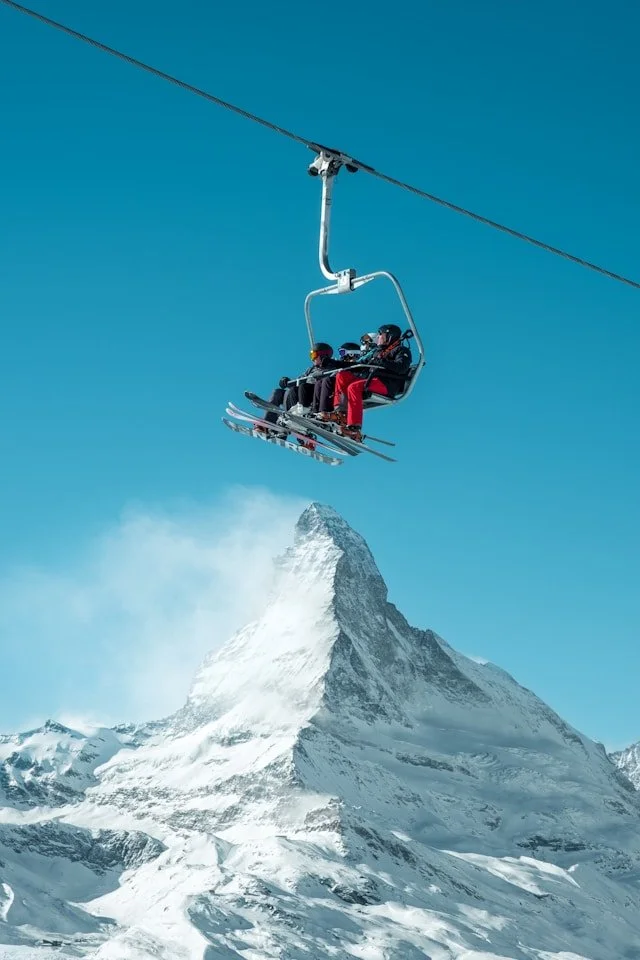
This is the place for those who want scale, altitude, and a story they can tell. From the Italian side of the Matterhorn, at Cervinia, you ski up to the Piccolo Cervino and cross into Switzerland for long, technically demanding descents on one of the highest glaciers in the Alps, before returning to Italy for the evening. The Ventina descent is 25 kilometers of continuous vertical.
There is something genuinely cinematic about standing at the top of a glacier with two countries at your feet. For the right client, this experience is unforgettable. The phrase we hear afterward: "I crossed a border on skis."
Alta Badia and the Sellaronda: The Iconic Dolomite Carousel
The Sellaronda is the loop that defines Dolomite skiing. Forty kilometers of runs, four Ladin valleys, the Sella Massif rising above you at every turn. Confident intermediate skiers complete it in five or six hours, skiing clockwise on the orange route for sun-drenched descents and a sporty pace, or counter-clockwise on the green route for more technical sections and quieter mountain views.
A practical note: start before 10am. The Sellaronda is a full day, and the final lifts close at a fixed hour. A private guide earns their fee here, keeping the timing tight and the lunch stop well-chosen.
A Day-by-Day Week in the Dolomites: What Seven Days Can Look Like
A week in the Dolomites, built around Alta Badia or Val Gardena as a base, might unfold something like this.
Day one begins on the Pralongìà plateau in Alta Badia: wide open, sun-drenched, and immediately spectacular. You end the afternoon on the Gran Risa, the legendary World Cup slope. It is a gentle opener that somehow still feels legendary by lunch.
Day two is the Sellaronda. One loop, four valleys, one story.
Day three: Marmolada. The Queen of the Dolomites. You ski to Arabba, take the lifts to 3,265 meters, and descend the longest run in the entire Dolomites: 12 kilometers of continuous descent back to the valley. There is nothing else quite like it in Italy.
Day four: Lagazuoi and the Hidden Valley. The descent begins through frozen waterfalls and ends with the famous horse-drawn tow back to the lift system. This is the day clients talk about for years.
Day five moves to Val Gardena for the Saslong and La Longia, two of the most technically satisfying and panoramically beautiful runs in the Dolomites.
Day six: Cortina d'Ampezzo. The Tofane peaks, Olympic heritage from the 1956 Games, and a mountain town with genuine fashion-capital energy. Cortina is not connected to the Sellaronda by lift, so a private transfer of roughly 40 minutes is the right call here, or a helicopter for the most elevated arrival.
Day seven: Plan de Corones, known locally as Kronplatz. The Black 5 run is the week's final challenge, and the Messner Mountain Museum at the summit offers something rare: a reason to linger at the top that has nothing to do with skiing.
The week never repeats the same emotion twice. That is the point.
Where to Base Yourself: The Hotel Question
In the Dolomites, the right base is not just a comfort decision. It is a logistics decision, and it changes the texture of the entire week.
The Hut-to-Hut Extension: For Those Who Want More
For clients who want to go deeper, the three-night hut-to-hut extension is one of the most memorable things we recommend. This is adventure without sacrificing comfort: rifugi with boutique-hotel sensibility, private Finnish saunas at 2,752 meters, gourmet mountain dinners, and star-filled Dolomite nights.
The route moves from Rifugio Salei near Passo Sella, to Rifugio Lagazuoi high above Val di Fassa and Alta Badia, to Rifugio Averau near the Cinque Torri, finishing with the Marmolada glacier as the final chapter. Each night is in a different world. The logistics are handled entirely by your guide.
One important note: the best rifugi fill up six to ten months in advance. If this experience is on your list, book early.
What About Non-Skiers? (This Matters More Than You Think)
A common question we hear: my partner doesn't ski, or my ski level is beginner while the rest of the group is advanced. Can we still make this work?
Yes, and here is why: the Dolomites mountain towns are genuinely beautiful places to spend a day. Spa and wellness programs, historic cafés, boutique shopping, guided cultural visits to Brunico (castle, Tyrolean atmosphere, and the extraordinary Messner Mountain Museum), Bressanone (baroque cathedral, cloisters, the famous Christmas markets), and Bolzano (two cultures meeting at the Piazza Erbe, and the fascinating Ötzi the Iceman museum) all offer real depth for non-skiers.
The afternoon ritual of après-ski is also not optional here. An Aperol Spritz or a Bombardino on a terrace at 4pm, with the peaks turning gold above you, is something the whole group shares. Nobody in a well-planned Dolomites week should feel like an afterthought.
Your Ikon Pass or Epic Pass Works Here (With a Few Things to Know First)
If you are already holding an Ikon Pass or Epic Pass from your North American skiing, good news: both passes give you meaningful access to skiing in Italy. Here is exactly what each covers, and the fine print worth knowing before you arrive.
Ikon Pass: Access to Dolomiti Superski and Valle d'Aosta
The Ikon Pass is, frankly, the stronger option for skiing in Italy. A full Ikon Pass gives you seven days at Dolomiti Superski, the massive interconnected network that covers the core of what we describe in this post: Alta Badia, Val Gardena, Arabba, Marmolada, Cortina d'Ampezzo, Plan de Corones, and nine other ski areas, all on a single pass. The Ikon Base Pass gives you five days. The Dolomiti Superski access window runs from November 15 through April 15.
The Ikon Pass is also direct-to-lift at Dolomiti Superski, meaning you do not need to stop at a ticket window. Your pass works exactly like a local ski pass at every lift in the area.
Starting with the 2025-26 season, the Ikon Pass added five resorts in Valle d'Aosta: Cervino Ski Paradise (the Italian side of the Matterhorn, which we highlight above), Courmayeur Mont Blanc, La Thuile, Monterosa Ski, and Pila. Full Ikon Pass holders get seven days across those five resorts combined; Ikon Base holders get five. This is a meaningful addition for clients who want to include the Matterhorn glacier experience in their trip.
One important note: the Friends and Family discount does not apply at European Ikon Pass resorts, and Ikon Session Passes do not include European access at all.
Epic Pass: Access to Skirama Dolomiti
The Epic Pass covers Skirama Dolomiti, a collection of eight resorts in the western Trentino region, including Madonna di Campiglio and Pinzolo. Full Epic Pass holders receive seven consecutive days of skiing here. Important: those seven days must be used back to back with no rest days in between, so plan accordingly.
Unlike the Ikon Pass, the Epic Pass at Skirama Dolomiti is not direct-to-lift. You need to visit a ticket office on arrival, present your Epic Pass card and a valid photo ID, and receive a local access card. There is a €5 refundable deposit for that card. The Epic Local Pass does not include access to Skirama Dolomiti.
Note that Skirama Dolomiti and Dolomiti Superski are two different pass systems covering different areas of the Italian Alps. Skirama (Epic) covers the western Trentino resorts. Dolomiti Superski (Ikon) covers the larger eastern Dolomites network including the Sellaronda circuit. If your clients are set on skiing the Sellaronda, Marmolada, or Cortina, the Ikon Pass is the relevant pass.
The Insurance Requirement: Non-Negotiable in Italy
This is the most important practical detail for American skiers arriving in Italy, and it catches people off guard every season. Since January 2022, Italian law requires all skiers to carry third-party liability insurance. This is not included with your Ikon Pass, your Epic Pass, or your Dolomiti Superski day ticket. It must be purchased separately.
Skiing without it risks a fine of €100 to €150, and ski pass confiscation. Coverage can be purchased online before you travel, and basic policies are inexpensive. Your existing travel insurance may include liability coverage, so check your policy carefully before buying additional coverage. We always confirm this with our clients before they step on the mountain.
Starting with the 2025-26 season, helmets are also mandatory for all skiers in Italy regardless of age.
Practical Things to Know Before You Go
The Dolomiti Superski pass covers the full connected area for those not using an Ikon or Epic Pass. A week of standalone skiing runs approximately €460 per person and can be purchased in advance.
Peak season runs from December through April, with specific holiday weeks in late December and late February drawing the largest crowds. If flexibility exists in the travel dates, aim for January or early March: the snow is excellent, the rifugi are still open, and the queues are shorter.
Weather in the Dolomites requires the same planning philosophy we apply everywhere in Italy: plans are valuable, but flexibility is essential. When wind closes the high lifts, the day pivots to sheltered terrain or a cultural visit. A good guide sees this coming before it becomes a problem.
Our Honest Take: Why We Love This Trip
We send clients to the Dolomites because it fits everything we believe about how Italy should be experienced. The skiing is world-class, but it is never the only thing. You are in a place with its own culture, its own language (Ladin, still spoken in the valleys), its own food and wine, and a landscape so singular that UNESCO felt compelled to protect it.
The clients who come back from a Dolomites ski week do not just say the skiing was incredible. They say they did not know Italy could look like that. They say the rifugio lunch on day four was one of the best meals they had in Europe. They say they are already thinking about going back.
That is what we are here to build.
Ready to Plan Your Italian Alps Trip?
At Italy With Bella, we build fully custom, private itineraries across all 20 Italian regions, including the Dolomites. We have been to every place we recommend. We know the right base, the right guide, and the details that turn a ski week into the trip of a lifetime.
Start with a free consultation. No generic packages. No group tours. Just Italy, done the right way.