The Best Day Trips from Florence (That Are Actually Worth It)
Florence is one of the greatest cities in the world. It is also, by any honest measure, one of the most visited. The Uffizi queue. The Ponte Vecchio at golden hour, elbow to elbow. The restaurant near the Duomo with a two-hour wait and a menu that plays it very safe.
Here is what the standard travel guides rarely tell you: some of the most rewarding experiences within reach of Florence are not in Florence at all.
Within a short train or car ride, you have access to a walled Renaissance city with almost no crowds, a medieval hill town that still runs on contrade loyalty, a food capital that arguably outranks Florence at the table, and two Tuscan towns that deliver exactly what people dream about when they dream about Italy.
At Italy With Bella, we plan these day trips the same way we plan every part of a trip: around personal vetting, trusted partners, and the belief that slower and deeper is almost always better than faster and wider. These are the five day trips from Florence we recommend most, and exactly why we recommend them.
Let's get into it.
1. Lucca: The Walled City That Keeps Its Secrets Well
Lucca is one of the great surprises of Tuscany, which is saying something in a region full of them. Unlike many Tuscan towns that have slowly tilted toward tourism, Lucca has remained genuinely itself: a small, prosperous city enclosed within perfectly preserved Renaissance walls, where locals cycle to the market in the morning and sit in the piazzas in the evening, and visitors are welcome without the whole place being organized around them.
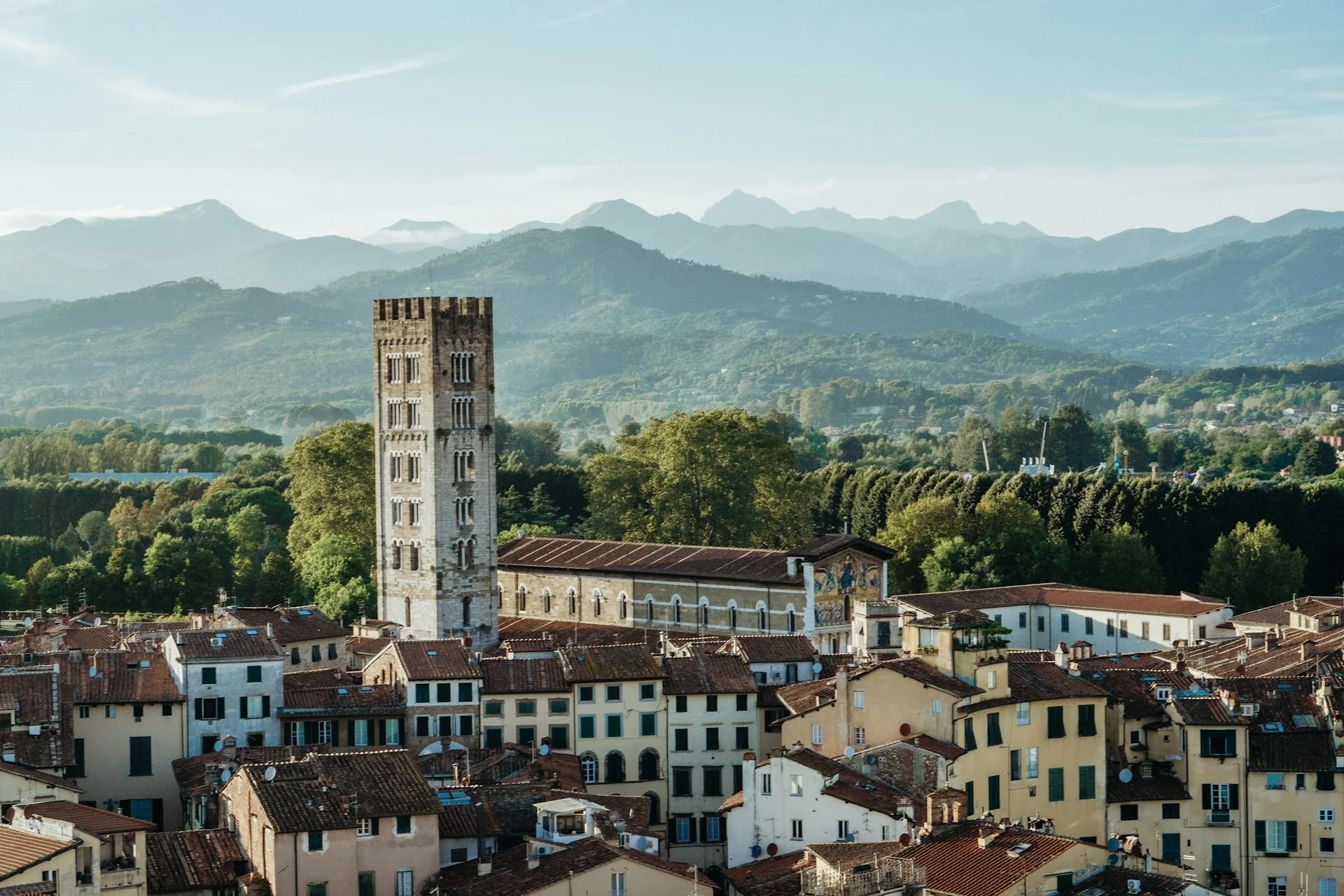
The walls themselves are the first thing to understand about Lucca. Built between the 16th and 17th centuries, they never served their defensive purpose because no attack ever came. Instead, they became a promenade, and today they are exactly that: a wide tree-lined path atop the ramparts where you can walk or rent a bicycle and circle the entire city in under an hour, looking out over rooftops and church towers and the Apuan Alps in the distance.
Inside the walls, Lucca rewards slow exploration. The Piazza dell'Anfiteatro traces the oval footprint of a Roman amphitheater, its medieval buildings constructed directly on top of the ancient structure. The Cathedral of San Martino holds Jacopo della Quercia's tomb of Ilaria del Carretto, one of the most quietly beautiful works of early Renaissance sculpture in Italy. Puccini was born here, and the city takes that seriously.
Lucca is roughly 75 minutes from Florence by train and requires no taxi once you arrive. The historic center is almost entirely car-free. It is one of the most logistically straightforward day trips on this list, and one of the most consistently loved by our clients.
IWB Tip: Rent a bicycle at one of the shops just inside the city gates and do a full loop on the walls before you explore the center. It puts the city in context in a way that no map or guidebook quite manages.
2. Siena: Gothic Grandeur and the Soul of Medieval Italy
If Florence is the Renaissance, Siena is everything that came before it. The city's rivalry with Florence shaped both of them, and losing that rivalry to the plague in the 14th century is, paradoxically, part of what preserved Siena so completely. The city that exists today is largely the one that existed in 1348, which is an extraordinary thing to sit with as you walk through it.
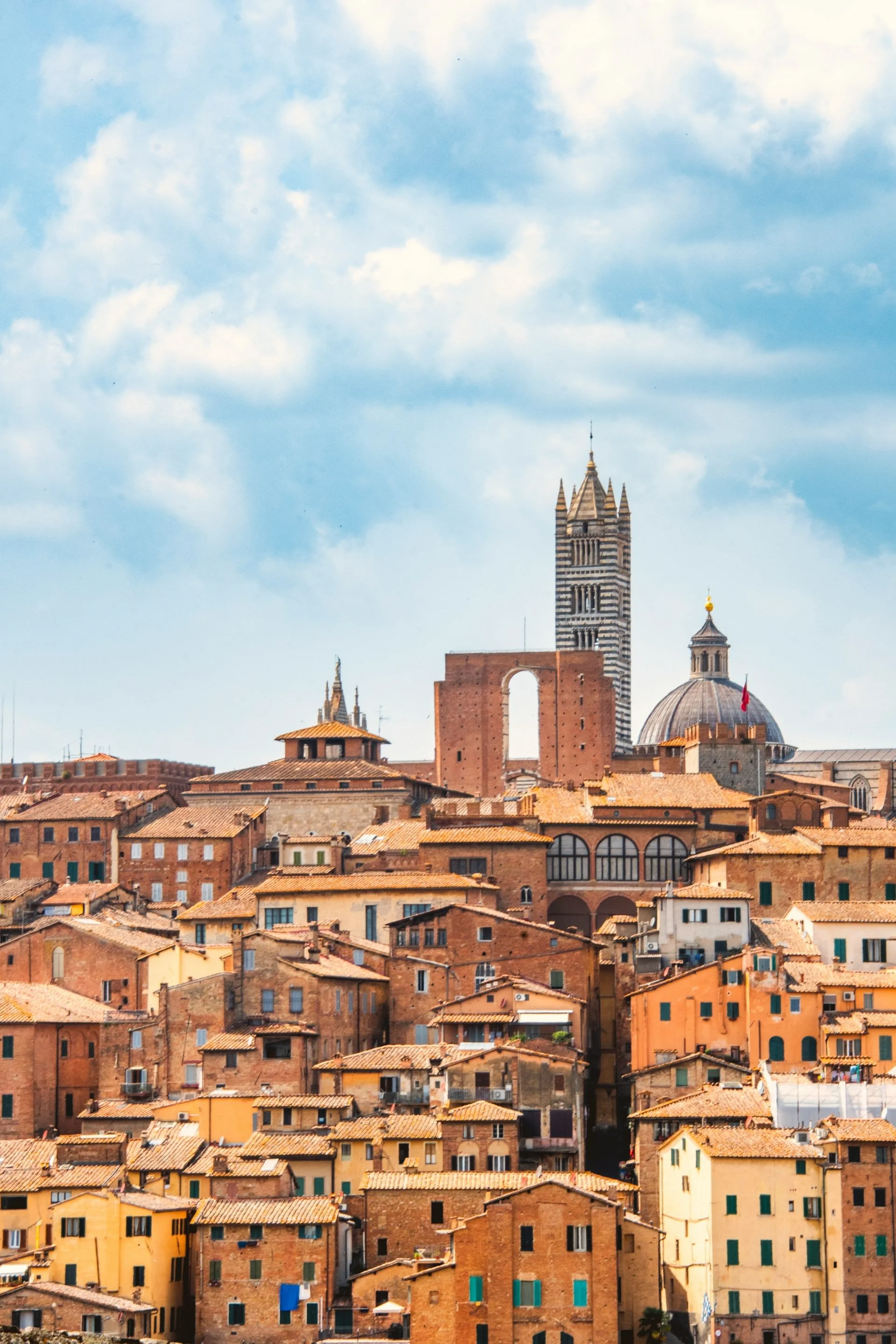
The Piazza del Campo is one of the finest public spaces in Europe, a wide shell-shaped square that slopes gently toward the medieval Palazzo Pubblico. Twice a year, during the famous Palio horse race, it becomes an arena. The rest of the time it is simply a place to sit, drink coffee, and watch the city go about its life.
The Duomo is a rival to almost any cathedral in Italy. The striped marble exterior, the extraordinary inlaid marble floor inside (partially uncovered only during certain months), the Piccolomini Library with its vivid Pinturicchio frescoes, the adjacent Museo dell'Opera. Together they constitute an afternoon that moves even visitors who came in already saturated by Italian churches.
Our partner leads history tours through Siena that go well beyond the highlight reel and into the contrade traditions, the deep civic identity that organizes the city to this day, and the stories that only emerge when you are walking the streets with someone who knows them.
Siena is best reached from Florence by bus, roughly 90 minutes, which drops you very close to the historic center. The train requires a change and takes longer.
IWB Tip: Build in a wine stop in Montalcino on the return. This is the home of Brunello di Montalcino, one of Italy's most celebrated reds, and the rolling countryside between the two towns is among the most beautiful driving in all of Tuscany.
3. Bologna: Italy's Food Capital, and So Much More
Bologna is just over an hour from Florence by fast train, which means it is technically one of the most accessible cities on this list. It is also, by a wide margin, the most underestimated. Most travelers pass through or skip it entirely in favor of more famous names. This is a mistake we are always glad to help people avoid.
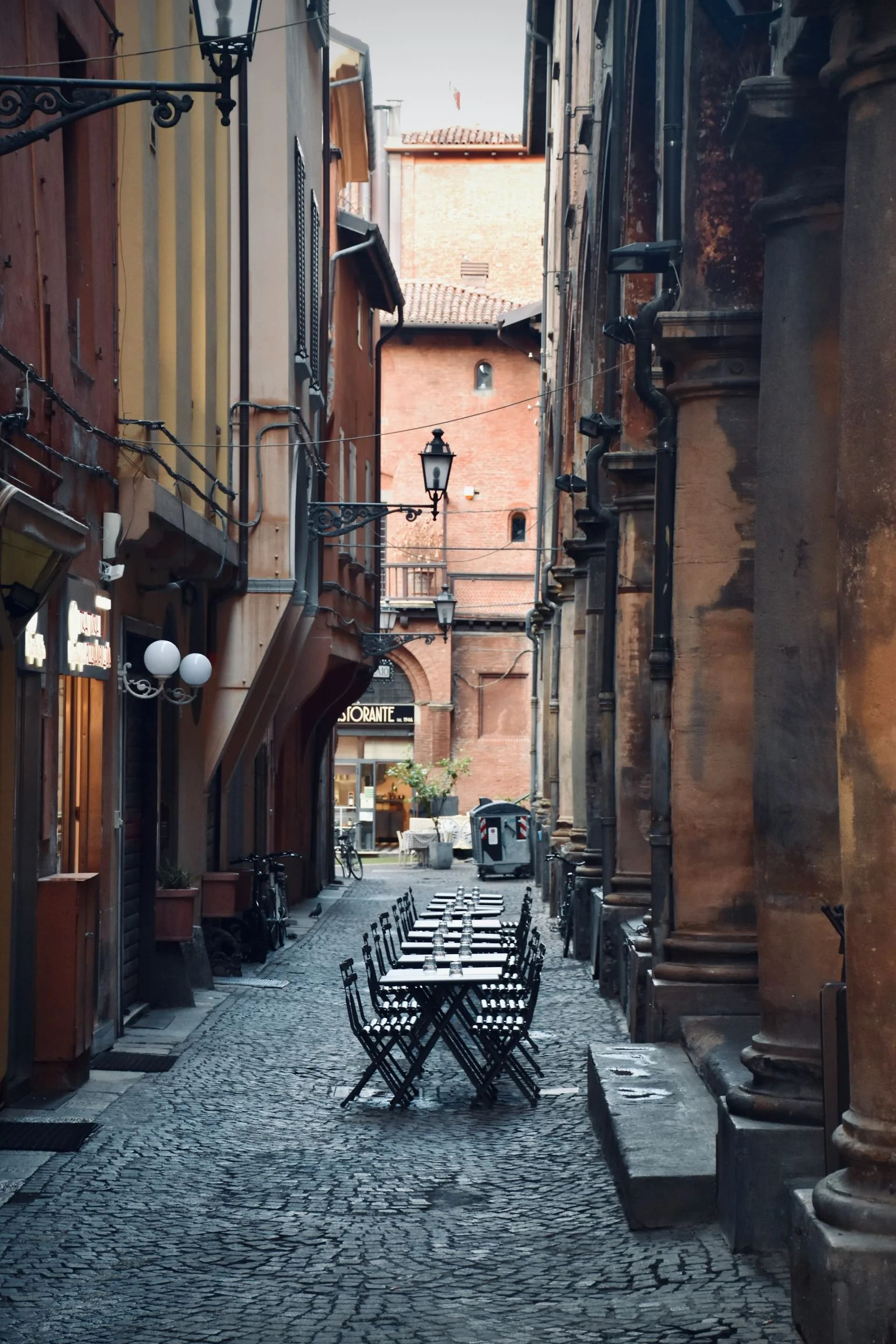
The city earns its nickname, La Grassa, the fat one, every single day. This is where tagliatelle al ragu was invented, and where the Bolognese insist, correctly, that what the rest of the world calls Bolognese sauce would not be recognized here. Mortadella originated in Bologna. So did tortellini, which legend says were shaped in homage to Venus's navel. The food culture is not a tourist attraction layered on top of the city. It is the city.
Our Bologna partner runs one of the most exceptional food experiences we offer anywhere in Italy: a full-day immersion that begins at 6:30 in the morning with a pickup at your hotel. The day takes you to a Parmigiano Reggiano dairy to watch the wheels being made, to one of the oldest balsamic vinegar families in Modena, their barrels aging for 25 to 30 years in a family attic, to a prosciutto production facility in Parma, and ends with a four-course feast paired with Lambrusco. It is the kind of day that recalibrates what you think food can be.
Beyond the table, Bologna is architecturally magnificent and almost entirely unpretentious about it. The medieval porticoes stretch for miles across the city, shading the sidewalks through sun and rain alike. The Two Towers lean over the city center. The university, founded in 1088, is the oldest in the Western world, and the student energy is palpable throughout.
Bologna rewards a full day, or longer if you can manage it.
IWB Tip: The fast train from Florence Santa Maria Novella to Bologna Centrale takes 37 minutes. This is one of the easiest long-distance day trips in northern Italy. If you have any interest at all in Italian food culture, this day belongs on your itinerary.
4. Cortona: The Tuscan Hill Town That Earns Every Cliche
Yes, it is the town from Under the Tuscan Sun. Yes, it is beautiful. And yes, it absolutely delivers on the fantasy, which is rarer than it sounds.
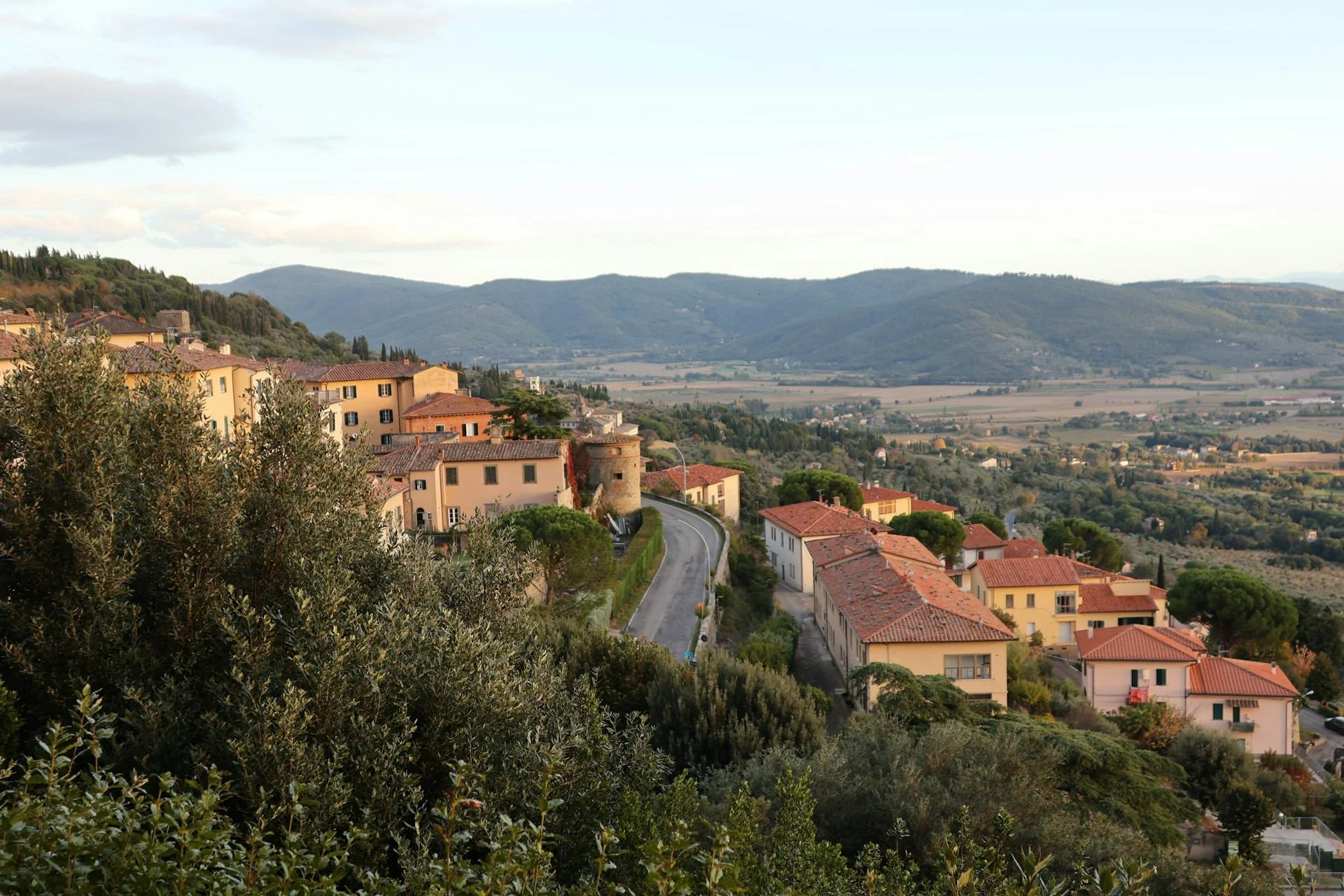
Perched on a steep hillside above the Val di Chiana, Cortona is one of Italy's oldest Etruscan cities. The views from the upper town stretch to Lake Trasimeno. The streets are narrow, the stone is ancient, and the pace is what you came to Italy for.
We plan exceptional history tours, truffle hunts, olive oil tastings, and wine tours through Southern Tuscany and into Umbria. These are not group excursions. They are guided encounters with the living culture of this corner of Italy.
One experience in Cortona that stands in a category entirely its own: Sebastian Del Brenna's jewelry atelier, housed in a 13th-century palazzo. His family has been crafting handmade jewelry since 1947, and his signature chain requires approximately 88 individual operations per inch. Below the shop, an Etruscan space dating back thousands of years. On Thursday evenings, Sebastian hosts a Wine, Dine, and Shine dinner where guests borrow pieces from the collection for the evening. It is the kind of experience that stays with people.
Getting There
From Florence, take the regional train to Camucia-Cortona station at the base of the hill, then a short taxi ride into town. Cortona effectively has one taxi driver, so coordinate your arrival and departure in advance. A private car service is often the cleaner choice.
IWB Tip: Cortona rewards those who linger. If your schedule allows, consider making it a base rather than a day trip.
5. Montepulciano and Pienza: Wine, Cheese, and Views That Stop Time
If you have imagined a perfectly preserved Renaissance hill town surrounded by vineyards, you have imagined Montepulciano. Home to Vino Nobile, one of Tuscany's great wines, the town climbs steeply upward through arched gateways, past wine cantinas carved into ancient cellars, to a wide piazza with a view that seems designed to make you want to move to Italy.
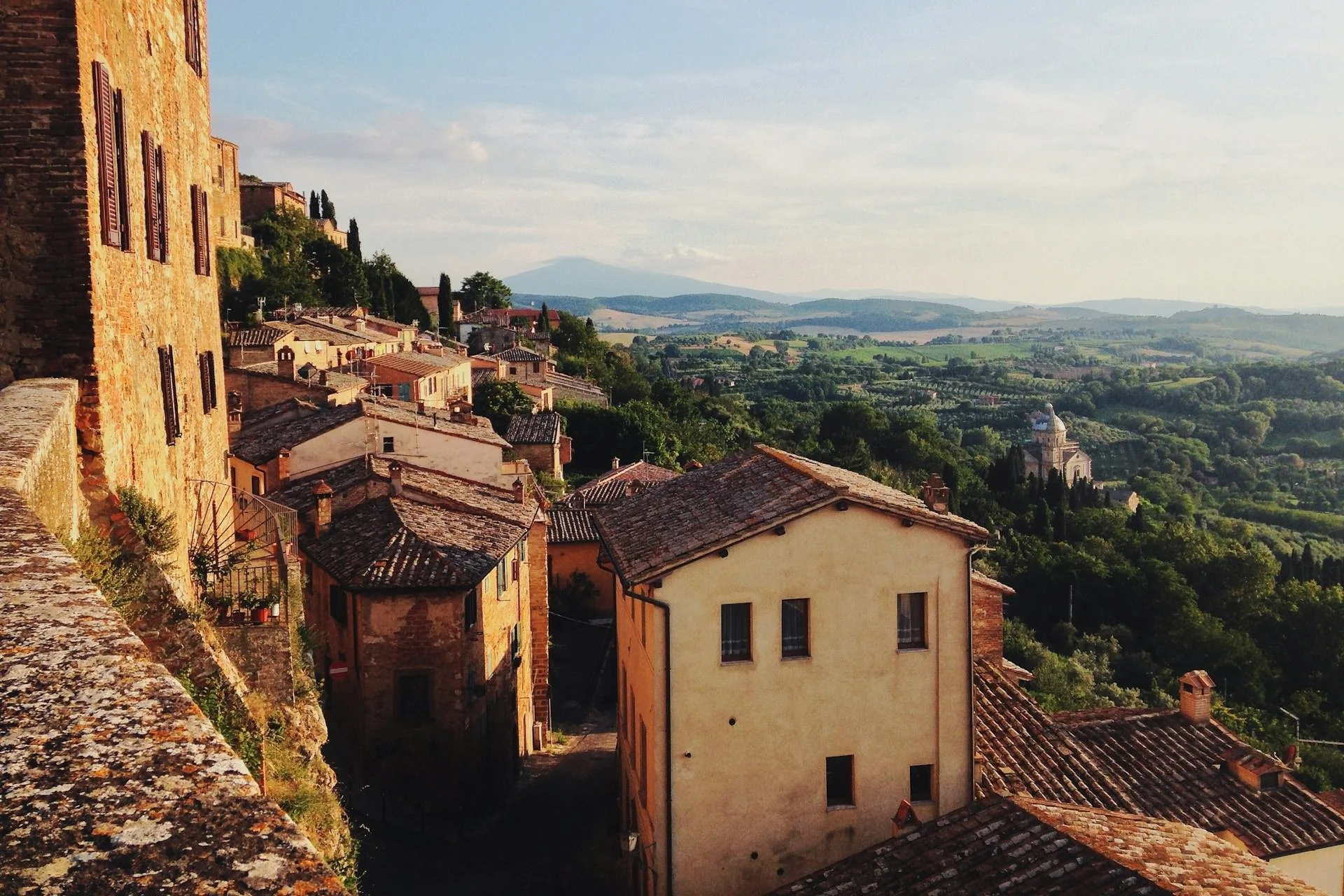
Pair this with a stop in nearby Pienza, the Renaissance ideal town commissioned by Pope Pius II, whose historic center is a UNESCO World Heritage Site. Pienza is famous for its aged Pecorino, and the small shops along the main street offer tastings that will make supermarket cheese feel like a different product entirely.
Together, Montepulciano and Pienza make for a deeply satisfying day through the Val d'Orcia, the landscape that has been painted, photographed, and filmed more than almost anywhere in Italy, and that still somehow exceeds expectations when you are actually standing in it.
IWB Tip: The E-Bike tour through Montepulciano is a wonderful way to experience the surrounding countryside without rushing. Build in a proper wine tasting at a local cantina. A picnic in the Val d'Orcia, with a view and a bottle of Vino Nobile, is one of the best afternoons Tuscany offers.
Our Honest Take: A Note on How We Build These Days
The most common mistake we see in Florence-area itineraries is trying to do too much. Three day trips in four days means you spend most of your time in transit and arrive everywhere slightly tired and slightly rushed.
Our philosophy is built around depth over coverage. We recommend one or two well-chosen excursions from Florence, designed around what you actually care about, built around partners we have personally vetted and would send our own families to.
The five destinations above are ones we return to consistently because they deliver. Each one has something that cannot be replicated on a screen or summarized in a highlights reel. The right day trip, done well, often becomes the part of a trip people talk about longest.
If any of these have caught your attention, we would love to help you figure out which ones belong in your particular itinerary.
Ready to plan your Italy itinerary?
We would love to hear what you are dreaming about and help you build something real. Schedule a complimentary consultation. Every trip starts with a conversation.