What Is Sprezzatura? The Italian Art of Effortless Living (and How to Travel Like It)
The Italian Art of Making Everything Look Easy: Understanding Sprezzatura
There is a word Italians live by that has no perfect English translation. You will not find it printed on a sign in a piazza or stamped on a bottle of wine. But you will feel it everywhere in Italy. In the way a Florentine man ties his scarf. In the way a Roman grandmother sets a table. In the way a Venetian guide walks you through a church she has visited a thousand times, yet speaks about it as if she is discovering it alongside you.
The word is sprezzatura. And once you understand it, you will never look at Italy the same way again.
What Is Sprezzatura?
Sprezzatura was born in the Renaissance, coined by Baldassare Castiglione in his 1528 masterwork, The Book of the Courtier. Castiglione used the word to describe the art of performing any difficult thing with such ease that it appears natural and unstudied. In other words, making the hard look effortless.
In the Renaissance court, sprezzatura referred to a courtier's ability to dance, fence, play music, converse, and dress with apparent ease, never straining, never showing the hours of practice behind the polish. The effort was invisible. The grace was everything.
Five hundred years later, the concept has not faded. It has simply spread from the court to the culture. It lives in the way Italians move through their days, and it is one of the most quietly powerful things you will absorb on a trip to Italy, if you slow down long enough to notice it.
Why Does Sprezzatura Matter?
In a world that rewards busyness and performs productivity like a sport, sprezzatura is almost radical. It says: the goal is not to look like you are working hard. The goal is to be so deeply practiced, so genuinely present, that the effort disappears.
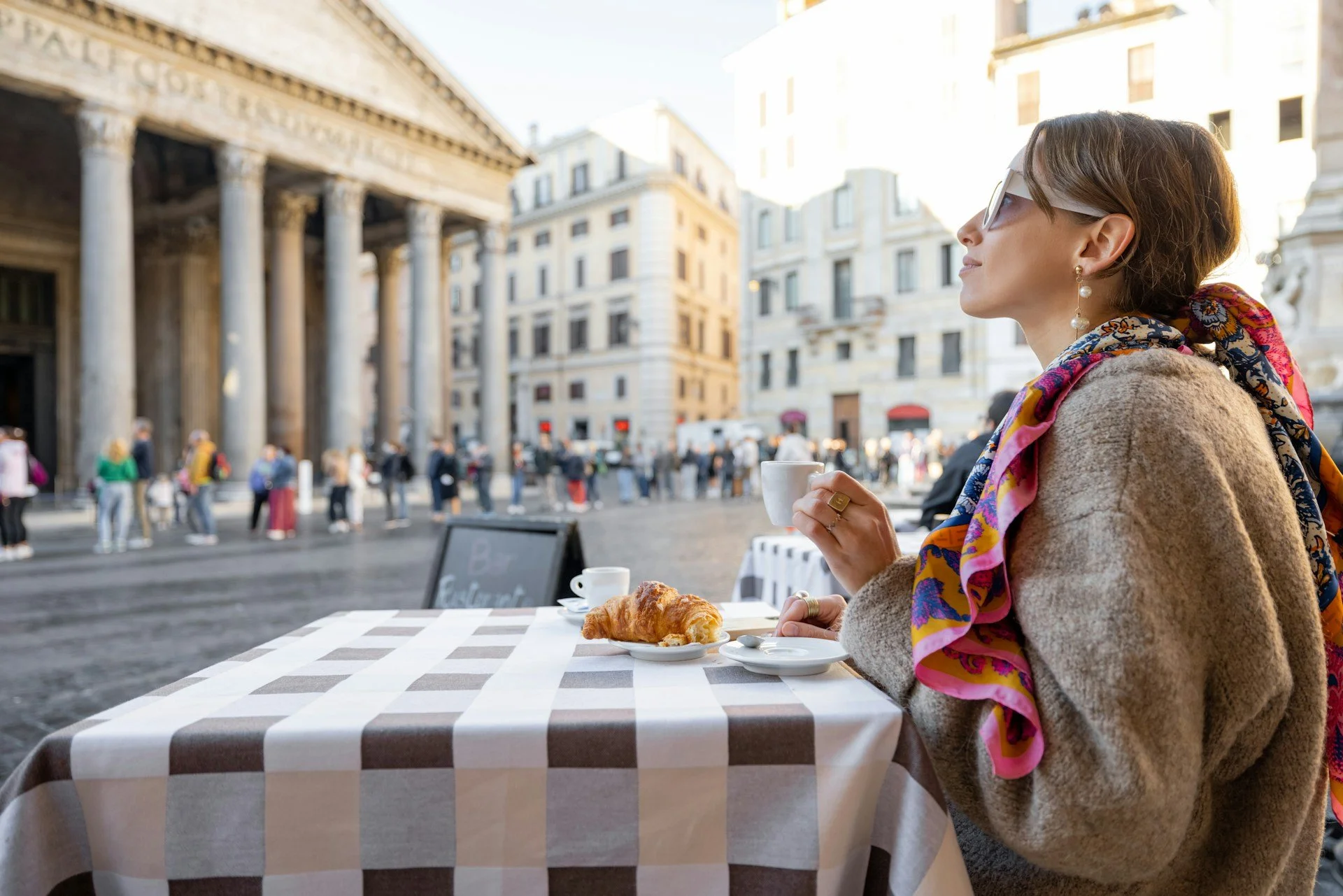
This matters for travelers because it reframes what a great trip actually looks like. The tourist mentality is built on visible effort: the checklist, the race between landmarks, the exhausted photo at the end of a fourteen-hour day. Sprezzatura suggests the opposite. A great day in Italy might involve lingering over a two-hour lunch, wandering without a destination, and arriving somewhere beautiful by accident.
At Italy With Bella, we call this slow travel. But Italians have a simpler name for it. They just call it living.
Is Sprezzatura a Good Thing?
This is where the conversation gets interesting, because sprezzatura has a complicated reputation.
At its best, sprezzatura is a form of generosity. When your host makes a three-course dinner look like nothing, when your guide explains a 600-year-old fresco without consulting a note, when the woman behind the bar at your neighborhood caffe remembers exactly how you take your espresso, that is sprezzatura in its purest form. The effort has been put in. The anxiety has been set aside. What remains is presence, warmth, and genuine skill.
At its most misunderstood, sprezzatura can look like indifference. Italians are sometimes described as laid back, or casual about time. What reads as nonchalance to an outsider is often something more intentional. It is a conscious decision not to rush, not to make the moment feel transactional. The waiter who does not bring your check immediately is not ignoring you. He is giving you the gift of the table.
So yes, sprezzatura is a good thing, when it is rooted in genuine mastery and sincere care. It becomes hollow only when it is performed without the substance behind it.
Can Anyone Pull Off Sprezzatura?
The beautiful answer is yes, but only if you stop trying to pull it off.
Sprezzatura cannot be faked. The moment you are performing effortlessness, you have lost it. This is what makes it both elusive and deeply human. It comes from doing something so many times, caring about it so deeply, that the self-consciousness falls away. What is left is simply the thing itself: the meal, the conversation, the walk through the hills at dusk.
The good news is that Italy is one of the best classrooms in the world for practicing this. When you travel slowly, when you return to the same caffe three mornings in a row, when you sit in a piazza for an hour without checking your phone, something shifts. You start to stop rushing. You start to arrive.
Our clients who return to Italy a second or third time often describe their trips differently than the first. The first trip was wonder and discovery. The later trips are something quieter and richer. They have found their rhythm. They have stopped performing the trip and started living it. That is sprezzatura beginning to take root.
How Sprezzatura Lives in Italian Culture
Once you know to look for sprezzatura, you will see it everywhere in Italy.
It is in the way Italians dress. The concept of la bella figura, looking your best in public, is not vanity. It is a form of respect for the people around you, delivered with apparent ease. A well-chosen jacket, a thoughtfully knotted scarf, shoes that have been polished rather than replaced. The care is real. The effort never shows.
It is in the way Italians eat. The nonna who has made the same ragù every Sunday for fifty years does not measure anything. She does not follow a recipe. She has practiced her way past the need for one. When you sit at her table, the meal arrives with a kind of inevitability, as if it could not possibly have been otherwise.
It is in the passeggiata, the evening walk that generations of Italians have taken together through their town centers. There is no destination, no fitness tracker, no productivity. There is only the ritual itself, practiced with perfect casual ease, and the quiet pleasure of being part of the life of a place.
And it is in the artisans. When a jeweler in Cortona who has been making chains by hand since 1947 slides a finished piece across the counter, the 88 individual operations that went into every single inch of that chain are completely invisible. What you see is only the beauty of it. That invisibility is the whole point.
How to Embrace Sprezzatura When You Travel to Italy
Here is where this ancient idea becomes genuinely practical for the modern traveler.
Stop over-scheduling.
Sprezzatura has no room for fifteen things before lunch. Choose fewer experiences and be fully present for each of them. A single long meal at a trattoria where you have ordered the thing the region is actually known for will teach you more about Italy than five rushed stops on a bus tour.
Let yourself become a regular, even briefly.
Return to the same caffe each morning. Order the same thing. Learn two words of Italian and use them every time. By the third day, the barista will have your espresso ready before you ask. That moment, small as it is, is a genuine taste of Italian daily life.
Take the passeggiata seriously.
In the early evening, set the map aside and walk. Follow the Italians. See where they go, what they stop to look at, who they greet. This is not sightseeing. This is participating, and it is one of the most unexpectedly moving things you can do in an Italian town.
Trust your guide.
A great private guide in Italy has years of knowledge behind an hour of conversation. Let them lead. Resist the urge to ask how long until the next stop. The information you receive when you surrender the agenda is almost always better than what you went in looking for.
Do not arrive and immediately perform your trip.
Your first day in Italy is not for monuments. It is for decompressing, orienting, and exhaling. Give yourself permission to arrive slowly. The Colosseum will still be there tomorrow, and you will see it with clearer eyes.
How to Bring Sprezzatura Home
The most interesting thing about sprezzatura is that it does not have to stay in Italy.
The spirit of the thing, doing fewer things with more care, practicing something until the anxiety leaves and only the pleasure remains, is available anywhere. It might mean cooking one dish on a Sunday until you know it so well the recipe is unnecessary. It might mean walking your neighborhood in the evening without a purpose. It might mean getting dressed with a little more intention, not for anyone else, but because it is a small act of elegance in an ordinary day.
Italy gives travelers a template. What you do with it after you land back home is entirely up to you.
Ready to travel to Italy with a little more sprezzatura?
At Italy With Bella, we build every trip around exactly this idea: fewer boxes checked, more moments actually lived. If you are ready to experience Italy the way Italians do, we would love to help you plan it. Start the conversation at italywithbella.com/schedule.