Cinque Terre: The Five Villages Explained
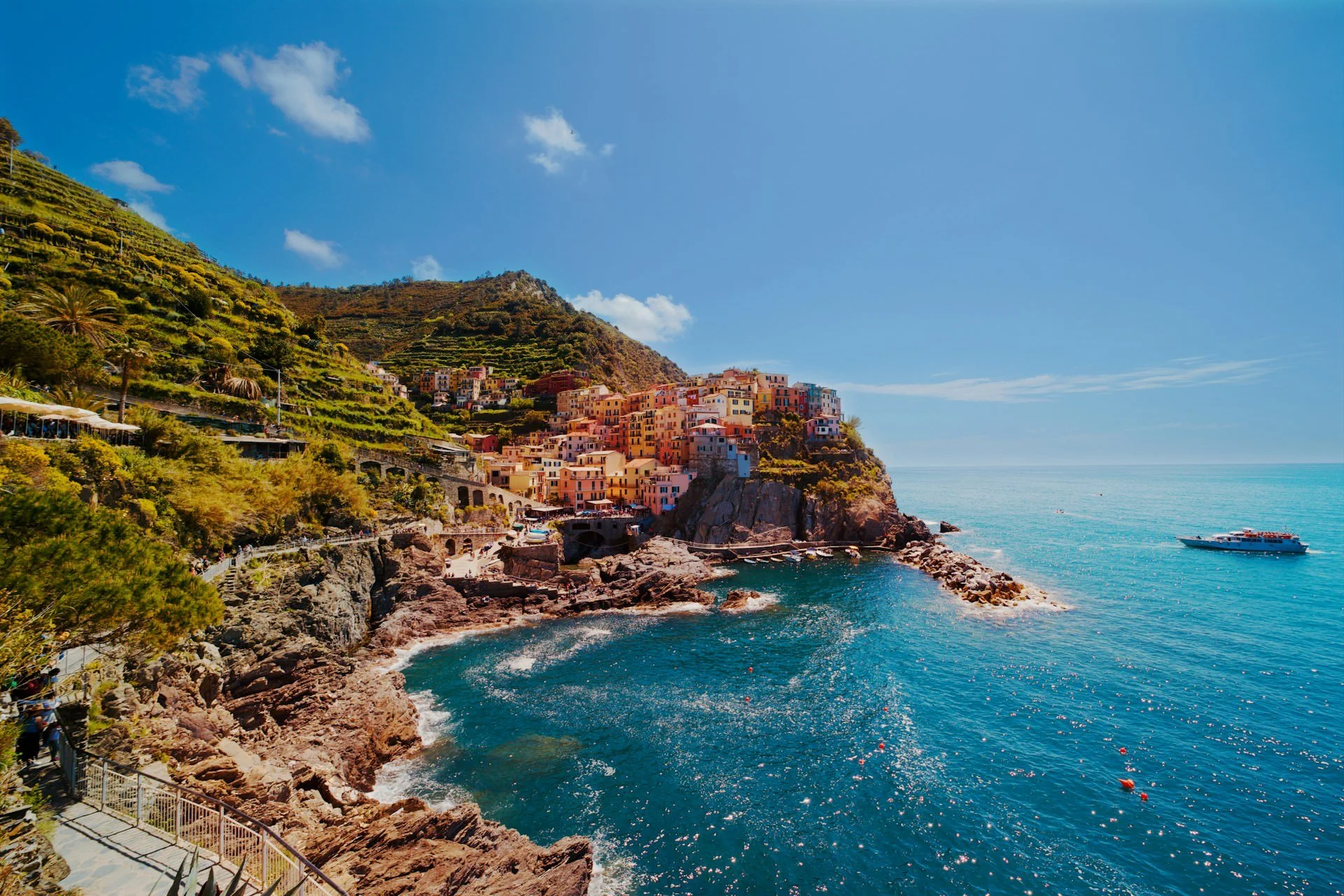
There is a moment, usually somewhere between the train pulling into a cliff-carved station and your first glimpse of pastel towers stacked against a cobalt sea, when Cinque Terre stops being a picture you have seen a hundred times and becomes completely real. That moment is worth protecting. And the best way to protect it is to arrive knowing exactly what you are walking into.
Cinque Terre, which translates simply to "Five Lands," is a collection of five ancient villages clinging to the rocky Ligurian coastline in the northwestern corner of Italy. Together, they form a UNESCO World Heritage Site. Individually, each one has a personality, a pace, and a reason to linger. This guide breaks them down so you can choose your experiences with care.
A Little Context Before You Go
The history here goes deeper than most visitors realize. The first settlers arrived around the 10th century, climbing from inland valleys to carve terraced farmland into nearly vertical cliffs using dry stone walls. These terraces, known locally as fasce, are held in place by an estimated 7,000 kilometers of dry stone walls, all packed into just 14 kilometers of coastline. What looks like picturesque hillside is actually centuries of stubborn agricultural engineering.
For much of their early history, the villages lived under the protection of the Republic of Genoa, and the defensive towers and castle ruins scattered across the cliffs tell the story of constant threat from Saracen and Turkish pirates. The name "Cinque Terre" itself first appeared in the 15th century, coined by a Genoese clerk who noticed the five villages shared enough in common to be grouped together.
Tourism only began in earnest in the 1970s. Before that, the railway was more likely to take people away from Cinque Terre than bring them toward it. Today, nearly 2.5 million visitors arrive each year, which means how and when you visit matters enormously.
Getting There and Getting Around
Forget the car. The roads that connect these villages are narrow, steep, and parking is nearly impossible between April and October. The train is by far the most efficient way in, with services running from La Spezia to the south and Levanto to the north. The Cinque Terre Express connects all five villages with trains running approximately every 15 minutes from early morning to nearly midnight. The journey between villages takes around five minutes by rail.
A Cinque Terre Card is worth picking up if you plan to visit multiple villages in one day. It covers unlimited rides on the Cinque Terre Express, access to the paid hiking trails within the national park, and local bus services between villages.
Ferries also connect the villages from April through October, with one important exception: Corniglia, perched high on its promontory, has no landing point and cannot be reached by boat.
The Five Villages, One by One
From south to north, traveling from La Spezia toward Levanto, the order is: Riomaggiore, Manarola, Corniglia, Vernazza, and Monterosso al Mare. Each deserves more than a quick pass-through.
1. Riomaggiore: The Southern Gateway
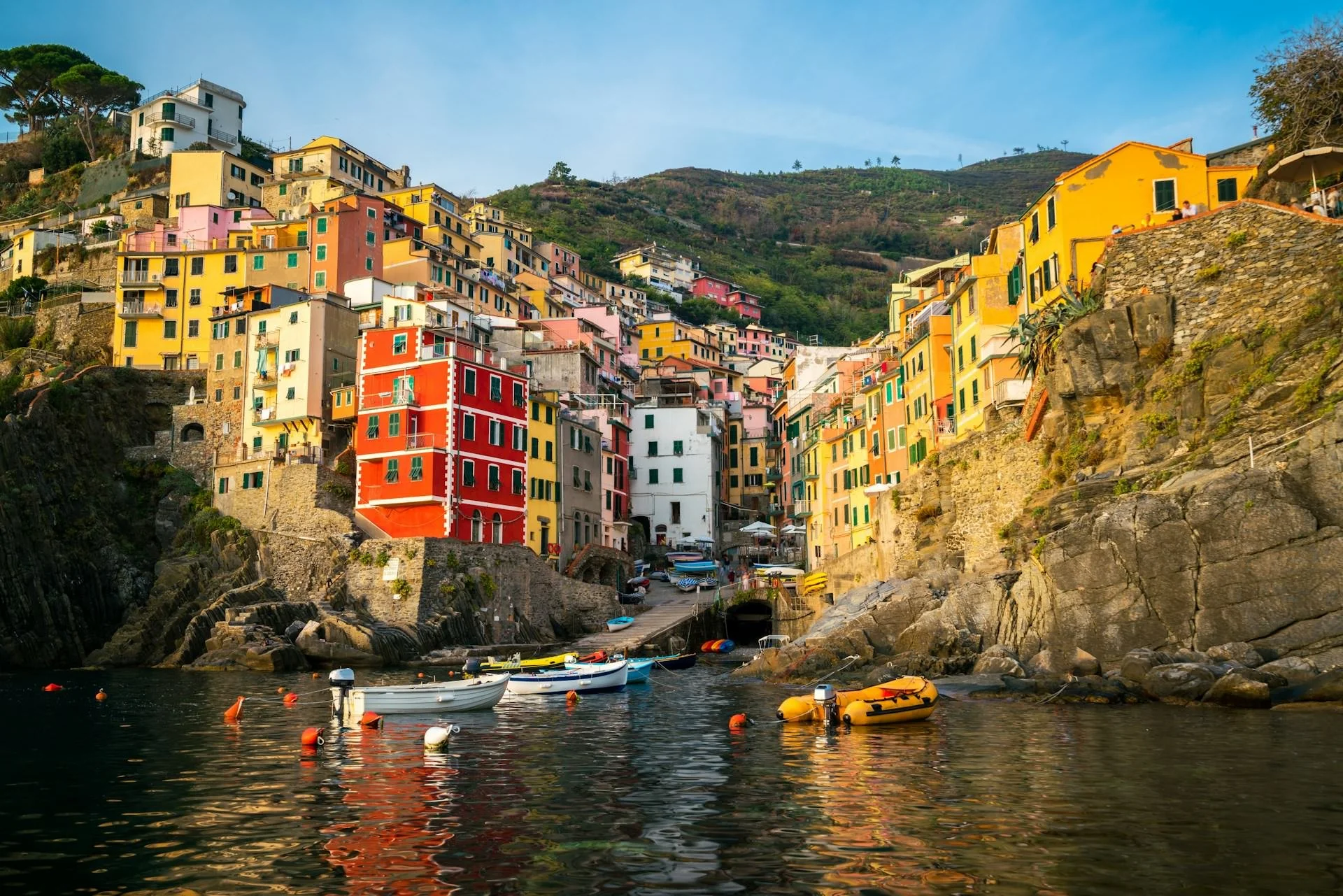
Riomaggiore is the first village you reach arriving from La Spezia, and for many travelers it serves as an entry point to the whole region. It is built into a narrow valley that drops steeply from the Ligurian hills to a small natural harbor, with tall, narrow tower houses painted in shades of ochre, pink, and burnt sienna rising on both sides of a single main street.
The village name comes from Rio Maggiore, the channel around which it grew, now covered under Via Colombo, the central pedestrian street that leads you down toward the harbor. The shape is typical of all five villages: vertical rather than horizontal, with stairways and caruggi (narrow lanes) threading between ancient facades.
The castle at the top of the village once served as a lookout against Saracen incursions and now offers educational facilities and sweeping views. The Church of San Giovanni Battista and the Chiesa dell'Assunta in the upper village are worth a visit, and the harbor itself, tucked among the rocks, is one of the most scenic landings on the entire Ligurian coast.
Riomaggiore is also the eastern starting point of the Via dell'Amore (Path of Love), the famous clifftop trail leading to Manarola. After more than a decade of closure, the path fully reopened in July 2024. It is the easiest and most celebrated walk in Cinque Terre, running just under a kilometer along the cliff face with the sea below.
Best for: First-time visitors to Cinque Terre, travelers arriving from La Spezia, those who want to walk the Via dell'Amore from its eastern end.
Don't miss: Stuffed anchovies al verde, trofie with hand-ground pesto, a glass of Cinque Terre DOC white with fresh seafood at the harbor.
2. Manarola: The Wine Village
Manarola may be the oldest of the five villages. The cornerstone of the Church of San Lorenzo, the village's most important historic monument, dates to 1338, and the settlement itself is believed to stretch back to the year 1000. The name is thought to derive from the Latin magna rota, meaning large wheel, a reference to the mill wheel that once stood at the heart of the village.
Where Riomaggiore announces itself with energy, Manarola asks you to slow down. It is smaller, quieter, and arranged around a covered stream bed that forms the village's main axis, with narrow stone-paved alleys branching off toward terraced hillsides and the sea. The houses here follow the traditional Genoese tower style, stacked several floors high on a narrow footprint.
Manarola has long been the wine heart of Cinque Terre. The surrounding terraces produce grapes for the Cinque Terre DOC white wine as well as Sciacchetrà, a rare and ancient passito-style dessert wine made from partially dried grapes. References to the quality of the region's wine appear in ancient Roman writings, and Sciacchetrà is today listed as a Slow Food Presidium product. A glass at sunset, ideally from the Punta Bonfiglio viewpoint or a table at Nessun Dorma overlooking the harbor, is one of those Cinque Terre experiences worth planning around.
During the Christmas season, Manarola takes on an entirely different kind of magic: a hand-crafted illuminated nativity scene set into the hillside above the village, built over decades by a retired railwayman named Mario Andreoli, and consecrated in 2007 as the largest nativity scene in the world.
Best for: Wine lovers, photographers, travelers who want to overnight in the Cinque Terre for a more intimate experience.
Don't miss: Sciacchetrà tasting at a local cantina, the view from Punta Bonfiglio at golden hour, the Gothic Church of San Lorenzo.
3. Corniglia: The Quiet One
Corniglia is the odd village out, in the best possible way. It is the only one of the five not directly on the waterline. Instead it sits atop a 100-meter promontory, entirely surrounded on its inland sides by terraced vineyards, with the sea visible from every angle but not immediately accessible. Because of its elevated position, it cannot be reached by ferry, and the approach by train requires climbing the Lardarina, a long staircase of 382 steps from the station to the village center.
That climb is worth every step. Corniglia is the smallest and quietest of the five villages, with a single main street and a maze of narrow alleys that you can explore without the shoulder-to-shoulder crowds that concentrate in Vernazza and Monterosso on a summer afternoon. The old center has an agricultural rather than maritime character, classified historically as a rural village, and the surrounding terraces feel closer and more present here than anywhere else in Cinque Terre.
The village square offers a viewpoint from which you can see all five settlements stretching along the coast. The local gelato is well worth seeking out, particularly flavors featuring locally grown honey, citrus, and even basil.
Best for: Travelers who want the Cinque Terre experience without the crowds, those who appreciate the slower, more agricultural side of the villages.
Don't miss: The panoramic viewpoint over all five villages, local gelato, the hike through the terraced vineyards toward Manarola or Vernazza.
4. Vernazza: The Crown Jewel
Vernazza is widely considered the most beautiful village in Cinque Terre, and the most-photographed. Once known to the Romans as Vulnetia, it grew into a fortified maritime town under Genoese control and is the only one of the five villages with a fully natural harbor. The town's past is written into its architecture: ancient ramparts, the medieval Castle of Belforte standing at the harbor's edge, and the Church of Santa Margherita d'Antiochia, built in 1318, whose bell tower has served watch over the harbor for seven centuries.
The piazza at Vernazza's harbor is one of the most evocative gathering places on the Italian Riviera, especially in the early morning before the tour boats arrive, or in the early evening when the day-trippers have gone and the village reclaims itself. The small beach at the harbor entrance is ideal for a swim in startlingly clear water.
In October 2011, a catastrophic flood severely damaged both Vernazza and Monterosso al Mare. The rebuilding effort was remarkable, and today the village has fully recovered. The experience left a deep impression on the community and reinforced the relationship between the villages' physical beauty and the fragility of the terraced landscape that frames it.
Best for: Couples, photographers, travelers who want the quintessential Cinque Terre harbor experience.
Don't miss: The harbor piazza at sunset, the Castle of Belforte, a swim in the natural harbor, dinner at a waterfront trattoria.
5. Monterosso al Mare: The Beach Town
Monterosso al Mare is the largest, most northerly, and most resort-oriented of the five villages. It is the only one with a proper sandy beach, and the only one with a meaningful concentration of hotels, restaurants, and shops that would feel at home in a classic seaside destination. The village is divided into two distinct sections by the San Cristoforo headland: the old town, largely intact from its medieval origins, and the more modern district of Fegina, where the beach and most of the larger accommodations are found. The two parts are connected by a pedestrian tunnel.
Monterosso entered the Republic of Genoa in the 11th century, and its fortifications were built up against Saracen pirates. The Church of San Giovanni Battista in the old town and the former convent of the Cappuccini on the hill above are worth visiting, and the view from the terrace near a statue of St. Francis of Assisi looks back over the coastline with remarkable clarity. Near the beach, a giant sculpture of Neptune known as Il Gigante emerges dramatically from the cliff face.
Monterosso is the main hub for lemon-based products in Cinque Terre: the hillsides are covered with lemon groves, and limoncino, the local lemon liqueur, is made and sold throughout the village. The white wines here are among the finest in Liguria.
Best for: Families, beach lovers, travelers who want the most accessible base with the best lodging options in the Cinque Terre.
Don't miss: The sandy beach, Il Gigante sculpture, limoncino, anchovies in olive oil (a Monterosso specialty), the old town center.
What to Eat in Cinque Terre
The food here is deeply Ligurian, meaning it belongs to the land and sea in equal measure. Pesto is the foundation of the kitchen, made in the traditional Genoese way with mortar and pestle and served over trofie or trenette pasta. Anchovies appear everywhere, stuffed, fried, marinated, and incorporated into sauces. Farinata, a crumbly chickpea flour flatbread baked in a wood-fired oven, is a local staple that travels no further than Liguria and is not to be missed.
For wine, the Cinque Terre DOC white is the pairing for anything from the sea, crisp and mineral with a salinity that feels almost intentional. Sciacchetrà, the passito-style dessert wine made from late-harvested grapes on the terraced hillsides, is one of Italy's rarest and most site-specific wines. Seek it out in the small cantinas of Manarola or Corniglia rather than the tourist shops near the harbor.
When to Go
The honest answer is that Cinque Terre in peak summer, particularly July and August, has become genuinely overwhelming. The villages are small and the crowds are enormous. For most travelers, the sweet spot is May through early June, or the second half of September into October. The light is extraordinary, the hiking trails are at their best, and the villages breathe again.
If you want the Cinque Terre that feels more like what it actually is, a cluster of ancient villages that happen to overlook an impossibly beautiful coastline, visit in the shoulder season and, if you can, stay overnight. The difference between a day-tripper's Cinque Terre and an overnight guest's Cinque Terre is the difference between a postcard and a memory.
A Note on Crowds and Alternatives
Cinque Terre has become one of Italy's most visited destinations, and some corners of it show the strain. If you are a repeat Italy traveler looking for the same emotional register with fewer tour groups, consider Portovenere to the south, a village of comparable beauty and drama that most day-trippers never reach, or the base town of Santa Margherita Ligure further north, which offers easier access to Portofino and the broader Riviera with a calmer, more lived-in character.
IWB Tip: If you are in Portofino, pay a visit to our partner at Trattoria Tripoli for a meal.
For first-time visitors, Cinque Terre remains worth the trip, done right. Book ahead, arrive early, and leave the agenda loose enough to let the place surprise you. Italy almost always rewards the traveler who is willing to put the phone away.
Ready to Plan Your Cinque Terre Trip?
Cinque Terre works beautifully as a two to three night stay built into a broader Liguria or Northern Italy itinerary. Paired with time in Genoa, the Portofino peninsula, or even a few days further south along the Tuscan coast, it becomes part of a journey rather than a bucket-list checkbox.
At Italy With Bella, we plan trips that go beyond the obvious. We help you experience the Cinque Terre at the right pace, at the right time of year, with the right places to stay. Schedule a conversation at italywithbella.com/schedule and let us show you how five small villages can be the beginning of something much bigger.