Unlocking the Secrets of Pompeii: Beyond the Main City
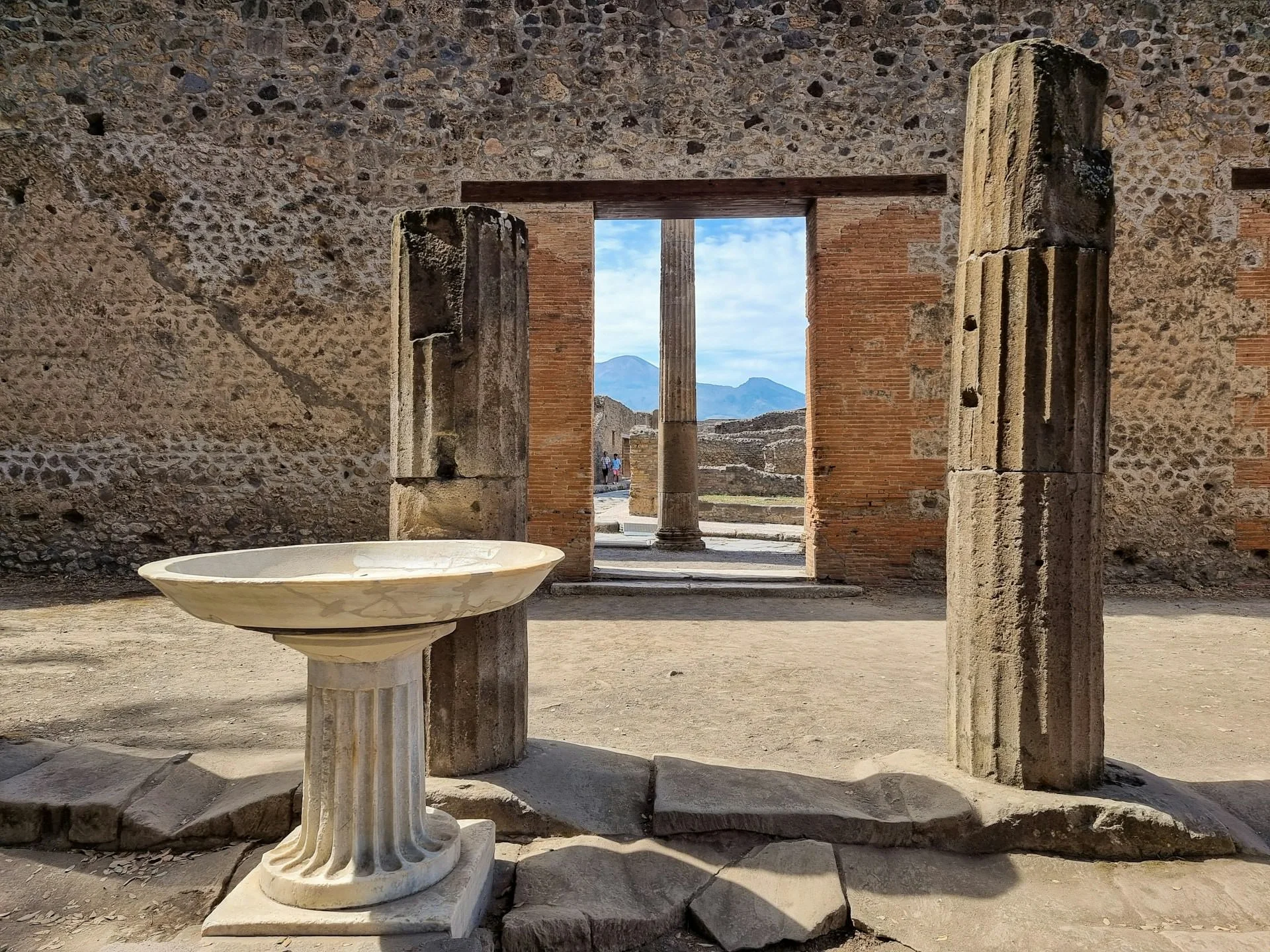
There are places in Italy that stop you in your tracks. Not because they are beautiful in the traditional sense, but because they are real in a way that very few places on earth can claim to be. Pompeii is one of those places.
Buried under meters of volcanic ash in 79 AD and forgotten for nearly 1,500 years, Pompeii is not a reconstruction. It is not a replica. It is an actual Roman city, streets intact, homes preserved, frescoes still vivid on the walls, waiting for you to walk through it as if you belong there. No other site in the world gives you a more complete, unfiltered picture of ancient life.
And yet most visitors rush through in two hours, snap photos of the famous plaster casts, and board a bus back to Naples. They miss the bakeries still stocked with stone millstones. They miss the small homes tucked into residential streets where ordinary Romans once argued, cooked, and loved. They miss the villa frescoes that have mystified scholars for over a century.
This guide is for the traveler who wants more than a photo. Here is everything you need to know about Pompeii before you go.
Where Is Pompeii Located?
Pompeii sits in the Campania region of southern Italy, roughly 25 kilometers southeast of Naples, in the shadow of Mount Vesuvius. It rests on a plateau about 30 meters above sea level, formed by ancient lava flow, overlooking the valley of the River Sarno.
The modern town of Pompei (spelled with one "i") has grown up around the archaeological site, connected by the Circumvesuviana train line to Naples and Sorrento. From Rome, the journey takes approximately two and a half hours by high-speed train to Naples, then another 35 to 40 minutes on the Circumvesuviana.
Geographically, Pompeii sits at the heart of a region loaded with history: Herculaneum lies to the northwest, also buried in the same eruption. The Amalfi Coast stretches south. Naples pulses to the north. Pompeii is not an isolated destination. It is the anchor of one of the most historically and scenically rich corners of the entire Italian peninsula.
The Significance of Pompeii
Why does Pompeii matter so deeply, nearly two thousand years after its destruction?
Because it is the only place on earth where you can walk through a complete ancient Roman city, frozen at a single moment in time. Every other Roman site offers fragments: a forum here, a bath complex there, a wall or two still standing. Pompeii gives you everything at once, block by block, neighborhood by neighborhood.
Before the eruption, Pompeii was neither the grandest nor the most powerful city in the Roman Empire. It was a prosperous, middle-class trading hub of somewhere between 10,000 and 20,000 residents. It had more than 40 bakeries, over 130 bars, public baths, a forum, two theatres, an amphitheater, and a thriving port economy. It was, in other words, a perfectly ordinary Roman city. And that is precisely what makes it so extraordinary to visit. It tells the story not of emperors and generals, but of real people going about their daily lives.
Recognized as a UNESCO World Heritage Site in 1997, Pompeii has been described by UNESCO as the only archaeological site in the world that provides a complete picture of an ancient Roman city. That is not hyperbole. It is simply accurate.
The Archaeological Park of Pompeii: What You Need to Know
The Archaeological Park of Pompeii covers approximately 66 hectares of excavated land, making it one of the largest and most complex archaeological sites in the world. It sits within the larger "Great Pompeii" UNESCO designation, which also includes Herculaneum, the Villa of the Mysteries, and the Villa Oplontis at Torre Annunziata.
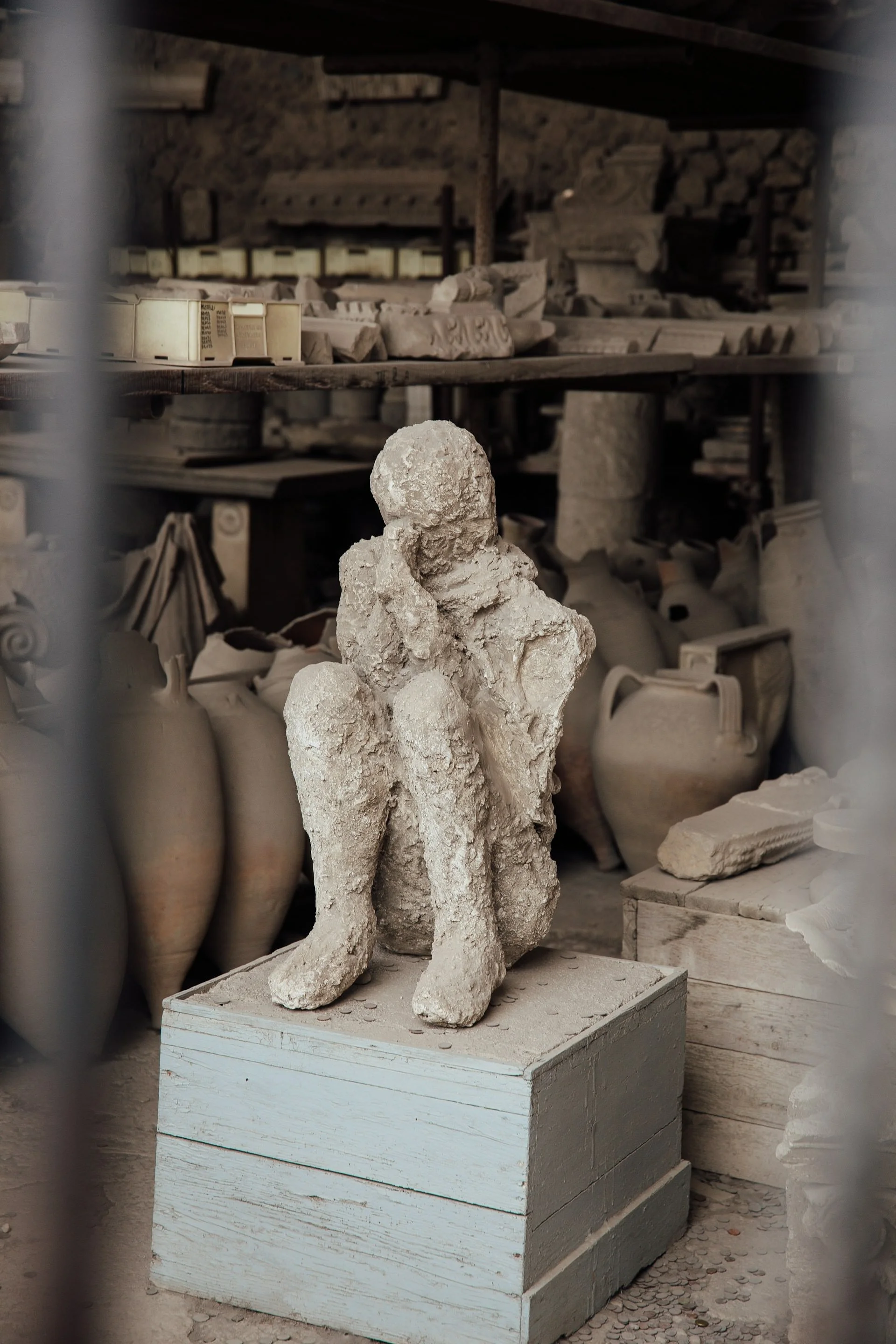
Excavations began officially in 1748 under King Charles III of Bourbon. The work continued through the 19th century, gaining rigor and methodology as the decades passed. In 1863, archaeologist Giuseppe Fiorelli developed the technique of injecting liquid plaster into the ash cavities left by decomposed human bodies, creating the haunting three-dimensional casts that have become among the most powerful images in all of archaeology. Since Fiorelli's time, just over a hundred such casts have been produced.
A moratorium on new excavations was in place from 1999 until 2017, after which the Great Pompeii Project resumed targeted work. The discoveries since have been extraordinary: a thermopolium (Roman fast-food counter) with food residue still in the serving jars; elaborate frescoes of mythological scenes; a freed slave's painted tomb; and in 2024 alone, a dining hall lined with rare frescoes of Helen of Troy and Apollo, a blue-painted shrine honoring the four seasons, and a neighborhood construction site still mid-renovation when Vesuvius erupted.
Today, the park receives approximately 2.5 million visitors per year, making it one of the most visited attractions in all of Italy. In November 2024, management introduced a daily cap of 20,000 personalized tickets, along with timed entry during peak season. Morning slots in spring and summer sell out weeks in advance. Book early.
Practical visiting information:
Opening hours run 9:00 AM to 7:30 PM from April through October, and 9:00 AM to 5:00 PM from November through March. Standard adult tickets provide access to the main archaeological park. A "Pompeii Plus" upgrade extends your visit to include the Villa of the Mysteries and Villa Regina at Boscoreale, accessible via free shuttle. Entrance is free on the first Sunday of every month. Children under 18 enter free but still need a ticket reserved in advance. Tickets can be purchased at the site or online through the official platform at vivaticket.it.
There are three main entrances: Porta Marina on the west side (closest to the train station, busiest), Piazza Anfiteatro on the east (quieter), and Piazza Esedra. If crowds are your concern, enter via Piazza Anfiteatro and work your way toward the Forum, rather than starting where everyone else starts.
Plan for a minimum of three to four hours for the key highlights. If you want to go deep, and you should, allow five to six hours or more. The site is around 66 hectares of ancient streets, with three to six kilometers of walking on uneven stone surfaces. Wear comfortable, closed-toe shoes. Bring water. There is very little shade. Spring and autumn offer the most comfortable visiting conditions.
A private guide makes an enormous difference here. The site has limited signage, and Pompeii without context is just old walls. With an expert walking beside you, it becomes a living story.
How Many People Died in Pompeii?
This is one of the most commonly asked questions, and the answer is more nuanced than popular culture suggests.
The exact death toll will never be known with certainty. Archaeological excavations have recovered approximately 1,100 to 1,150 bodies in and around Pompeii. Historians generally estimate that around 2,000 people died within the city itself. But the broader eruption, which also destroyed Herculaneum, Stabiae, Oplontis, and surrounding settlements, may have claimed as many as 16,000 lives in total.
Before the eruption, Pompeii had a population of roughly 11,000 to 20,000 residents. The fact that only around 2,000 bodies have been found suggests that the majority of the population managed to flee during the initial, less lethal phase of the eruption, when pumice stones rained down for approximately 18 hours but did not immediately kill.
The deadly phase came on the second day, when the eruption column collapsed and unleashed a series of pyroclastic surges, superheated clouds of ash, gas, and volcanic debris racing down the mountain at extraordinary speed. Anyone still in Pompeii at that moment died. The specific cause of death remains debated by scientists: some research suggests suffocation from ash inhalation during lower-temperature pyroclastic flows, while other studies have proposed instantaneous death from thermal shock as superheated gases vaporized body fluids. It is likely that different victims experienced different fates depending on where they were and which surge reached them.
What is not in dispute is the scale of the tragedy, or the fact that the same volcanic material that killed those who remained also preserved their city for the rest of human history.
The Most Famous Ruins in Pompeii
Pompeii is so large that visitors frequently feel overwhelmed. These are the sites that should anchor your visit, along with a few that most people miss entirely.
The Forum The Forum was the beating heart of Roman civic life: the place for commerce, politics, religion, and public spectacle. This vast rectangular plaza is surrounded by the ruins of the Temple of Jupiter, the Temple of Apollo (the oldest structure in Pompeii), the Basilica, and the Macellum, the ancient food market. Standing here with Vesuvius looming directly behind the northern end, the scene carries a weight that is difficult to put into words.
The House of the Faun One of the largest private residences in Pompeii, the House of the Faun occupies an entire city block. It is named for the small bronze dancing faun found in its central pool, and it was here that archaeologists discovered the breathtaking Alexander Mosaic, depicting Alexander the Great in battle against Darius III. The original mosaic now lives at the National Archaeological Museum in Naples, but the house itself, with its two atria and spacious peristyle gardens, gives a vivid sense of the wealth concentrated in Pompeii at the height of the Roman Empire.
The Villa of the Mysteries Located just outside the city walls, this suburban villa contains one of the most extraordinary series of frescoes to survive from the ancient world. The so-called Dionysiac frieze wraps around three walls of a large triclinium, depicting life-sized figures engaged in what appears to be an initiation ritual into the cult of Dionysus. The colors, a deep Pompeian red background with vivid figures, are astonishing. Scholars have debated the meaning of the scene for over a century. The villa requires the Pompeii Plus ticket and is absolutely worth it.
The Stabian Baths The oldest and best-preserved bath complex in Pompeii, dating to the 2nd century BC. The baths demonstrate how central communal bathing was to Roman daily life, with separate sections for men and women, changing rooms, warm baths, hot baths, cold plunge pools, and exercise areas. Going to the baths in ancient Rome was not merely about hygiene. It was a social ritual, a place to conduct business, exchange gossip, and simply exist alongside one's neighbors for hours at a time.
The Amphitheater Built in 70 BC, the Pompeii amphitheater is the oldest surviving stone amphitheater in the Roman world, predating the Colosseum in Rome by roughly 140 years. It could hold approximately 20,000 spectators, essentially the entire population of the city, and hosted gladiatorial games that drew crowds from throughout the region. The amphitheater was famously the site of a violent riot between Pompeii fans and spectators from the rival town of Nuceria in 59 AD, which prompted the Roman Senate to ban games there for ten years. In a very different moment of history, the same space hosted Pink Floyd's legendary 1972 concert film.
The Garden of the Fugitives Perhaps the most emotionally powerful site in all of Pompeii. Thirteen plaster casts of victims, an entire family group including children, lie in the positions where they fell and died. The casts preserve not just the body shapes but the folds of clothing, the strain of final moments, the unmistakable humanity of the people who did not escape. This is the site that makes Pompeii something more than archaeology.
The Thermopolium of Regio V This recently excavated fast-food counter has become one of the park's most talked-about recent discoveries. Food residue was found still inside the terracotta serving jars embedded in the counter: traces of duck, pig, goat, fish, snails, and wine. A glass vessel from Alexandria, Egypt, repurposed as a kitchen container, was found at its center. The thermopolium tells you in the most direct and tangible way imaginable that Pompeii was not a monument. It was a city where people were hungry and needed lunch.
Via dell'Abbondanza Pompeii's main commercial street, running east to west through the heart of the city. Walking this road is the closest thing to walking through ancient Rome itself: workshops, food stalls, bars, fountains, stepping stones to cross the street, electoral slogans painted on walls, and the faint traces of chariot ruts worn into the paving stones.
What Was Daily Life Like in Pompeii?
Pompeii was not a city of monuments. It was a city of people, and the ruins make that startlingly clear.
The city was organized around its Forum, where business, legal matters, and religious ceremony converged daily. Beyond the Forum, Pompeii was a grid of streets lined with shops at ground level and apartments above. The wealthy lived in sprawling domus, private homes built around atriums and peristyle gardens, decorated with elaborate frescoes and mosaic floors. The less wealthy lived in smaller dwellings, many without kitchens, which is why thermopolia were so prevalent throughout the city.
Romans ate simply, often outside. Street-side food counters served stews, salted fish, baked cheese, and wine. Bread was central to the diet, and Pompeii's 40-plus bakeries worked constantly, with large stone millstones still visible in several, some still containing the charred remains of loaves when excavated. Recent frescoes discovered at the site even depict what appears to be an ancient precursor to focaccia bread, topped with pomegranates and dates.
Public baths were not a luxury. They were a daily necessity, a social institution that cut across most class lines. The Stabian Baths and the Forum Baths both offered elaborate facilities that Romans used with the same casual regularity we might use a coffee shop.
Entertainment centered on the amphitheater for gladiatorial games, and on two theatres for dramatic performances. A recently discovered inscription reveals that the freed slave Marcus Venerius Secundio organized Greek and Latin performances in Pompeii lasting four days, the earliest known evidence of Greek cultural events in the city.
The walls of Pompeii are covered in graffiti, over 11,000 inscriptions recorded to date. Election endorsements, insults, love declarations, jokes, and simple announcements. "Gaius Pumidius Dipilus was here," reads one, dated to 78 BC. It is the oldest surviving piece of Latin street graffiti. The impulse to leave a mark on the world, it turns out, is not a modern invention.
Women operated businesses, not merely as exceptions but as a documented part of Pompeii's economic fabric. Slaves, who could sometimes accumulate enough resources to purchase their own freedom, occupied every tier of the social structure. The city's population was diverse, its residents drawn by trade from across the Mediterranean world.
Beyond the Main City: What Most Visitors Miss
Most itineraries to Pompeii focus entirely on the archaeological park. But the region around Pompeii holds experiences that can make this stop far richer.
Herculaneum (Ercolano) Herculaneum (Ercolano) While Pompeii is the more famous site, Herculaneum is in many ways the more astonishing one, and it is consistently undervisited by travelers who assume they have already seen the best of what the region offers.
The two cities were buried by the same eruption, but in fundamentally different ways, and that difference changes everything about what survives. Pompeii was buried under pumice and ash, materials that, while preserving walls and stone structures, still allowed air in over centuries, meaning wood rotted, food decomposed, and most organic material was lost. Herculaneum was closer to Vesuvius. When the eruption column collapsed on the second day, the town was engulfed by a rapid succession of pyroclastic surges and then sealed under nearly 20 meters of volcanic mud that hardened into solid rock. The mud was airtight. No oxygen could penetrate it. As a result, Herculaneum preserved things Pompeii simply could not.
Walking through Herculaneum today, you encounter wooden doors still on their hinges, wooden bed frames, carbonized loaves of bread still sitting in ovens, shelving units, a wooden baby's cradle, ceiling beams, window frames, and in one extraordinary bathhouse, a wooden door so well preserved by the humidity of the room that archaeologists describe it as looking centuries rather than millennia old. The Villa of the Papyri yielded an entire library of carbonized papyrus scrolls, the only surviving ancient library in existence, which researchers are still working to decipher using advanced imaging technology.
The human story at Herculaneum is equally haunting and different in character from Pompeii. In the 1980s, excavations along what was once the ancient shoreline, now several hundred meters inland due to subsequent eruptions, uncovered the skeletal remains of at least 300 people huddled in arched boat chambers, having fled toward the sea hoping for rescue that never came. Unlike Pompeii's plaster casts, which capture body shapes in ash, Herculaneum's victims left their bones, and the detail they contain, including evidence of age, diet, disease, and cause of death, has told researchers a great deal about who actually lived in this city.
Herculaneum was not a working port like Pompeii. It was a seaside retreat for wealthy Romans, a resort town of roughly 5,000 residents where senators and aristocrats built estates overlooking the Bay of Naples. The architecture reflects that. The homes are more refined, the frescoes and mosaic floors more lavish, the density of luxury per square meter noticeably higher than in Pompeii. Multi-story buildings with intact balconies still standing give you a genuine sense of what Roman streetscapes actually looked like in three dimensions, something Pompeii, for all its scale, cannot quite offer.
Only about a quarter of ancient Herculaneum has been excavated. The rest lies beneath the modern town of Ercolano, which was built on top of it. That inaccessibility is frustrating from an archaeological standpoint, but it also means that what has been uncovered feels concentrated and deeply intimate, a quality that Pompeii's 66 hectares can sometimes work against.
Both sites sit on the Circumvesuviana train line from Naples, just a few stops apart. A full day that pairs a morning at Herculaneum with an afternoon at Pompeii, or vice versa, creates one of the most complete and layered experiences of ancient Roman life available anywhere in the world. If you can only do one, and many travelers find themselves in that position, do not assume Pompeii is automatically the right answer.
Mount Vesuvius The volcano is dormant but not dead, and hiking to the crater rim remains one of the most visceral experiences available in southern Italy. Standing on the edge of the caldera, looking down into the steaming interior while the Bay of Naples spreads out behind you, you understand in a physical and emotional way what the residents of Pompeii faced. Vesuvius is accessible by bus from Pompeii or Naples, with a guided hike to the summit taking roughly 30 minutes from the upper parking area.
The National Archaeological Museum of Naples Many of Pompeii's greatest treasures were removed from the site over centuries of excavation and are now housed in Naples. The Alexander Mosaic from the House of the Faun, the erotic art from the so-called Secret Cabinet, extraordinary bronzes, surgical instruments, jewelry, and personal objects. If Pompeii gives you the context, the Naples museum gives you the finest details. Budget at least half a day.
Oplontis (Torre Annunziata) Just a short train ride from Pompeii, the Villa of Poppaea at Oplontis is one of the most spectacular Roman villas in existence. Believed to have belonged to Sabina Poppaea, wife of Emperor Nero, the villa's wall paintings are among the finest surviving examples of Roman fresco art. It is almost entirely uncrowded. It is also part of the same UNESCO World Heritage designation as Pompeii. Almost no one visits it.
| Site | Best For | Atmosphere | Vibe |
|---|---|---|---|
| Pompeii | Urban scale & layered history | Bustling / Grand | Like a busy ancient city |
| Herculaneum | Detail & remarkable preservation | Intimate / Quiet | Like a preserved neighborhood |
| Paestum | Greek architecture & open space | Spiritual / Expansive | Like an ancient park |
Things to Know Before You Visit
A few practical points that will make your Pompeii experience substantially better:
Book tickets in advance. During peak season, the daily cap of 20,000 visitors means morning slots sell out two to four weeks ahead. The official platform is vivaticket.it.
Hire a private guide. Pompeii is poorly signed and vast. The difference between walking through with context and without it cannot be overstated.
Do not start at the Forum. Every tour group floods the Forum within the first 30 minutes of opening. Start instead at the Amphitheater or explore the quieter residential streets in the eastern sections, then work your way back to the center as crowds spread out.
Wear comfortable shoes with grip. The ancient paving stones are uneven, often polished smooth, and occasionally slick. High heels and sandals are a genuine hazard.
Bring water and sun protection. There is very little shade, and in summer the heat radiating off the stone streets is intense.
Plan for more time than you think you need. Three hours is the minimum. Five is better. The site repays a slow, unhurried pace.
If your broader Italy itinerary includes the Campania region, resist the temptation to cram Pompeii, Herculaneum, Vesuvius, and the Amalfi Coast into a single day. The region deserves two to three days at minimum to experience at the depth it offers.
Our Honest Take: Have You Considered Paestum Instead?
We are going to share something here that most travel guides will not tell you.
Pompeii is genuinely worth visiting. The scale, the history, the plaster casts, the Forum with Vesuvius at its back, all of it is real and it is powerful. We would never discourage a client from going.
But if you ask us where we would personally send you for the most moving, most uncrowded, most completely awe-inspiring ancient ruins experience in all of Campania, the answer is Paestum.
About 85 kilometers south of Naples, tucked into the Cilento coast in a region few tourists think to reach, Paestum holds something that almost defies description: three ancient Greek temples standing in an open field, largely intact, in use from around 550 to 450 BC. Not Roman temples. Greek. The temples at Paestum are considered among the best-preserved ancient Greek temples in the entire world, including in Greece itself. They predate Pompeii's Roman heyday by centuries.
And almost no one goes.
Where Pompeii can feel like navigating a very historically significant theme park, especially in peak season with its 20,000-visitor daily cap now regularly met, Paestum offers something increasingly rare in Italian tourism: stillness. Arrive at opening time and you may have the temples nearly to yourself for the first hour, standing beneath columns that have witnessed 2,500 years of human history, with nothing but open sky and ancient stone around you.
The site also includes a Roman amphitheater, intact city walls stretching for 4.5 kilometers, and one of the finest archaeological museums in southern Italy. The museum's crown jewel is the Tomb of the Diver, a fresco painted in 470 BC depicting a lone figure leaping into water, interpreted by scholars as a metaphor for the passage into death. It is the only image of its kind ever found in the ancient world, and it was discovered in 1969 by an artichoke farmer who happened to be working the adjacent field.
The surrounding Cilento region, itself a UNESCO World Heritage Site, adds further texture. Buffalo mozzarella dairies dot the area, some open to visitors, producing the kind of fresh mozzarella di bufala that makes everything you have eaten before it feel approximate. The Cilento and Vallo di Diano National Park extends beyond, largely unseen by the tourist circuit. The ancient Greek settlement of Velia lies about an hour south.
Getting to Paestum requires a little more intention than a day trip to Pompeii. By private car it is the most comfortable option. By train, take the main Naples to Reggio Calabria line to the Paestum station, a journey of around an hour and fifteen minutes from Naples, then a short walk to the site. It can be done as a day trip from the Amalfi Coast, Naples, or Salerno, though spending a night nearby, with the beach just minutes from the temples, is the kind of slow travel that our clients tend to remember for years.
Pompeii gives you the Roman city. Paestum gives you something older, quieter, and in many ways more extraordinary. If your Campania itinerary has room for both, go to both. If you have to choose, or if crowds and the feeling of genuine discovery matter to you, call us before you book Pompeii.
A Final Thought
There is a reason Pompeii remains one of the most visited places in Italy, and it has nothing to do with checklist travel. It has to do with what happens when you walk a 2,000-year-old street and realize that the people who lived there were not so different from you. They argued about politics on those walls. They stopped for lunch at the corner bar. They loved their dogs, decorated their homes, worried about money, and watched games at the amphitheater on weekends.
Pompeii does not require you to imagine the past. It puts the past directly in front of you, in full color, and asks you to pay attention.
That is a rare thing. It deserves more than two hours.
Ready to experience Pompeii and southern Italy the right way, with the kind of planning that actually lets you slow down and take it all in? Schedule a conversation with our team and let us show you the Italy most travelers never find.