Acqua Alta in Venice: What It Is, When It Happens, and How to Navigate It Like a Local
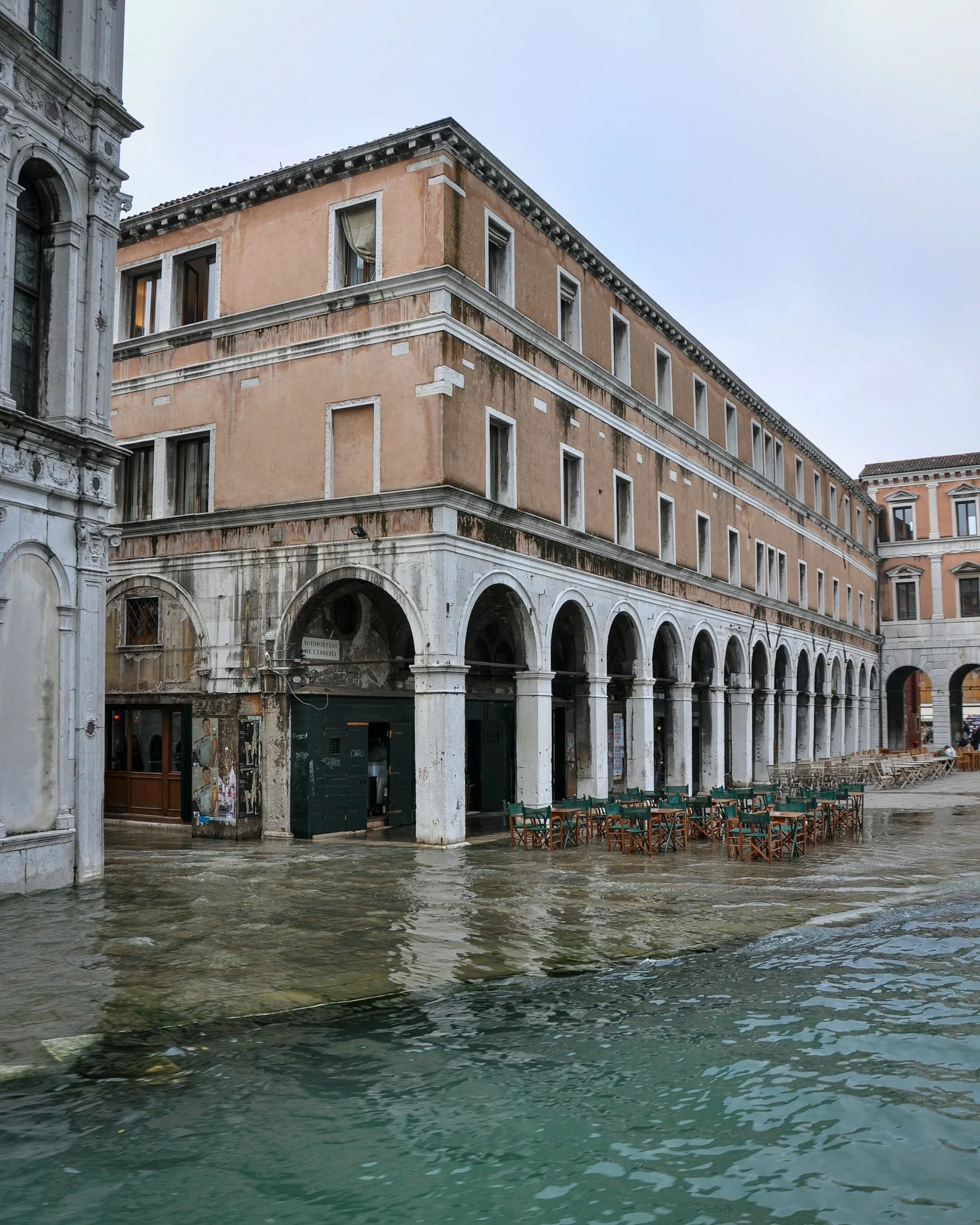
You've seen the photos. Gondolas gliding past flooded piazzas. Tourists perched on elevated wooden walkways. Water lapping at the doorsteps of centuries-old palazzos. It looks almost magical, until you're the one standing in St. Mark's Square with soaked shoes, wondering what exactly you stepped into.
Acqua alta, which translates literally to 'high water,' is one of Venice's most fascinating and least understood phenomena. It's not a flood. It's not a disaster. It's a natural rhythm the city has lived with for centuries. And with the right knowledge, it doesn't have to disrupt your trip at all.
Here's what you need to know before you go.
What Is Acqua Alta?
Acqua alta refers to the periodic flooding of Venice's lower-lying areas, caused by a combination of high tides, strong winds (particularly the Sirocco blowing up from the south), and low atmospheric pressure. When these conditions align, the water level in the Venetian Lagoon rises and spills into the city's streets and squares.
Venice sits on 118 small islands in a shallow tidal lagoon in the Adriatic Sea. The city has no true ground floor in the traditional sense. It exists in constant dialogue with the sea. This is not a bug; it is, in many ways, the defining feature of Venetian life.
The tidal fluctuation that produces acqua alta is measured in centimeters above the astronomical tide reference point, called the Punta della Salute gauge. Here is what those numbers mean in practical terms:
80-109 cm: Minor flooding in the lowest areas, primarily St. Mark's Square
110-119 cm: Significant flooding affecting roughly 12% of the city
120-129 cm: About 35% of the city affected
130-139 cm: Over 70% of the city sees water in the streets
140 cm or above: Exceptional event, historically significant flooding
The highest acqua alta ever recorded occurred on November 12, 1966, when water reached 194 cm above reference. That event prompted a 50-year international effort to protect the city. The second-highest on record was November 12, 2019, at 187 cm.
When Does Acqua Alta Happen?
The Season
Acqua alta events are most frequent from October through January, with November and December historically being the peak months. That said, isolated events can occur as early as September and as late as April, depending on weather conditions.
Summer acqua alta is extremely rare. If you are visiting Venice in June, July, or August, flooding is almost certainly not something you need to plan around.
The Time of Day
Because acqua alta is tide-driven, it follows a predictable cycle. Most events occur in the morning, typically between 6:00 AM and 11:00 AM, as tidal highs tend to coincide with the early hours during peak season. This is actually quite helpful for travelers. Flooding may be at its highest when you wake up, but by mid-morning or early afternoon it has often receded.
Duration
A typical acqua alta event lasts somewhere between two and four hours. The city does not stay flooded all day. Venetians know this, which is why you will see them calmly waiting it out at a cafe, boots stored neatly by the door.
The MOSE Barrier: Venice's Modern Defense
In 2020, Venice inaugurated the MOSE system (Modulo Sperimentale Elettromeccanico), a series of 78 mobile floodgates installed at the three inlets of the Venetian Lagoon: Lido, Malamocco, and Chioggia. When an acqua alta event above 110 cm is forecast, the barriers rise from the seabed and block the inflow of water from the Adriatic.
The system has been operational since 2020 and has been raised dozens of times. Its performance has been widely praised, with several significant flooding events successfully blocked. However, MOSE is not activated for events forecast below 110 cm, and its use depends on advance forecasting accuracy.
What this means for travelers: severe acqua alta events are now far less likely than they were even a decade ago. Events in the 80-109 cm range still occur and still affect St. Mark's Square, but the catastrophic flooding that once defined winter headlines in Venice is increasingly being prevented.
Why St. Mark's Square Floods First
If you've heard that Venice floods, what you've mostly heard is that Piazza San Marco floods. This is true, and it is worth understanding why.
St. Mark's Square sits at one of the lowest elevations in the entire city, roughly 63 cm above mean sea level. It also drains directly into the lagoon through a system of underground cisterns and drains, which means when the lagoon rises, it rises in the piazza too.
The rest of Venice sits higher. Many neighborhoods, including Cannaregio, Castello, Dorsoduro, and San Polo, have streets that are only affected during more significant events. Local Venetians who have lived there for generations have largely figured out which parts of their neighborhood flood and which do not, which is the kind of hyperlocal knowledge a good guide brings to your experience.
How Venice Responds
The Siren Warning System
When an acqua alta event is forecast to exceed 110 cm, the city issues warnings through a network of sirens. One long tone signals that water will reach 110 cm. Each additional tone adds 10 cm to the forecast. Venetians hear four tones and know they are looking at a serious event.
The Centro Previsioni e Segnalazioni Maree (Venice Tide Forecast Center) publishes tide forecasts on their website and through a free app, Città di Venezia, which sends push notifications. This is worth downloading before your trip if you are visiting in the October through January window.
Passerelle: The Elevated Walkways
Within hours of a significant forecast, city workers deploy passerelle, elevated wooden walkways, along the most trafficked pedestrian routes. These connect major landmarks, ferry stops, and train stations and allow pedestrians to move through flooded areas without difficulty. The route network is posted on signs throughout the city.
Stivali di Gomma
Rubber boots, or stivali di gomma, are sold at pharmacies and small shops throughout Venice, including many near the train station. They are inexpensive and highly practical for lower-level events. Some hotels keep loaner pairs for guests. If you are visiting in November or December, packing a lightweight pair of waterproof boots or shoe covers takes up almost no space and eliminates any anxiety entirely.
What This Means for Your Trip
Here is the honest, experience-based perspective we always give our clients: acqua alta is something to be prepared for, not afraid of.
The vast majority of travelers who encounter acqua alta describe it as an extraordinary and memorable part of their Venice experience. Watching the city respond to the tides, seeing locals carry on with coffee and newspapers while water fills the square, standing on a passerella above a flooded calle at dawn: these are the moments that separate a postcard version of Venice from the real thing.
What we recommend:
Visit St. Mark's Basilica in the morning before any tidal peak, or reserve tickets in advance so you can time your visit around a receding tide
Book accommodations in the higher-elevation neighborhoods of Cannaregio, Dorsoduro, or San Polo if flooding anxiety is a concern
Download the city's tide forecast app and check it the evening before each day
Pack rubber shoe covers or lightweight waterproof boots if traveling October through January
Embrace the slower rhythm that acqua alta creates. Some of the best meals, conversations, and photographs come from being forced to pause
A City That Has Survived the Sea for a Thousand Years
Venice was built on water, held together by water, threatened by water, and saved by water. Its entire identity is inseparable from the lagoon that surrounds it. Acqua alta is not an anomaly in Venice's story. It is a chapter that repeats every autumn, and one that the city has been writing for over a millennium.
When you walk the elevated passerelle above a flooded Piazza San Marco, you are not witnessing a city in crisis. You are witnessing a city doing what it has always done: adapting, persisting, and somehow still being the most beautiful place on earth.
That is the Venice we love to show our clients. Not a sanitized, perfectly dry postcard version, but the real, breathing, tide-affected, impossibly resilient city that has been captivating travelers for centuries.
Planning a trip to Venice? Our team has walked every neighborhood, knows which streets flood first and which never do, and has the on-the-ground experience to build you an itinerary that works with Venice's rhythms rather than against them. Reach out to schedule a call with our team.