Catania Travel Guide: What to See, Eat, and Do in East Sicily
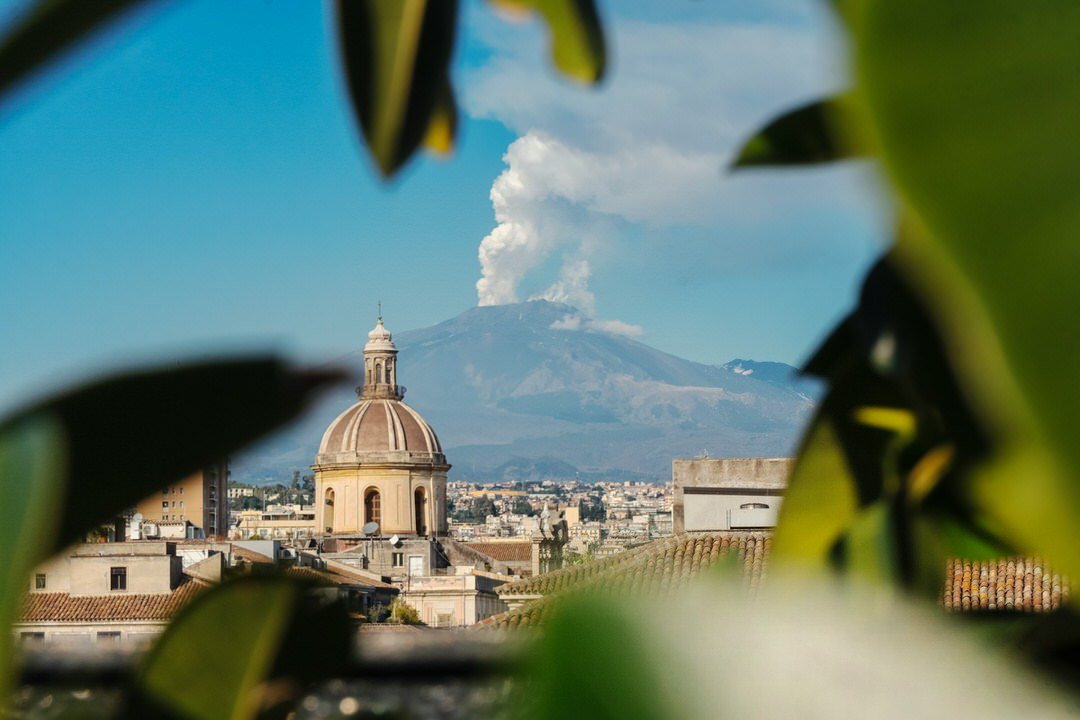
Catania does not try to charm you. It does not polish itself for a photograph or soften its edges for a tour bus. What it offers instead is something rarer: a working Sicilian city, built twice from the same black lava that once destroyed it, sitting at the foot of Europe's largest active volcano. For the right traveler, that honesty is exactly the point. For everyone else, it is worth knowing precisely what you are walking into before you build a trip around it.
This is our honest guide to Catania. Not the version written to sell you a hotel room, but the version we tell our own clients before they land.
A City Built on Lava, Twice
Catania is Sicily's second largest city, spread along the island's eastern coast in the shadow of Mount Etna. In 1669, lava from the volcano reached the edges of the city. Twenty four years later, an earthquake leveled most of what remained. What stands today is the rebuild: a Baroque city center, now a UNESCO World Heritage site, constructed from the very lava stone that had destroyed its predecessor. The streets were widened deliberately, as escape routes in case history repeated itself.
That origin story shapes everything about how the city feels. Catania is not delicate. It is dark stone, wide piazzas, and a university-town energy that has never been dressed up for tourism the way Taormina or Positano have. It is Sicily unfiltered, for better and occasionally for worse.
Your Gateway to Eastern Sicily
Catania-Fontanarossa Airport (CTA), named for Catania-born composer Vincenzo Bellini, is the busiest airport in Sicily and one of the busiest in Italy. It sits just a few miles from the city center, with strong connections to Rome, Milan, and major European cities, which makes it the natural front door for a trip to eastern Sicily. From the airport, Taormina, Syracuse, and Mount Etna itself are all within an easy drive.
IWB Tip: We regularly route clients into or out of Catania because the flight connections make sense. Where we get more selective is what happens after you land, which is exactly what the rest of this guide is about.
What to See in a Few Hours
Catania rewards a focused half day far more than an open-ended one. Here is what earns a place on that list.
Piazza del Duomo
The heart of the city and a UNESCO-listed set piece of black lava and white limestone. At its center stands the Fontana dell'Elefante, known locally as U Liotru, an ancient lava-stone elephant carrying a small Egyptian obelisk on its back. It has been the symbol of Catania for centuries. The Cattedrale di Sant'Agata, dedicated to the city's patron saint, anchors the square and is worth stepping inside for its marble facade and the relics of Saint Agatha housed within.
Via Etnea
Catania's main artery runs straight from Piazza del Duomo toward Mount Etna, which appears at the far end of the street on a clear day. It is lined with Baroque churches, cafes, and shops, and is the closest thing Catania has to a formal promenade.
The Roman Theatre and Odeon
Two remarkably intact structures from the 2nd century AD, tucked into the city's residential fabric. A quiet, easy way to feel the layers of history beneath the Baroque surface.
Castello Ursino
A brooding 13th century castle that now houses Catania's civic museum and the Biscari archaeological collection. Worth an hour if art and antiquity interest your travelers.
Villa Bellini
A lovely 19th century public garden a few blocks off Via Etnea, ringed by cafes. A good spot to slow down after a morning of walking on lava stone.
La Pescheria: The Fish Market Worth the Trip
If Catania has one unmissable experience, this is it. La Pescheria, tucked just behind Piazza del Duomo, is a centuries-old open-air fish market and one of the most vivid slices of daily Sicilian life you will find anywhere on the island. Fishmongers shout prices in Sicilian dialect. Swordfish are split open on the spot. Oysters are shucked and handed over with a squeeze of lemon before you have finished asking. It is loud, it is theatrical, and it is completely unpolished for visitors, which is precisely what makes it worth seeing.
The market runs Monday through Saturday, generally from early morning until early afternoon, and is closed on Sundays. Go early, before the crowds and the heat arrive, and consider a guided food tour if your clients want the context and the language behind what they are seeing. The surrounding streets extend the market into cheese, produce, and other local specialties, so give it more than a passing walk-through.
IWB Tip: Comfortable, close-toed shoes are non-negotiable here. The ground is wet, and fish is being cleaned in real time a few feet from where you are standing. This is not a place for sandals.
What to Eat in Catania
Sicily is a food-first island, and Catania has its own claims to the table.
Pasta alla Norma: Catania's signature dish, made with fried eggplant, tomato sauce, salted ricotta, and basil. Named for Bellini's opera Norma, the story goes that a local writer, tasting it for the first time, declared it "a Norma" in tribute to the dish's perfection.
Arancini: Sicily's fried rice balls, and in Catania, do not skip the pistachio version. Nearby Bronte produces some of the best pistachios in the world, and the local arancini put them to excellent use.
Granita e brioche: The Catanese breakfast of choice. A semi-frozen granita, most traditionally coffee or almond, served alongside a soft brioche bun for dipping. Order it the way the locals do, first thing in the morning.
Seltz al limone: A simple, refreshing local drink of lemon, sugar, and soda water, best enjoyed on a hot afternoon.
Street snacks: Look for cipollina (a savory onion and tomato pastry) and cartocciata (a filled pastry roll) at bakeries around the center.
Our Honest Take: A Great Front Door, Not Always the Best Place to Stay
Here is where we want to be direct with you, because that is how we plan trips.
Catania is a real, working Sicilian city, and parts of it show that plainly. Certain streets around the train station and on the edges of the historic center can feel rundown or unkempt, especially after dark, and Catania does not carry the same buttoned-up, tourist-ready polish that a place like Taormina or Ortigia does. That is not a knock on the city's character. It is simply a fact worth knowing before you commit multiple nights of a trip to it.
Our approach: we use Catania as exactly what it does best, a gateway and a day trip. Fly in, spend a focused morning at the fish market and in the historic center, eat well, and then move on to a base that suits an overnight stay more comfortably, whether that is Taormina on the coast, Ortigia in Syracuse, or a base up toward Mount Etna itself. That way, your clients get everything Catania genuinely offers, without asking a stopover city to do a base city's job.
IWB Tip: If a client's flights land or depart from Catania, we typically build in a half day or a full day here on arrival or departure, then base them elsewhere for the rest of the eastern Sicily leg. It gives them the fish market and the piazza without the compromise of an overnight stay.
This Is the 1% of Sicily Most Itineraries Get Wrong
Most travelers either skip Catania entirely or make the opposite mistake and build too much of a trip around it. The truth sits in between. Catania, done right, is a vivid half day of fish markets, lava-stone piazzas, and pistachio arancini, not a home base for your Sicily itinerary. Knowing the difference is exactly the kind of planning we do for every client.
Ready to Plan Your Italy Trip?
At Italy With Bella, we build fully custom, private itineraries across all 20 Italian regions, including the parts of Sicily most travel guides get wrong. We have been to every place we recommend. We know when to send you into a city for an afternoon, and when to send you somewhere else to sleep.