Malta: The Easy Mediterranean Add-On to a Sicily Trip
There are some places that feel like a natural extension of Italy, not because they are Italian, but because they share a similar rhythm of history, sea, stone, food, and layered culture.
Malta is one of those places.
Set between Sicily and North Africa, Malta is small, sun-washed, dramatic, and deeply historic. It feels familiar enough for Italy travelers to settle in quickly, yet different enough to feel like you have crossed into an entirely new chapter of the Mediterranean.
For travelers already planning time in Sicily, Malta can be a surprisingly easy and rewarding addition. A high-speed ferry connects Sicily and Malta in under two hours, making it possible to pair the baroque towns, coastal drives, ancient Greek temples, and volcanic landscapes of Sicily with the fortified cities, golden limestone architecture, and turquoise harbors of Malta.
It is not a replacement for Sicily. It is a beautiful complement to it.
And for the right traveler, it can make an Italy itinerary feel even more layered, adventurous, and memorable.
Why Add Malta to a Sicily Trip?
Malta works beautifully as a short add-on because it is close, compact, and rich in history. You do not need a week to appreciate it, though you certainly could spend one. For many travelers, two or three nights in Valletta or nearby can be enough to experience the island’s character without feeling rushed.
It is especially appealing for travelers who love:
Historic cities
Beautiful architecture
Ancient civilizations
Harbor views
Island culture
Religious history
Boats, ferries, and coastal scenery
A little “out of country” moment within a larger Italy trip
Malta also has a practical advantage: English is widely spoken, which can make it feel easy and accessible after time in Italy. It is modern, well-connected, and tourist-friendly, but still filled with places that feel atmospheric and old-world.
For travelers who enjoy the idea of collecting another passport stamp, Malta is its own country, a member of the European Union, and part of the Schengen Area. So while it pairs naturally with Sicily, it still gives your trip the feeling of crossing into somewhere new.
How Easy Is It to Get From Sicily to Malta?
Very easy, especially from southeastern Sicily.
The most common route is the high-speed ferry between Pozzallo, Sicily and Valletta, Malta. The crossing is typically about 1 hour and 45 minutes, which makes Malta one of the easiest international add-ons to a Sicily itinerary.
This works especially well if your Sicily trip includes places like Ragusa, Modica, Noto, Siracusa, or the Val di Noto region. Rather than thinking of Malta as a separate trip entirely, you can build it into the end of a southeastern Sicily itinerary.
A sample flow might look like this:
Start in Palermo or Catania
Explore eastern or southeastern Sicily
Spend time in Siracusa, Noto, Ragusa, or Modica
Transfer to Pozzallo
Take the ferry to Valletta
End with two or three nights in Malta
For some travelers, Malta may also work well at the beginning of the trip, especially as more direct flight options become available from the United States. But in most Italy With Bella itineraries, we would likely think of Malta as a graceful finale to Sicily: a final burst of sea, limestone, history, and harbor light before heading home.
What Makes Malta So Interesting?
Malta’s history is astonishingly layered for such a small place.
Its earliest history reaches back thousands of years, with prehistoric temple sites that are among the oldest free-standing stone structures in the world. The Ġgantija temples on Gozo, along with Ħaġar Qim and Mnajdra on the main island, offer a glimpse into a civilization that existed long before the classical ruins many travelers associate with the Mediterranean.
For Christian history, Malta is traditionally connected to the shipwreck of the Apostle Paul, described in the Book of Acts. Visitors can still explore sites tied to this story, including St. Paul of the Shipwreck Church in Valletta.
Then there is the era that gives Malta much of its visual identity: the Knights of St. John.
From 1530 to 1798, Malta became the stronghold of the Knights Hospitaller, also known as the Order of St. John. The island’s position in the Mediterranean made it strategically important, especially during the Great Siege of Malta in 1565, when the Knights defended the island against Ottoman forces.
After the siege, the Knights built Valletta as a fortified capital. The result is one of the most striking cities in Europe: compact, golden, defensive, elegant, and dramatic, with streets that rise and fall toward flashes of blue water.
Valletta: The Best Base for a Short Malta Stay
For a first visit, Valletta is the easiest and most atmospheric place to stay.
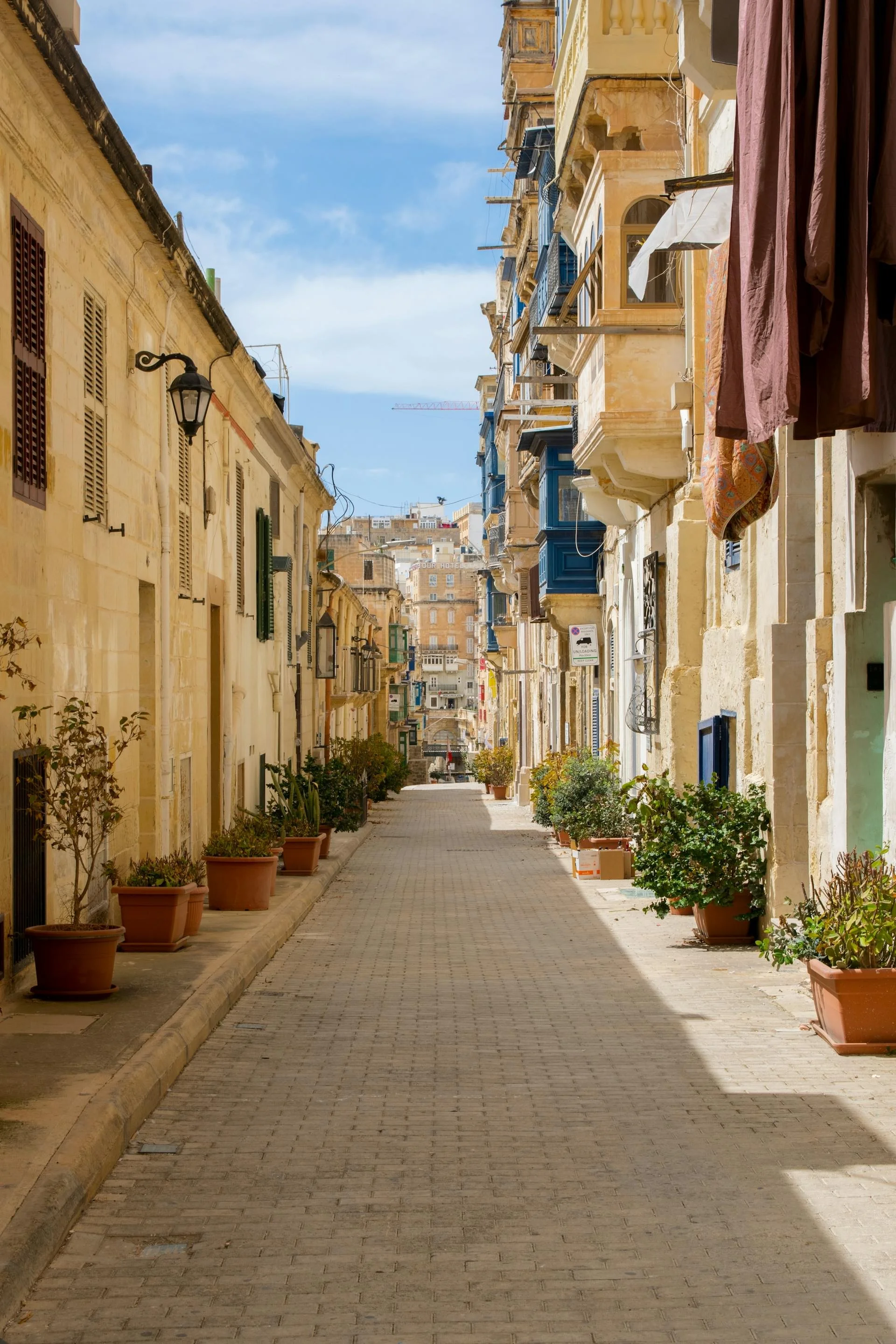
Malta’s capital is tiny compared to Rome, Florence, or Palermo, but it is packed with churches, museums, restaurants, palaces, gardens, and harbor views. It is also walkable, which makes it ideal for a short stay. You can step out of your hotel and almost immediately be surrounded by limestone balconies, carved doorways, church domes, and views across the Grand Harbour.
Start with St. John’s Co-Cathedral, one of Malta’s most important sites. Its exterior is relatively restrained, but inside it is all Baroque drama: gilded ornament, marble tombs, painted ceilings, and chapels connected to the Knights of St. John. It also houses Caravaggio’s “The Beheading of St. John the Baptist,” one of the most powerful works in the Mediterranean.
From there, make your way to the Upper Barrakka Gardens for one of the best views in Malta. From the terrace, you can look across the Grand Harbour toward the Three Cities: Birgu, Senglea, and Cospicua.
This is the moment when Malta begins to make sense visually. The fortifications, the sea, the boats, the layered cities, the strategic position of the island, all of it comes into focus.
The Three Cities and the Grand Harbour
One of the most memorable ways to experience Malta is from the water.
From Valletta, you can take a public ferry across the Grand Harbour to the Three Cities, or ride in a traditional Maltese wooden boat called a dgħajsa. It is a simple experience, but a beautiful one, especially if you love the romance of old harbors and working waterfronts.
The Three Cities offer a quieter counterpoint to Valletta. Birgu, also known as Vittoriosa, is especially atmospheric, with narrow lanes, historic buildings, and views back toward the capital. It is a lovely place to wander, linger over lunch, and feel a little more removed from the busiest parts of Valletta.
For travelers who love Venice, Istanbul, or coastal cities with deep maritime histories, this part of Malta can be especially compelling.
Mdina: The Silent City
If you have more than one full day in Malta, Mdina should be high on the list.
Known as the Silent City, Mdina is a fortified medieval hilltop town in the center of the island. It is enclosed, quiet, golden, and beautifully preserved, with narrow streets, noble houses, and views over the Maltese countryside.
Mdina feels different from Valletta. Where Valletta is a city of harbors, defenses, and movement, Mdina feels suspended in time. It is slower, quieter, and more contemplative.
A visit here pairs well with nearby Rabat or with a broader day of exploring Malta’s interior.
Marsaxlokk, St. Peter’s Pool, and the Southern Coast
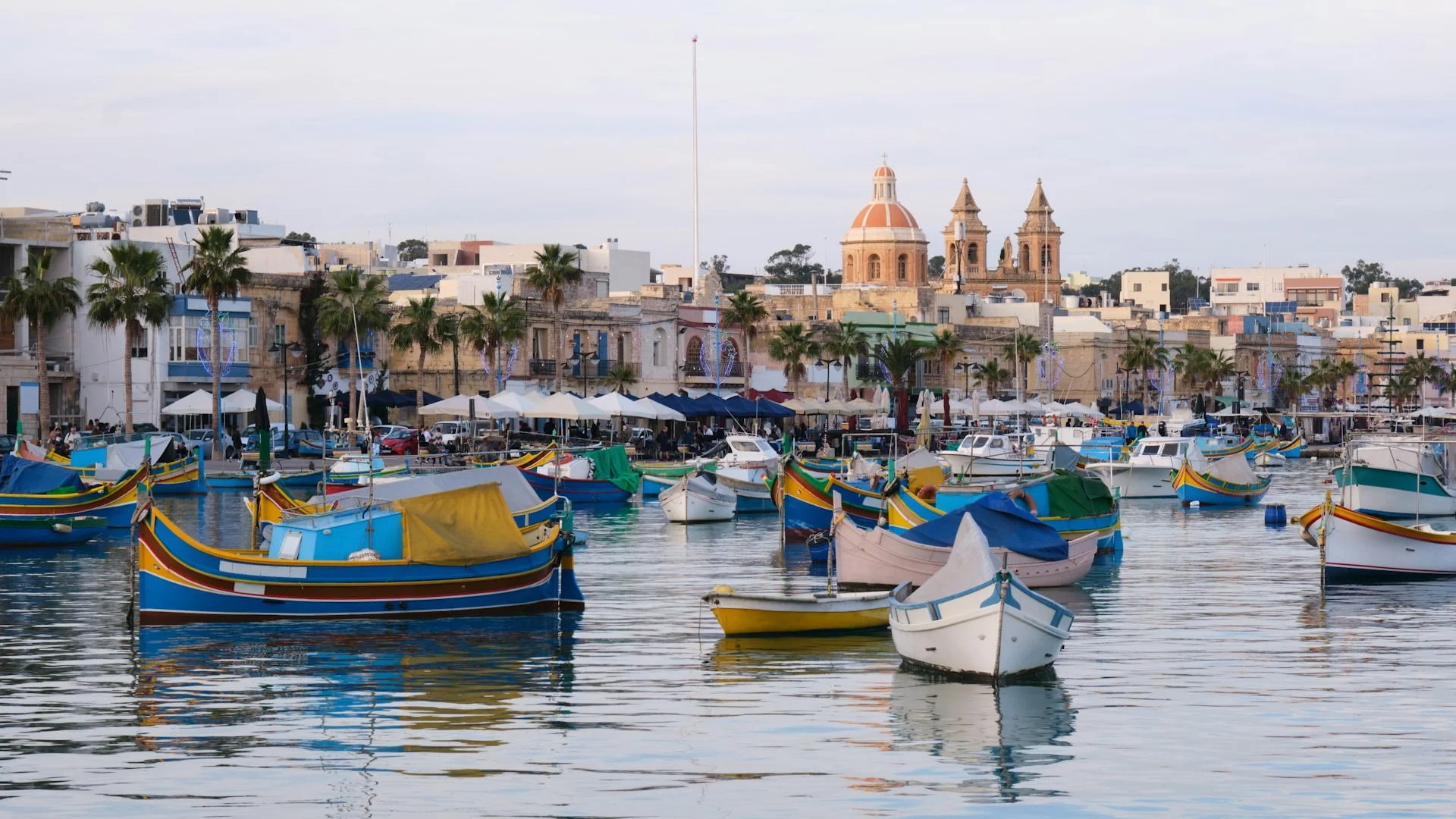
For a more colorful coastal experience, Marsaxlokk is a charming fishing village on Malta’s southern coast. It is known for its harbor filled with traditional painted boats and its Sunday fish market.
This can be a lovely excursion for travelers who enjoy markets, seaside lunches, and a more local-feeling rhythm. Nearby St. Peter’s Pool is a scenic swimming spot, though it is best suited for travelers comfortable with rocky coastal access rather than a traditional sandy beach setup.
This part of Malta can be especially appealing after time in Sicily, where fishing villages, sea views, and long lunches are already part of the story.
Gozo and Comino: For Travelers With More Time
If you have three or more nights in Malta, consider adding Gozo.
Gozo is quieter and more rural than the main island, with its own ancient sites, dramatic coastline, and slower pace. Highlights include Victoria and its Citadel, Ramla Bay, the Xwejni Salt Pans, Ta’ Pinu Basilica, Ġgantija Temples, and the Dwejra area.
Comino, known for the Blue Lagoon, is famous for its bright turquoise water. It can be beautiful, but it is also very popular, especially in high season. For many travelers, it is best approached thoughtfully, with timing and expectations managed carefully.
This is where customized planning really matters. Malta is small, but trying to do everything can still leave you feeling rushed. The goal is not to check every island and viewpoint off a list. The goal is to choose the experiences that fit the way you like to travel.
Where to Eat and Drink in Valletta
Valletta has a lively and increasingly sophisticated food and cocktail scene. You can find everything from classic cafés to modern bistros, wine bars, and elevated dining.
For a classic stop, Caffe Cordina is a beloved historic café in the heart of Valletta. It is a good place for coffee, pastries, people-watching, and a sense of old Valletta.
For dinner, Palazzo Preca is a strong option for travelers looking for a polished restaurant experience in the city center, while Legligin is often mentioned for a more intimate Maltese tasting-style meal.
For cocktails, Strait Street is one of Valletta’s most interesting areas. Once known as the city’s notorious nightlife district, it has been reimagined with bars, restaurants, and live music venues. Today, it is one of the best places to experience Valletta after dark.
Where to Stay in Malta
For most first-time visitors, we would lean toward staying in or near Valletta, especially for a short Sicily add-on. It keeps logistics simple and allows you to experience Malta’s capital on foot.
For an iconic grand hotel experience, The Phoenicia Malta is one of the best-known properties on the island, located just outside the city gates of Valletta.
For a more boutique, highly designed stay, Iniala Harbour House offers a refined harbor front experience with a strong sense of place.
Valletta also has a number of smaller boutique hotels and restored palazzo-style stays, which can be a wonderful fit for travelers who prefer character, walkability, and atmosphere over a larger resort setting.
If the trip is more beach-focused, then areas like St. Julian’s, Sliema, or resort properties outside Valletta may make sense. But for a short cultural stay, Valletta is hard to beat.
How Many Nights Do You Need in Malta?
For an Italy With Bella-style itinerary, Malta works well in two to four nights, depending on the pace of the larger trip.
Two nights gives you a taste of Valletta, the Grand Harbour, and perhaps the Three Cities.
Three nights allows for Valletta, the Three Cities, and either Mdina or the southern coast.
Four nights gives you room to add Gozo or a deeper island day without rushing.
If you are adding Malta after Sicily, we would not want it to feel like an afterthought. Even though the ferry is quick, Malta deserves space in the itinerary. It is best experienced with enough time to wander, take in the harbor views, enjoy a good meal, and let the island’s layered history come into focus.
Who Is Malta Best For?
Malta is a wonderful fit for travelers who love history, architecture, and cultural layering.
It is especially good for travelers who have already been to Italy’s major cities and want something that feels connected to the Mediterranean world, but still distinct. It can also be a smart addition for repeat travelers who are ready to go beyond the classic Italy itinerary.
Malta may not be the best fit for someone who wants a purely Italian experience from start to finish. It is not Sicily. It is not Rome. It is not the Amalfi Coast.
But that is exactly what makes it interesting.
Malta offers a different lens on the Mediterranean: one shaped by ancient temples, the Knights of St. John, British influence, Catholic tradition, North African proximity, and a striking island landscape.
The Italy With Bella Perspective
We love the idea of Malta as an elegant add-on to Sicily, especially for travelers who are curious, history-minded, and open to a slightly more adventurous itinerary.
It is close enough to feel easy, but different enough to feel exciting.
The key is planning it well.
Because ferry schedules, transfers, hotel location, touring pace, and seasonal crowds all matter, Malta is not something we would simply tack on without thought. It should be woven into the trip in a way that feels smooth, intentional, and worth the extra movement.
For some travelers, that might mean a few nights in Valletta after exploring southeastern Sicily. For others, it might mean pairing Malta with a deeper dive into Baroque Sicily, connecting the architecture, history, and coastal culture of both places.
Done well, Malta can turn a Sicily trip into something even more memorable: a journey through the heart of the Mediterranean, where every island tells a different part of the story.
Final Thoughts
Malta is small, but it is not simple.
It is ancient and modern, European and Mediterranean, Catholic and cosmopolitan, fortified and breezy, dramatic and surprisingly easy to navigate. It gives travelers the feeling of discovering somewhere both close to Italy and completely its own.
For those already dreaming of Sicily, Malta may be the perfect next question:
What if the trip did not have to end there?
With the right itinerary, the answer might be a ferry ride across the sea, a golden city on a harbor, and a few unforgettable days in one of the Mediterranean’s most fascinating little countries.