Palermo vs. Catania: Which Sicily Destination Should You Choose?
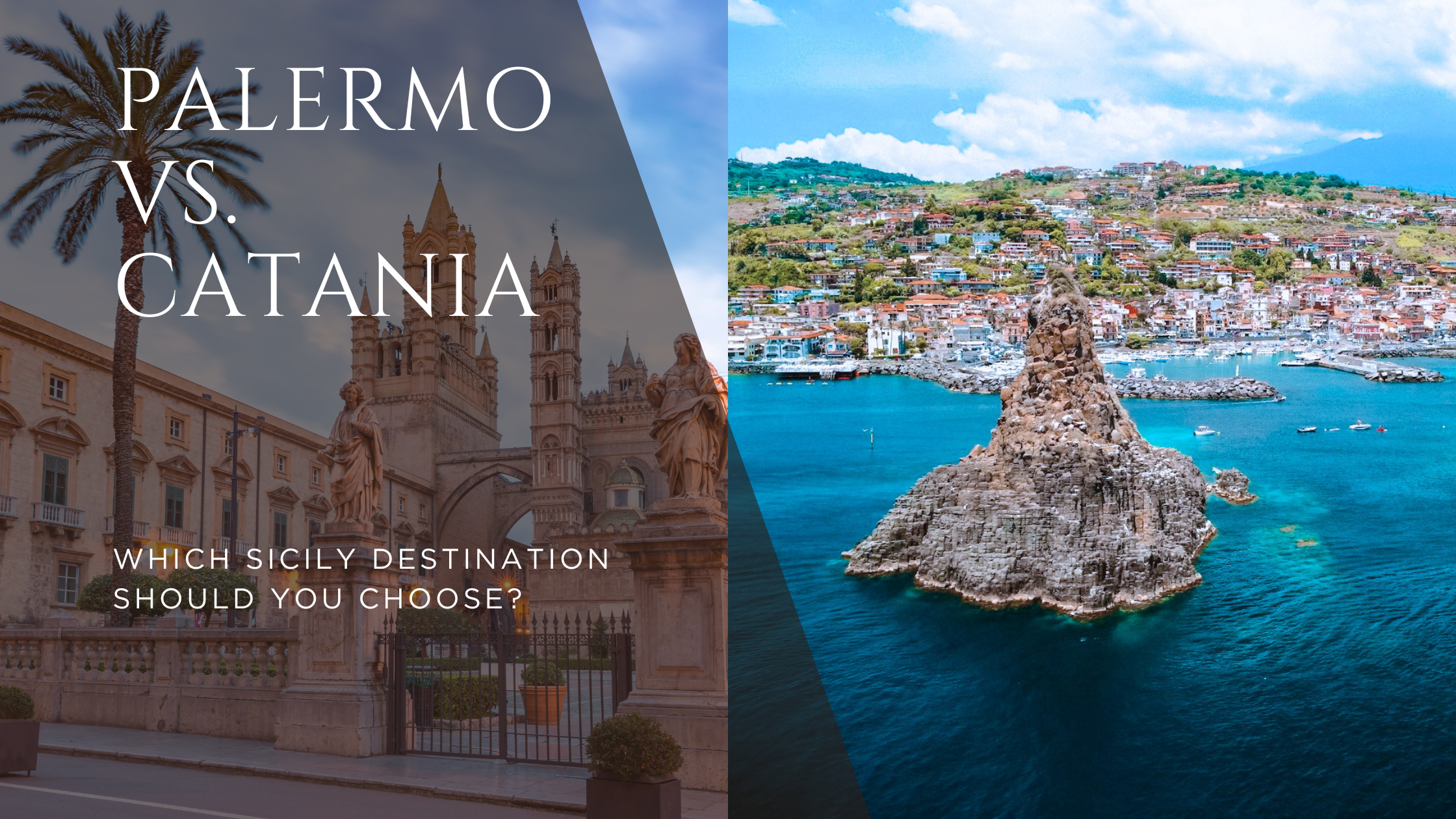
Sicily is not a single destination. It is an island the size of a small country, with two very different cities anchoring two very different versions of a Sicilian trip. Palermo sits on the northwest coast, layered with Arab, Norman, and Byzantine history. Catania sits on the east coast, in the shadow of an active volcano, with a baroque skyline rebuilt from ash and lava rock. Ask ten travelers whether Palermo or Catania is the better choice and you will get ten different answers, because the honest answer depends on what kind of trip you are building.
This comparison is meant for the earlier stage of planning, before you have committed to an itinerary. We work with clients through every region of Italy, and Sicily is one of the places where the choice between Palermo versus Catania genuinely changes the shape of the trip. Here is how we walk our own clients through it.
1. Atmosphere
Palermo is dense, layered, and a little chaotic in the best way. Markets spill into the street, laundry hangs between balconies in the old quarters, and centuries of history sit stacked on top of each other without much apology. It is a working port city first and a tourist destination second, which is part of its appeal. Catania has a different energy: darker stone buildings built from volcanic rock, a more compact historic center, and a livelier, younger nightlife scene tied to its university population. Catania also feels closer to nature in an immediate way. Mount Etna is visible from the city streets on a clear day, smoking quietly in the background.
IWB Tip: If you want a city that feels unmistakably Sicilian and slightly rougher around the edges, Palermo delivers that in full. If you want a city with easier energy and a mountain literally watching over you, Catania is the better fit.
2. Architecture and History
Palermo's architecture tells the story of every culture that ever controlled Sicily. The Palazzo dei Normanni and its Cappella Palatina blend Byzantine mosaics, Arab arches, and Norman stonework in a single room, and it remains one of the most extraordinary interiors in Italy. The Teatro Massimo, the Quattro Canti crossroads, and the layered markets of Ballaro, Vucciria, and Capo all reflect a city that has been rebuilt, reconquered, and reinvented for over a thousand years.
Catania's story is more singular and, in its own way, more dramatic. After the catastrophic earthquake of 1693 destroyed much of the city, it was rebuilt almost entirely in Sicilian Baroque style using dark volcanic stone from Etna itself. Piazza del Duomo, anchored by the black-and-white Duomo and the Elephant Fountain, is the clearest expression of this. Walking through Catania means walking through a city that was, quite literally, built from the volcano that still looms over it.
IWB Tip: For travelers who want architectural depth and a genuine cross-section of Sicilian history, Palermo has more range. For travelers who want a single, striking, cohesive style, Catania's baroque core is hard to beat.
3. Food
Both cities take their food seriously, and both will feed you extraordinarily well, but the specialties diverge. Palermo is the street food capital of Sicily. Arancini, panelle, sfincione, and pani ca meusa are sold from stalls that have operated for generations, and the markets themselves are as much a meal as a sightseeing stop. Palermo is also where you will find some of the island's best cannoli, made with sheep's milk ricotta the way it is meant to be.
Catania's signature dish is pasta alla Norma, a tribute to the local composer Bellini, built from tomatoes, fried eggplant, ricotta salata, and basil. The fish market, La Pescheria, runs a loud, theatrical morning trade just steps from Piazza del Duomo and feeds many of the trattorias in the surrounding streets. It also has a notable street food tradition including Arancini, which are different in the east compared to the west. There's a funny "rivalry" about the names as well. In the west they call them ArancinE (feminine, and they're round) whereas in the east they're called ArancinI (masculine, and in the shape of a pyramid). Etna's volcanic soil also produces excellent wine nearby, and travelers based in Catania are closer to the Etna DOC vineyards than those based in Palermo.
IWB Tip: We eat what the region is known for in the region it comes from. In Sicily, that means street food and cannoli in Palermo, and pasta alla Norma and Etna wine near Catania.
4. Beaches
Palermo's easiest beach access is Mondello, a short drive from the city center with soft white sand and clear, shallow water that feels almost Caribbean on a calm day. It gets busy with locals in high summer, but it remains one of the more convenient city beaches in Italy.
Catania sits on the Ionian coast, and its beach access leans toward dramatic rather than soft sand. Aci Trezza's black volcanic rock formations, the Cyclops Islands, and the beaches around Taormina and Giardini Naxos are all within reach and offer a different kind of coastal beauty, shaped by lava rather than surf.
IWB Tip: Neither city is a beach base in the way the Amalfi Coast or Cinque Terre are. Think of the beaches near Palermo and Catania as a strong bonus, not the reason to choose one city over the other.
5. Transportation
Catania's Fontanarossa Airport is the busier of the island's two main airports and often has more direct flight options from major European and North American gateway cities, which makes Catania a genuinely convenient arrival point. Palermo's Falcone-Borsellino Airport is well connected too, particularly to mainland Italy.
The train between Palermo and Catania is not fast. Sicily's rail network winds through the island's interior, and the journey typically runs close to three hours despite the relatively short distance on a map. Most of our clients moving between the two cities are better served by a private driver than by rail.
IWB Tip: If your Italy trip includes both Sicily and the mainland, factor Catania's stronger flight connections into your planning. It often makes more sense as an arrival or departure point than Palermo does.
6. Nearby Excursions
Catania's biggest draw is proximity. Mount Etna is less than an hour away, and a guided excursion onto its lower slopes is one of the most memorable half-days we plan in Sicily. Taormina, with its cliffside setting and ancient Greek theater, is also an easy day trip from Catania, as are the black sand beaches of Aci Trezza.
Palermo's excursions lean historical and coastal. Monreale Cathedral, a short drive up into the hills, holds mosaic work that rivals anything in Palermo itself. Cefalù, a Norman cathedral town on the coast, makes an easy day trip, and the Zingaro Nature Reserve offers hiking and quiet coves for travelers who want to get outdoors.
IWB Tip: Mount Etna remains an active volcano, and access to the summit trails can shift with volcanic activity, including occasional closures at Catania's airport. This rarely affects a well-planned itinerary, but it is worth building in a buffer day if Etna is a priority.
7. Which Is Better for First-Time Sicily Visitors
There is no single correct answer here, but there is a genuinely useful way to think about it. If this is your first trip to Sicily and history, architecture, and Sicilian street food are what draw you, Palermo gives you more depth and more range in a single base. If Mount Etna, easier flight logistics, and a slightly more compact, walkable center matter more to you, Catania is the stronger first stop.
Most first-time visitors are drawn to Sicily for a mix of both. In that case, we generally steer clients toward whichever city aligns with their arrival and departure flights, since Sicily rewards travelers who spend real time in fewer places rather than rushing between two cities on a short trip.
8. Should You Include Both?
If you have ten days or more in Sicily, yes, both cities earn a place on the itinerary, ideally paired with Taormina or the southeastern baroque towns in between rather than treated as a single long drive. If your Sicily trip is shorter than a week, we typically recommend choosing one city as a base and building excursions around it rather than splitting your time and losing days to transit.
This is the same divide by four thinking we apply across every Italy itinerary we build. Sicily is large enough that it deserves the same restraint we apply anywhere else in the country: fewer bases, more time in each place, and the kind of unhurried days that let a destination actually settle in.
The Honest Take
Palermo versus Catania is not really a competition. They are two different doors into the same island, and each one opens onto a different version of Sicily. Palermo is the deeper historical and culinary experience. Catania is the more convenient and more dramatically situated one, with Etna as a neighbor. Where to stay in Sicily depends less on which city is objectively better and more on what kind of trip you are building around it.
Ready to Plan Your Sicily Trip?
Sicily is one of our favorite regions to plan, and Palermo and Catania are only the beginning of what the island offers. Read our full guide to Sicily, and check back soon for our dedicated Catania destination guide.
At Italy With Bella, we build fully custom, private itineraries across all 20 Italian regions. We have been to every place we recommend. We know the right time to visit, the right guide to book, and the details that turn a good trip into one you talk about for years.