The Best Things to Do in Palermo, Sicily
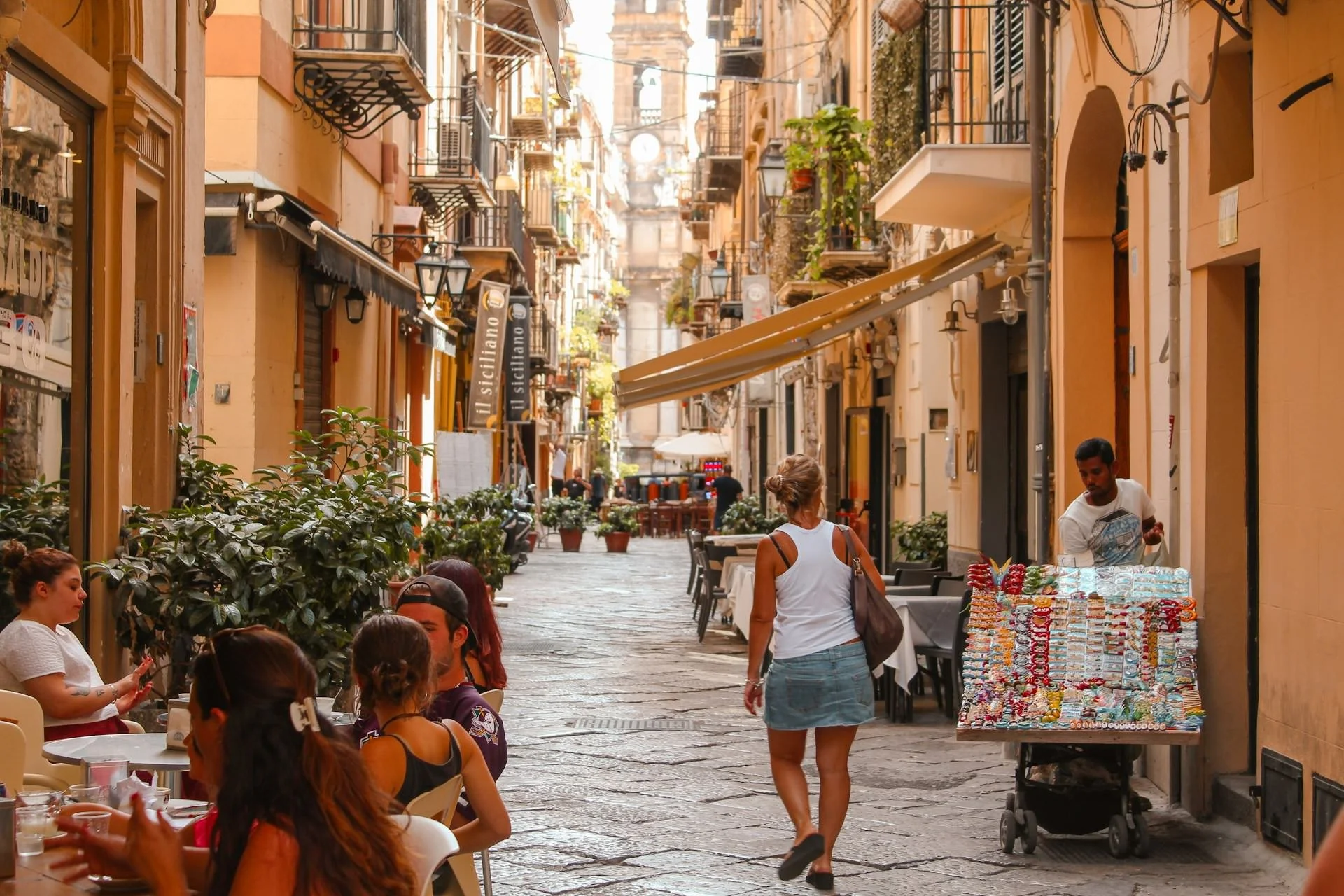
Palermo does not ease you in. You step off a plane or a train and the city is already talking to you, in the smell of citrus and frying dough, in the noise of Vespas cutting through baroque piazzas, in the layers of Phoenician, Arab, Norman, and Spanish history stacked one on top of the other like sediment. Most travelers spend a day here on their way to somewhere else in Sicily. That is a mistake. Palermo rewards the traveler who gives it real time, and this guide covers the best things to do in Palermo, from the landmarks you cannot skip to the neighborhoods where the city actually lives.
This is our primary guide to what to see in Palermo, built the way we plan it for our own clients: cathedrals and chapels first, then the markets and neighborhoods that give the city its pulse, then the day trip that closes out the experience with the right kind of finale.
1. Palermo Cathedral
The Cattedrale di Palermo is where the city's entire layered history is written in stone. Built in 1185 on the site of a Byzantine church that had itself been converted into a mosque under Arab rule, the cathedral has been added to, rebuilt, and reworked for centuries, which is exactly why it looks the way it does. Norman battlements sit beside Gothic spires, Arab-style crenellations wrap around Baroque additions, and the whole structure reads like a timeline rather than a single architectural style.
Inside, the royal tombs hold Norman kings and Holy Roman emperors, including Roger II and Frederick II. Climb to the rooftop terraces for a walk among the domes and a wide view over the city toward the mountains, and budget time for the treasury, which holds Constance of Aragon's 13th-century imperial crown.
IWB Tip: Go early. The cathedral is a working church as well as a monument, and the light through the piazza in the first hour after opening is the best time to photograph the facade without a crowd in every frame.
2. Palazzo dei Normanni and the Palatine Chapel
If you only have time for one interior in Palermo, make it the Cappella Palatina inside the Palazzo dei Normanni, the Norman Palace. Commissioned by King Roger II in 1132, the chapel is a small room that somehow holds an overwhelming amount of beauty: Byzantine gold mosaics covering the walls and ceiling, a Norman throne, an Arab muqarnas wooden ceiling carved with hunting scenes and courtly life, and a marble floor inlaid in geometric patterns. It is the single clearest expression of Sicily's Arab-Norman period, the era when Muslim, Byzantine, and Latin Christian craftsmen worked side by side under Norman kings.
The palace itself is now the seat of Sicily's regional parliament, and access to some rooms depends on legislative schedules, so a visit here benefits from advance planning rather than a walk-up attempt.
IWB Tip: The Palatine Chapel is one of the most photographed rooms in Sicily, which means it is also one of the most crowded by mid-morning. Pair an early cathedral visit with an early palace visit and you will have both mostly to yourself.
3. Teatro Massimo
Teatro Massimo is the largest opera house in Italy and ranks as the third largest in Europe, surpassed in size only by the Palais Garnier in Paris and the Vienna State Opera. Opened in 1897 after a construction saga that ran more than twenty years, the theater is a Neoclassical landmark that anchors Piazza Verdi, one of Palermo's grandest squares.
A guided tour takes you through the auditorium, the royal box, and the halls behind the stage, and if your dates line up with the opera or ballet season, seeing a performance inside is one of the more memorable evenings you can spend in Sicily. Film fans will also recognize the front steps from the closing sequence of The Godfather Part III.
IWB Tip: Buy Teatro Massimo tickets ahead during peak season, whether for a guided tour or a performance. Same-day availability shrinks fast between April and October.
4. Quattro Canti
Quattro Canti, the Four Corners, is the Baroque intersection where Palermo's two main historic streets, Via Maqueda and Via Vittorio Emanuele, cross and divide the old city into its four traditional quarters. Each of the four curved corner facades is decorated with a fountain, a Spanish king, and the patron saint of one of Palermo's historic districts, stacked in tiers. It is a small space architecturally, but it functions as the city's compass point, the place every walking route through the historic center eventually passes through.
Just steps away, Piazza Pretoria holds a monumental 16th-century fountain so elaborately populated with nude marble figures that 19th-century Palermitans nicknamed it the Fountain of Shame.
5. Martorana Church
Officially Santa Maria dell'Ammiraglio, the Martorana is easy to underestimate from the outside and impossible to forget once you are inside. Founded in 1143 by George of Antioch, a Greek admiral in the service of King Roger II, the church holds some of the finest Byzantine mosaics outside of Istanbul, including a famous panel showing Roger II being crowned directly by Christ rather than by a pope, a deliberate political statement about Norman Sicily's independence.
The church sits on Piazza Bellini next to the Church of San Cataldo, whose three red domes are one of the most photographed rooflines in Palermo. Together, the two churches make a short but rich stop.
6. Church of the Gesù
The Chiesa del Gesù, also known as Casa Professa, is Palermo's Baroque interior taken to its fullest extreme. Where the cathedral and the Palatine Chapel show you Sicily's Norman and Arab layers, the Gesù shows you what came after: nearly every surface inside, walls, columns, ceiling, is covered in polychrome marble inlay, a technique Sicilian craftsmen developed into an art form of its own. Begun by Jesuits in the late 16th century, the interior took more than a century to complete.
IWB Tip: This church sits at the edge of the Ballarò market, which makes it easy to combine a quiet, awe-inducing interior with the noise and energy of the market in a single stop.
7. Historic Markets: Ballarò, Vucciria, and Capo
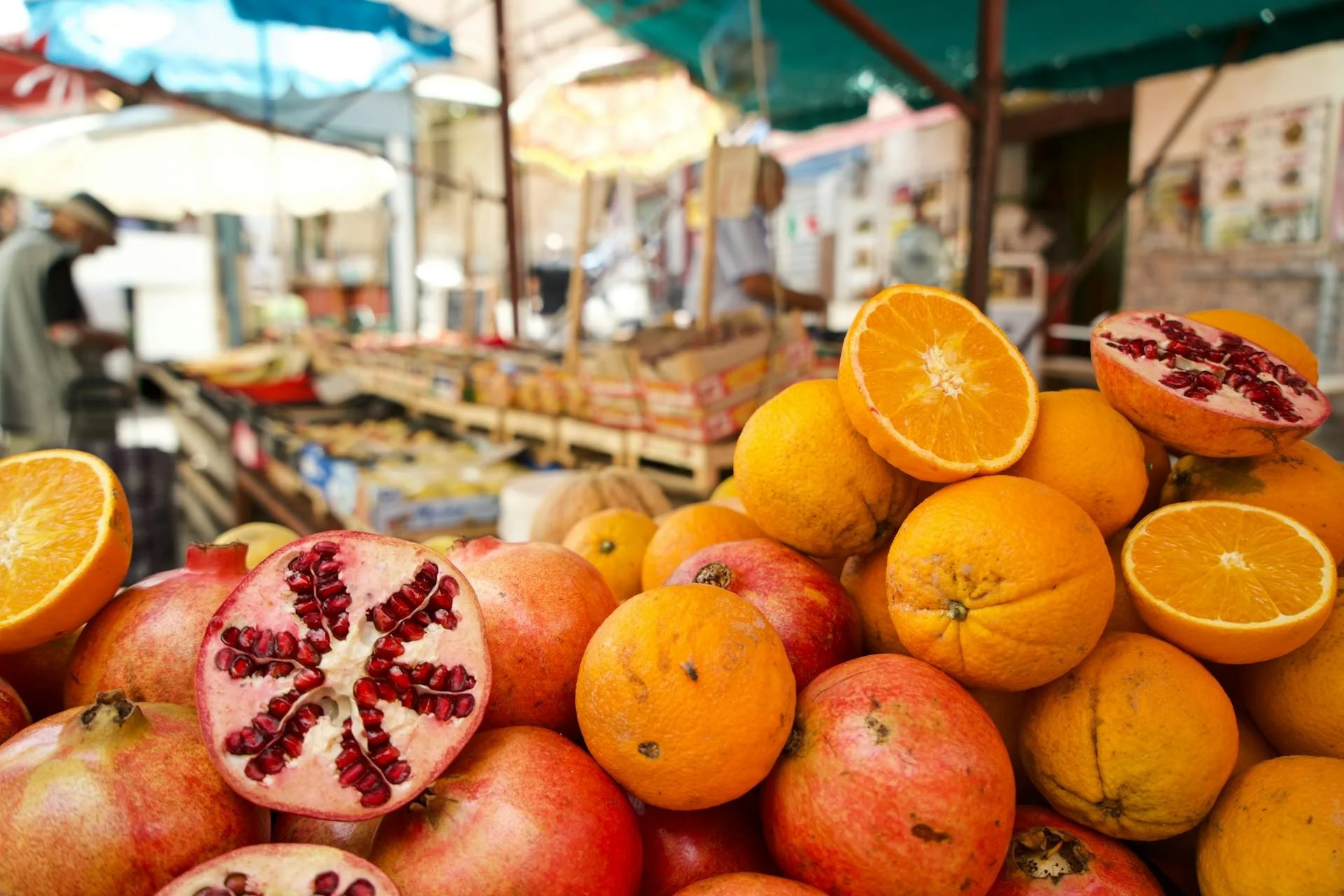
Palermo's street markets are not a tourist attraction dressed up for visitors. They are how the city has fed itself for centuries, and walking through one is one of the best things to do in Palermo if you want to understand the place rather than just see it.
Ballarò, believed to trace back to Arab-era Palermo, is the largest and most authentic of the three, running through the Albergheria neighborhood with produce stalls, fish vendors, and street food cooked in front of you. Vucciria, closer to the port, has shifted in recent years from a daytime food market into more of an evening spot for street food and drinks, though the historic stalls are still there by day. Capo, near the cathedral, is narrower and more residential in feel, with butchers and produce sellers who have worked the same stretch of street for generations.
This is also where to eat the food Palermo is actually known for: arancine (Palermo uses the feminine form, unlike the rest of Sicily), panelle, sfincione, and pani ca meusa for the adventurous.
IWB Tip: Go with an empty stomach and no fixed plan. The best market experiences in Palermo happen when you stop at whatever stall has the longest line of locals, not the one with the English menu.
8. Kalsa Neighborhood
The Kalsa is Palermo's oldest quarter, founded as a fortified settlement by Arab rulers in the 9th century and named from the Arabic al-Khalisa, meaning "the pure." For much of the 20th century it was one of the city's poorest and most heavily bombed districts, and its slow restoration since the 1990s has made it one of Palermo's most interesting neighborhoods to walk today, a mix of restored Baroque palazzi, half-renovated buildings, contemporary art spaces, and some of the city's best small restaurants.
Highlights inside the Kalsa include the Galleria Regionale della Sicilia at Palazzo Abatellis, home to Antonello da Messina's Annunciation, and the waterfront promenade of the Foro Italico, where locals walk, run, and gather in the evening along the sea.
9. Mondello
Mondello is Palermo's beach, a fifteen-minute drive or bus ride from the historic center, with pale sand and turquoise water backed by Monte Pellegrino and Monte Gallo. It was developed as a bathing resort in the early 20th century, and the Art Nouveau bathing pavilion built out over the water in 1913 is still the visual centerpiece of the waterfront.
Mondello is where Palermo goes to cool off, especially on summer weekends, and the promenade lined with seafood restaurants makes it an easy half-day trip away from the density of the historic center.
IWB Tip: If you want Mondello without the weekend crowds, go on a weekday morning and stay for lunch. The fish restaurants along the harbor are as good a reason to visit as the beach itself.
10. Monreale
No guide to what to see in Palermo is complete without Monreale, a hilltop town about twenty minutes outside the city that holds one of the greatest works of art in Sicily. The Cathedral of Monreale, built starting in 1174 under Norman king William II, is covered floor to ceiling in roughly 68,000 square feet of gold Byzantine mosaics depicting scenes from the Old and New Testaments, culminating in a colossal image of Christ Pantocrator that dominates the apse. It is the largest cycle of Byzantine mosaic art anywhere outside Istanbul, and it is a UNESCO World Heritage Site along with the cathedral's cloister, where 228 twin marble columns are each carved with a different decorative pattern.
We treat Monreale as the natural finale to a Palermo visit rather than the opener. Start with the cathedral and the Palatine Chapel in the city, spend real time in the markets and the Kalsa, and let Monreale close out the experience on the highest note. The scale and gold of the mosaics land differently when they are the last thing you see rather than the first.
How We Plan a Palermo Visit
Palermo is not a city to rush. We generally recommend at least two full days in the city itself, with Monreale added as a half-day extension, before moving on to the rest of Sicily. Pair it with Cefalù for an easier, more relaxed entry point into the island, and let the mosaics build in intensity as you go, from the Palatine Chapel to the Martorana to Monreale.
As with everywhere in Italy, we plan Palermo around real local knowledge rather than a checklist. That means knowing which market stall is worth the wait, which hour the cathedral is quiet, and where to send you for dinner once the guidebooks have closed for the night.
Ready to Plan Your Sicily Trip?
Palermo is one of the richest, most layered cities in all of Italy, and it deserves more than a rushed afternoon between connections. At Italy With Bella, we build fully custom, private itineraries across Sicily and all 20 Italian regions, with real local guides and the kind of insider knowledge that only comes from having been there ourselves.
Start with a free consultation. No generic packages. No group tours. Just Italy, done the right way.