The Complete Guide to Mount Etna: Touring, Timing, and Skiing Sicily's Living Volcano
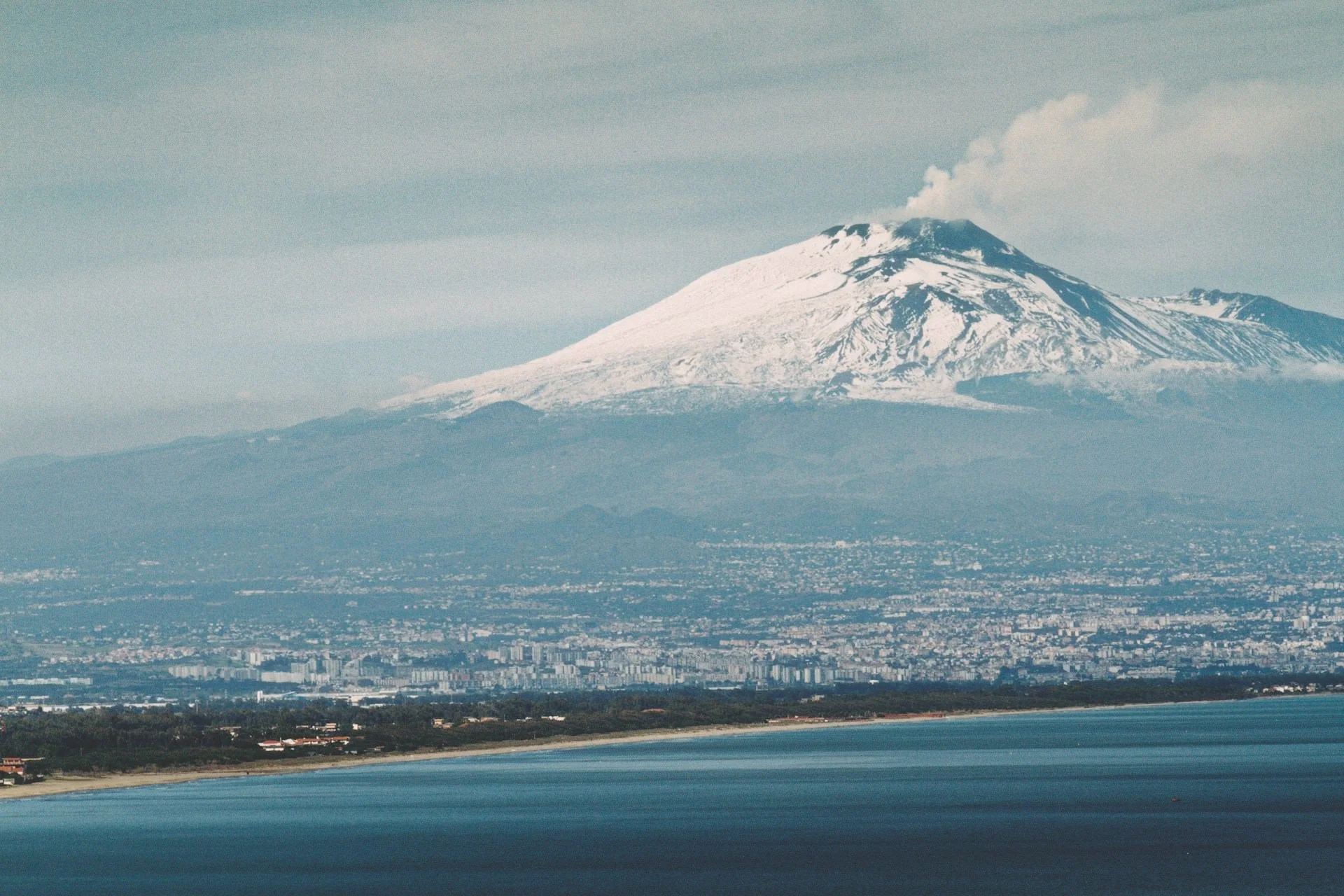
There is a moment, usually somewhere on the drive up from Catania, when the citrus groves fall away and the road turns black. Not dark. Black, the color of hardened lava, stretching in frozen waves toward a summit that is, more often than not, breathing a thin ribbon of smoke into the sky. This is Etna. Not a mountain you climb so much as a presence you visit, one that has been erupting, rebuilding, and reshaping this corner of Sicily for longer than recorded history can account for.
Most travelers know Etna as a name on a wine label or a silhouette behind a postcard of Taormina. Very few understand what it actually is: the tallest active volcano in Europe, a UNESCO World Heritage Site, and one of the only places on earth where you can ski down snow-covered slopes with a live volcanic crater steaming above you. This is our comprehensive guide to visiting, touring, and yes, even skiing Mount Etna, the way we plan it for our own clients.
Getting to Know the Volcano
How Active Is Etna Right Now?
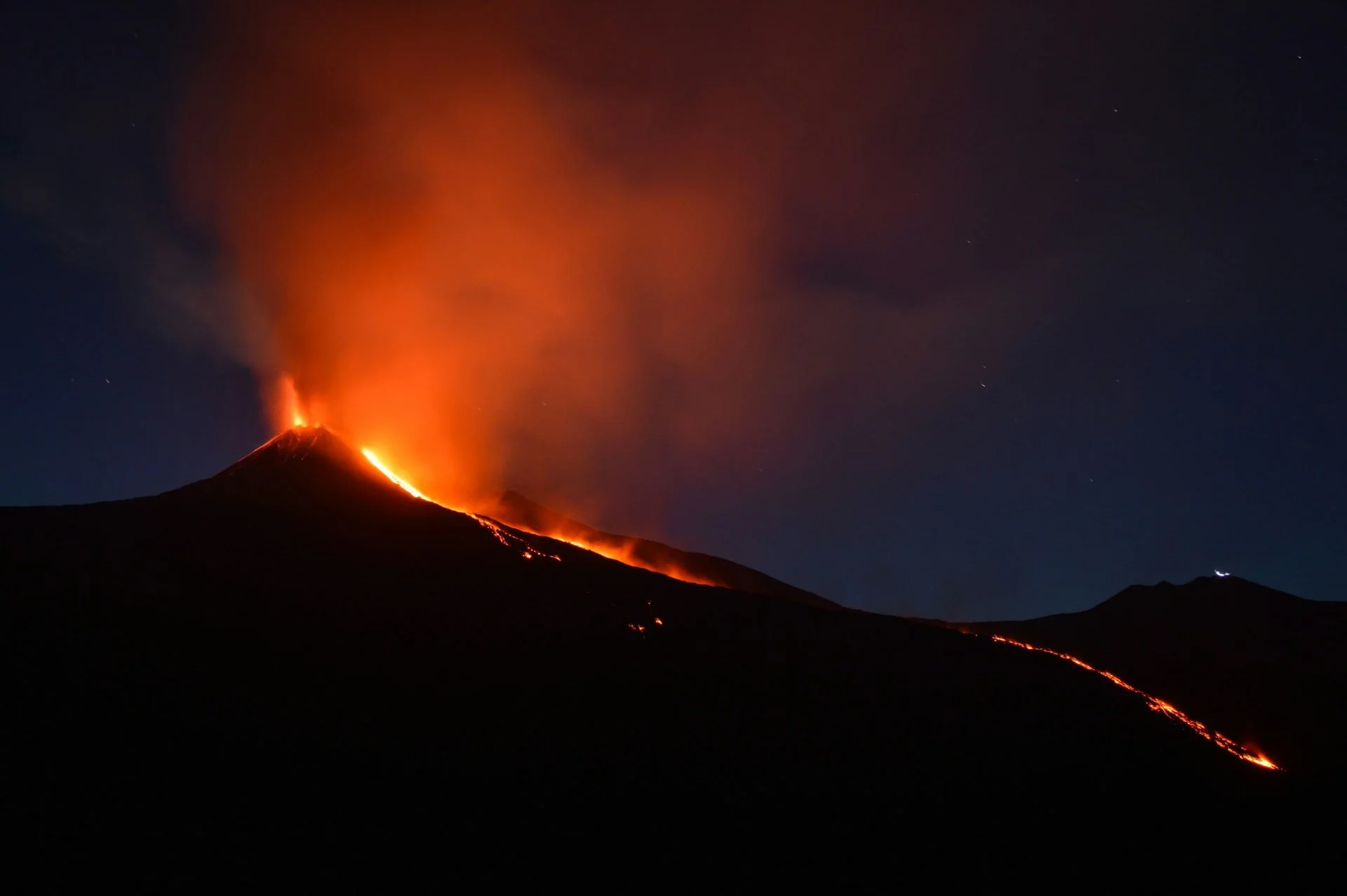
Etna is not a dormant postcard backdrop. It is one of the most active volcanoes on the planet, and it has been in near constant motion for centuries, alternating between quiet periods of gentle degassing and active phases of Strombolian explosions and lava flows. Its alert status is monitored continuously by Italy's National Institute of Geophysics and Volcanology, and it shifts, sometimes within days, between calm and active.
IWB Tip: Because Etna's activity changes quickly, we always check current conditions with our on-the-ground Sicily team before a client's visit, and we build flexibility into every Etna day. If ash or elevated activity closes the summit or affects flights into Catania, we pivot the itinerary rather than force the original plan. This is the peel the onion approach applied to a volcano: we plan with the mountain, not against it.
How Etna Was Formed
Etna's story began roughly half a million years ago as a submarine volcano, born from fissures on what was then the floor of an ancient gulf. Over hundreds of thousands of years, eruption after eruption built the mountain upward and outward until it broke the surface and became the layered giant travelers see today, a stratovolcano built from countless generations of lava and ash. Its base spans an extraordinary 35 kilometers, and the summit's exact height shifts over time as eruptions add material and craters collapse.
A Brief Eruptive History
Etna's documented eruptive history stretches back roughly 2,700 years, with its first recorded eruption around 1500 BCE, making it one of the longest continuously observed volcanoes anywhere in the world. Its most catastrophic eruption came in 1669, when lava flows reached and damaged part of Catania itself. The 20th century brought its own chapter, including the 1928 eruption that destroyed the town of Mascali. Etna has erupted well over one hundred times since records began, and it remains, alongside Kilauea in Hawaii, one of the two most consistently active volcanoes on earth.
What Eruptions Mean for the Land Around It
An active volcano is not only a spectacle, it is an ecosystem. Etna is Europe's largest natural source of sulfur dioxide, and its ash can disrupt air quality and agriculture in the short term, particularly for citrus groves on the lower slopes. But the same volcanic ash that damages crops in the moment is also what makes this region so fertile in the long run. The mineral-rich soil built by centuries of eruptions is exactly why the Etna DOC wine region produces some of Sicily's most distinctive bottles, and why the pistachios, mushrooms, and produce grown on the mountain's flanks taste the way they do. Etna gives and it takes, and the rhythm of that exchange has shaped Sicilian life on its slopes for millennia.
Touring Mount Etna
There is no single way to see Etna, and the right approach depends entirely on how close to the summit you want to get and how much time you have.
Guided Summit Experiences
For travelers who want to stand near the active craters, this is the way to do it. A typical summit day combines a cable car ride partway up the mountain, a 4x4 transfer across the higher slopes, and a guided hike to the accessible craters near the top, generally in the 2,900 to 3,300 meter range depending on current volcanic activity. Access above roughly 2,800 meters always requires a certified volcanological guide. This is not a formality. It is the difference between a spectacular, safe afternoon and a genuinely dangerous one.
Jeep and Lower Crater Tours
For a shorter or less strenuous option, 4x4 jeep tours explore the lower flank craters, lava tunnels formed by old flows, and the more accessible black landscapes of the mid mountain, often timed to end with the sun setting over the Ionian Sea. These tours suit travelers who want the drama of the volcanic landscape without a full-day summit push.
Independent, Lower-Altitude Visits
Travelers can explore Etna's lower, permitted trails on their own, without a guide, generally up to around 2,800 meters depending on current restrictions. This works well for a shorter stop, but it will not get you near the summit craters, and conditions can change the permitted limit with little notice.
The Two Main Access Points
Etna Sud, at Rifugio Sapienza near Nicolosi: the more developed and popular side, home to the main cable car, visitor center, and most jeep tour operators.
Etna Nord, at Piano Provenzana near Linguaglossa: quieter, framed by pine forest, and generally the choice we prefer for clients who want the volcano without the crowds of the southern approach.
IWB Tip: We favor Etna Nord for most of our clients. It carries the same drama, the same lava fields, the same steaming summit, with far fewer tour buses. Pair it with a wine tasting on the northern slopes, where the Nerello Mascalese grape thrives in volcanic soil, and you have a full day that shows the 1% of Etna most day-trippers never reach.
When to Visit
Etna rewards a visit in almost any season, but each one offers something different.
Spring (April to June)
Wildflowers push up through the black lava fields, temperatures on the lower slopes are comfortable, and the crowds have not yet arrived in force. This is our favorite season for a summit hike, since trail conditions are typically stable and the light is extraordinary.
Summer (July to August)
Peak season, and for good reason. Long days mean more time on the mountain, and a sunset jeep tour in August, with the Ionian Sea glowing below and the summit silhouetted above, is unforgettable. Mornings are the move here. The lower slopes heat up quickly, and starting early keeps both the temperature and the crowds manageable.
Autumn (September to November)
Harvest season on Etna's wine slopes overlaps beautifully with clear, cooler days on the mountain itself, making this our top recommendation for combining a volcano tour with a proper Etna DOC wine afternoon.
Winter (December to March)
This is when Etna becomes something almost nobody associates with Sicily: a ski destination. More on that below.
IWB Tip: Because Etna is an active volcano, conditions, access, and even nearby airport operations can shift on short notice. We always confirm current status with our Sicily-based team before finalizing an Etna day, and we recommend travelers check official updates from Italy's Civil Protection Department and Catania Airport in the days before travel, just as they would check the forecast before a beach day. This is the patience in our three P's: we plan, we watch, and we pivot without losing the day.
Skiing Mount Etna
Here is the detail that surprises almost every client we tell it to: you can ski Mount Etna. Not novelty skiing. Real, lift-served skiing, on a mountain with a live, steaming summit above the runs and the Ionian Sea sparkling below them. It is one of the most singular winter experiences in Europe, and one that almost no one associates with an Italy trip.
The Ski Season
The season generally runs from December through March, sometimes stretching into April on the higher, longer-lasting snowpack of the northern slope. January and February tend to bring the most reliable coverage and the thinnest crowds. Because Etna sits in the Mediterranean, late-season skiing can be a strange and wonderful thing: snow on the upper runs, spring warmth by the time you are back down at the base.
Two Very Different Ski Areas
Etna Nord, Piano Provenzana
Skiing here runs from about 1,800 to 2,400 meters through several lifts and a chairlift. Because these slopes face northeast, the snow holds longer and more reliably than the southern side, and the season here often outlasts Etna Sud's. The blue runs wind through pine forest and suit beginners and families well, while the red runs reached by the higher lifts are genuinely technical, with views straight toward the summit craters.
Etna Sud, Rifugio Sapienza
The higher and more dramatic of the two areas, reaching roughly 2,700 meters via cable car. The terrain here is almost entirely treeless, with red runs descending the volcano's southern face and views across nearly the whole of eastern Sicily. Advanced skiers sometimes drop into the lava canals along the flanks of the Montagnola, always with a guide.
Ski Touring for the Adventurous
Beyond the lift-served runs, Etna is a serious ski touring destination. Experienced skiers with skins and crampons can reach the summit craters in roughly three hours from the top lift station, conditions permitting. The Valle del Bove, an eight-by-four kilometer glacial valley on the mountain's east side, holds couloirs steep enough to challenge advanced skiers, and the traverse from Etna Sud to Etna Nord is a full, roughly seven-hour day across the whole volcano. None of this is territory for a self-guided outing. Every touring route on Etna should be done with an IFMGA-certified mountain guide who knows how the terrain and the volcano itself are behaving that week.
What Travelers Should Know Before Skiing Etna
Bring true technical ski layers. The summit wind is sharper than the mild Sicilian climate at sea level suggests, and sun exposure at altitude is intense even in winter.
Snow chains matter for the drive up. Roads to both base areas climb quickly and conditions can turn fast.
Equipment rental and instruction are available at both Piano Provenzana and Rifugio Sapienza, so travelers do not need to bring their own gear for lift-served skiing.
Ski passes run remarkably affordable compared to the Alps, and crowds stay light even in peak season.
This is still an active volcano. Resort terrain sits in monitored, managed zones, but anyone heading off-piste or ski touring should always check current activity and go with a guide.
Pairing Skiing With the Rest of Sicily
This is what makes Etna skiing genuinely special rather than a gimmick: nowhere else can a traveler ski in the morning and be eating swordfish on the Ionian coast by evening. Taormina sits roughly thirty minutes from Etna Nord, with its Greek theater and honey-colored old town. Catania, with its baroque core and one of Italy's great fish markets, is under an hour from either base. A day on the slopes followed by a proper Sicilian dinner is not a compromise. It is the whole point.
IWB Tip: Etna is one of the most memorable ways to close out a Sicily itinerary in winter, but it should never be the only thing on a ski day's agenda. We build these days around a slower morning on the mountain and an unhurried evening back at the coast, because the volcano is at its best when it is not rushed.
Our Honest Take
Etna is not a photo stop. It is a full day, done right, and it deserves more respect and more planning than most itineraries give it. We have watched clients try to squeeze a jeep tour between Taormina and dinner reservations, and it never lands the way it should. Give the mountain its own day. Go with a real guide above 2,800 meters, whether you are hiking or skiing. Check conditions close to your travel dates, since this is a living, moving mountain and not a fixed monument. And if you can, go in a season most people skip: a quiet spring morning on the summit trails, or a February day carving turns above the sea, will show you an Etna that the summer jeep-tour crowds never get close to.
That is the 1% of Sicily most visitors never experience. That is what we are here to help you plan.
Ready to Plan Your Sicily Trip?
If Etna has found its way onto your Italy list, you are already thinking about Sicily the right way. At Italy With Bella, we build fully custom, private itineraries across the island, and every guide, driver, and experience we recommend has been personally vetted by our own team. We know when the mountain is worth a full day and when to send you elsewhere instead.
Start with a free consultation at italywithbella.com/schedule. No generic packages. No group tours. Just Sicily, done the right way.