The Complete Italy Travel Guide
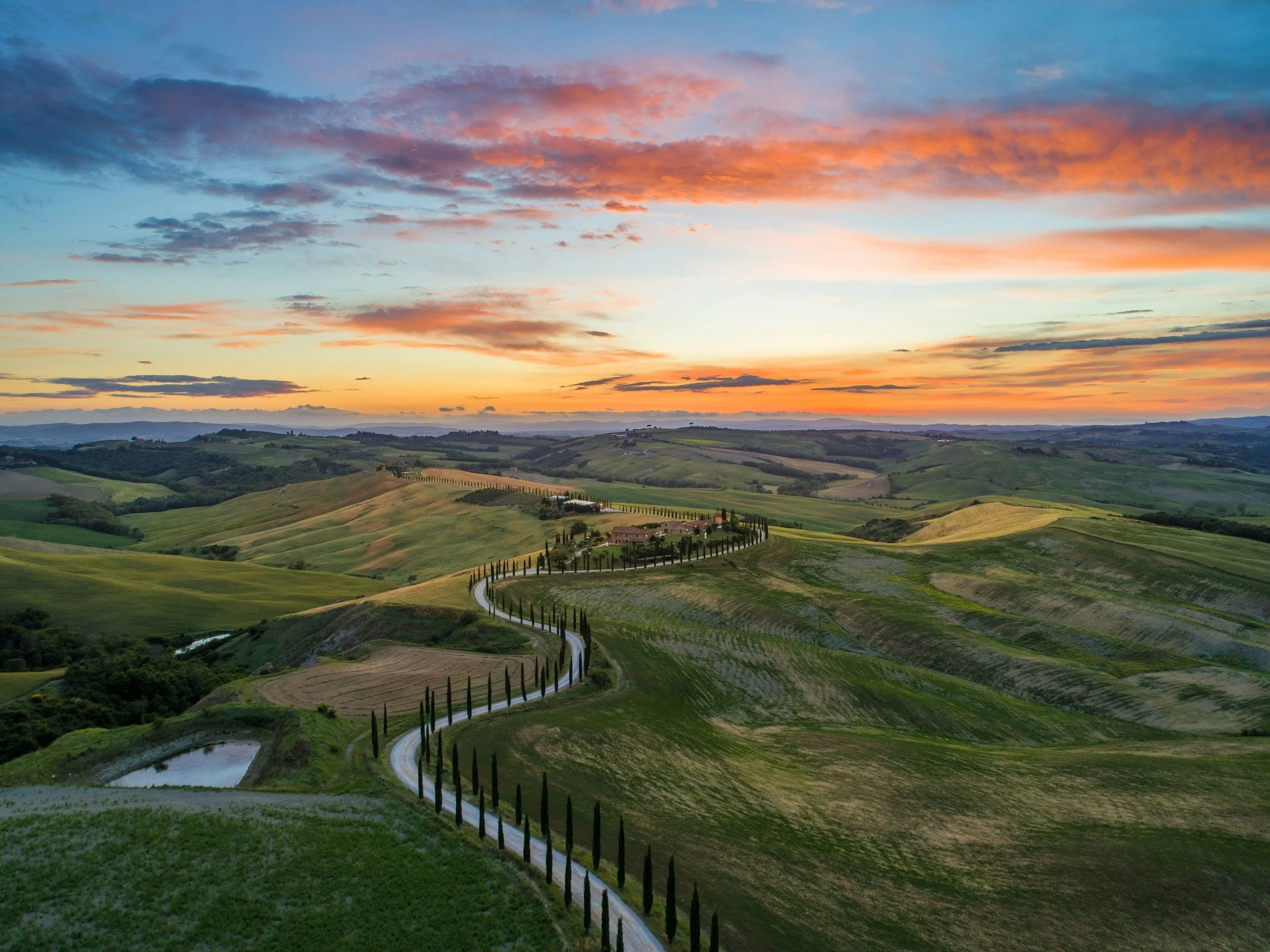
Italy has a way of showing up on people's minds long before it shows up on their calendar. Maybe it was a plate of cacio e pepe that stopped you mid-bite, a photo of the Amalfi coastline saved to a folder you keep revisiting, or a friend who came back from Tuscany and simply would not stop talking about it. Whatever brought you here, you are asking the right question. Where do you even start with a country this rich, this layered, and this full of options?
This guide is our answer. We have spent years building custom itineraries across all 20 of Italy's regions, and what follows is the same practical, honest information we would give a client sitting across from us at a consultation. Popular cities, the best regions, how long you actually need, the best reasons to go, and yes, a few honest reasons Italy might not be the right trip for you this year. Consider this your starting point.
If you already know Italy is calling but you are not sure where to begin, take our Where in Italy Should You Visit quiz for a personalized starting point based on your travel style.
Top Reasons to Travel to Italy
There is no shortage of reasons people fall for Italy, but a few come up again and again with our clients.
The food is a way of life, not a checklist. Every region cooks differently because every region grows, raises, and fishes differently. Eating your way through Italy means eating your way through its geography and its history.
The art and history are unmatched. From Roman ruins to Renaissance masterpieces to Byzantine mosaics, Italy holds more UNESCO World Heritage Sites than any other country on earth.
The landscapes are wildly diverse. Snowcapped Dolomite peaks, turquoise coastlines, rolling Tuscan hills, and volcanic islands all exist within the same country, often within a few hours of each other.
The culture rewards slowing down. Long lunches, evening passeggiate, and unhurried conversation are not inefficiencies. They are the point.
The regional diversity means no two trips look alike. Twenty regions each with their own dialect, cuisine, architecture, and history means a trip to Piemonte feels nothing like a trip to Puglia.
It is genuinely romantic. Not in a staged, postcard sense, but in the way the light falls on old stone in the late afternoon and makes you want to stay a little longer.
IWB Tip: Clients often come to us wanting to see "everything." The Italy we send people home talking about is never the version with the most stops. It is the version with the most time to actually be there.
A Few Honest Reasons Italy Might Not Be the Right Trip Right Now
We would rather tell you this upfront than have you find out the hard way. Italy is not the right trip for everyone, or at least not the right trip this particular year. A few honest considerations:
You want a resort-style, do-nothing beach vacation. Italy has beautiful coastlines, but it is not built around all-inclusive resorts. If your ideal trip is a swim-up bar and zero planning, other destinations may suit you better.
You have very limited time and want to see the whole country. Rome, Florence, Venice, the Amalfi Coast, and Sicily in seven days is a common request and an uncomfortable trip. You will spend more time in transit than in any one place.
You are working with a tight budget and expecting bargain prices. Italy can be done at many price points, but the experiences that make a trip unforgettable, a private guide, a family-run agriturismo, a dinner at a table most tourists never find, come at a fair cost. Budget travel is possible. It is just a different kind of trip.
IWB Tip: If any of this sounds like your situation, it does not mean cross Italy off the list. It means the plan needs to look different than the standard tourist route, which is exactly the kind of planning we do.
How Long Do You Need in Italy?
This is one of the first questions we ask every client, and the honest answer depends on how many places you want to see versus how deeply you want to see them. As a general guide:
7 to 8 days: Enough for one region or two connected cities done well. Think Rome and the Amalfi Coast, or Florence and the Tuscan countryside. Not enough to also add Venice or Sicily without regret.
10 to 12 days: Our most requested trip length. Enough time for three bases across a logical route, such as Rome, Florence, and Venice, or Sicily on its own with room to breathe.
14 days or more: Room to slow down further, add a lake district or a lesser-known region, and build in true rest days between bases.
Our "Divide by Four" Rule
Here is a planning principle we use with every itinerary we build: take your total number of days and divide by four. That is roughly how many bases you should plan. A 12-day trip means three bases, not five. A 16-day trip allows four. This keeps you from the single biggest mistake we see travelers make, which is packing, unpacking, and repacking every two nights while never actually settling into a place.
As a hard rule, we never recommend more than three bases in a 10 to 14 day trip. Fewer bases means more time in each place, more room for the unplanned afternoon that turns into your favorite memory, and far less time lost to trains, transfers, and hotel check-ins.
Italy's Regions, By Macro Region
Italy is made up of 20 official regions, but they group naturally into five macro areas, each with a distinct personality. Understanding these groupings is one of the fastest ways to figure out what kind of Italy trip you actually want.
Northwest Italy (Piemonte, Liguria, Lombardy, Valle d'Aosta)
Elegant, refined, and touched by French and Swiss influence, this is sometimes called "Italy light" for its polish and pace. Piemonte is wine and truffle country and home to Turin, Italy's first capital. Liguria holds the dramatic coastline of the Cinque Terre and the Italian Riviera. Lombardy is home to Milan's fashion and design world and the lake district, including Lake Como.
Northeast Italy (Veneto, Emilia-Romagna, Friuli Venezia Giulia, Trentino-Alto Adige)
The most culturally diverse corner of the country, shaped by Austrian, German, and Slovenian influence alongside its Italian roots. This is where you find Venice's canals, the Dolomites' jagged peaks, and Bologna's legendary food scene. Emilia-Romagna alone is worth a trip for the kitchen, home to Parmigiano Reggiano, prosciutto di Parma, and traditional balsamic vinegar.
Central Italy (Tuscany, Umbria, Lazio, Marche)
The Italy of postcards. Rolling vineyards, hill towns, Renaissance art, and Rome itself. Tuscany needs no introduction, but neighboring Umbria is quietly one of our favorite recommendations. Travelers who love Tuscany but want fewer crowds often describe Umbria as Tuscany 20 years ago, with the same medieval towns and rich food culture and a fraction of the tourist traffic.
Southern Italy (Campania, Puglia, Calabria, Basilicata, Abruzzo)
Sun-drenched, coastal, and deeply flavorful. Campania holds the Amalfi Coast and the ruins of Pompeii. Puglia is olive groves, whitewashed towns, and the famous trulli of Alberobello. Basilicata's Matera, with its ancient cave dwellings, is one of the most extraordinary and least crowded places in the entire country.
The Islands (Sicily and Sardinia)
Sicily is a world of its own, shaped by Greek, Arab, Norman, and Spanish rule, and it needs at least 10 days to do justice given its size and depth. It represents roughly 35 to 40 percent of the requests we receive, and for good reason. Sardinia is a different kind of island trip, more focused on beaches and coastline and easily covered in about a week.
IWB Tip: Trying to cover more than one macro region in a single trip almost always means less time in each and more time in transit. We typically recommend one macro region per trip unless you have three weeks or more.
Popular Cities and Towns to Visit
Here is a closer look at the destinations that come up most often when clients start planning.
Rome
The Eternal City and, for most travelers, the natural starting point for a first trip to Italy. Ancient ruins, the Vatican, and some of the best food in the country all exist within a walkable historic center. Rome rewards a guide who knows how to navigate both the crowds and the layers of history. Read our full Rome travel guide for a deeper look at where to stay and what to prioritize.
Florence
The birthplace of the Renaissance, compact enough to explore largely on foot, and the natural gateway to the Tuscan countryside beyond it. Home to the Uffizi, the Duomo, and some of the finest people-watching in Italy from a café table in the Oltrarno. See our Florence guide for the full breakdown.
Venice
There is nowhere else on earth quite like it. A city built on water, best explored slowly, ideally with a private guide who can lead you away from the main crowds around San Marco and into the quieter residential sestieri. Our Venice guide covers how to see it right.
Milan
Italy's modern, fashionable north, anchored by one of the most extraordinary Gothic cathedrals in the world. Milan works well as a short stop before heading to the lakes or the Dolomites, or as a starting point into Piemonte's wine country. Read our full guide to the Milan Duomo for tickets and timing.
The Amalfi Coast
Dramatic cliffside towns, lemon groves, and the Tyrrhenian Sea in every shade of blue. Positano gets the postcards, but it is also increasingly overcrowded, and we now steer many repeat clients toward quieter coastal towns nearby for a more authentic version of the same magic. Our Amalfi Coast guide has our full honest take.
Lake Como and the Lake District
Alpine peaks meeting glassy blue water, with a level of natural beauty that photographs undersell. Como itself has grown busy in recent years, and we now often recommend Lake Maggiore and Stresa as a quieter, more local alternative with equally stunning scenery. See our Lake Como guide for the details.
Cortona and the Tuscan Hill Towns
A medieval hill town in southern Tuscany that serves as one of our most-used home bases in the region, surrounded by vineyards, olive groves, and easy access to Umbria. Small enough to feel personal, central enough to explore widely from.
Palermo and Catania, Sicily
Two very different anchor cities for a Sicily trip. Palermo is chaotic, layered, and full of Arab-Norman history and incredible street food. Catania sits in the shadow of Mount Etna and serves as the gateway to the island's eastern coast, including Taormina. Most well-planned Sicily itineraries use both as bookends.
IWB Tip: A pattern we see constantly: travelers assume they need to visit the most famous version of a place, when a quieter alternative nearby often delivers the same beauty with a fraction of the crowds. This is a huge part of what we help clients navigate.
Things to Do in Italy
Beyond sightseeing, the experiences that tend to stay with travelers longest are the ones rooted in daily Italian life.
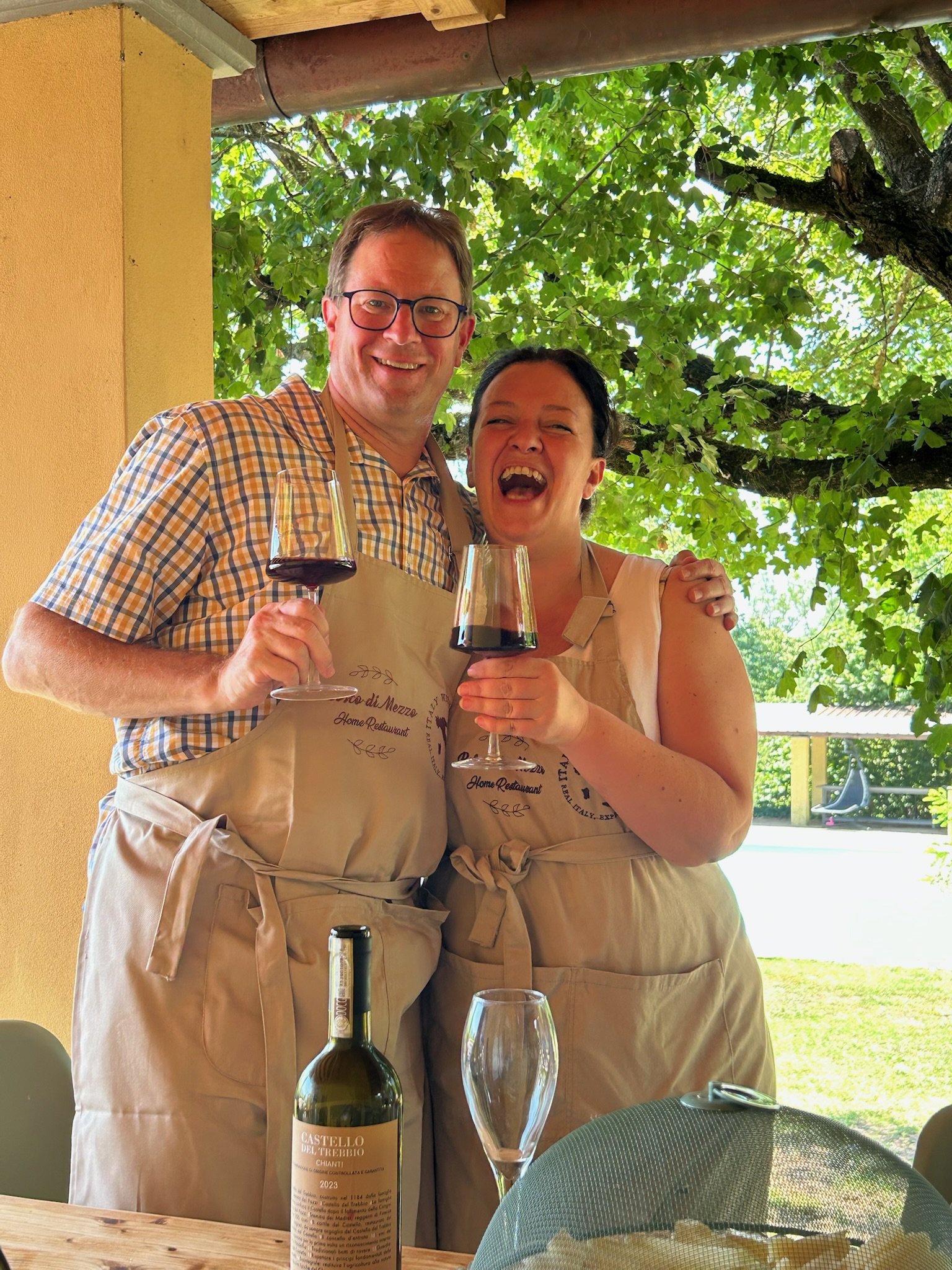
Cooking classes and home dining. Learning to make pasta by hand or sharing a home-cooked meal with a local host consistently ranks as a trip highlight, often above the major monuments.
Wine tastings and vineyard tours. From Piemonte's Barolo country to Tuscany's Chianti hills to Umbria's Montefalco, wine touring is one of the best ways to experience the countryside.
Truffle hunting. A genuinely memorable half-day activity in regions like Piemonte and Umbria, ideally timed to true peak season in late autumn and early winter.
Private guided history tours. A knowledgeable local guide transforms ruins and museums from a wall of information into a story you actually remember.
Coastal boating and hiking. From the Cinque Terre trails to a private boat tour on Lake Como, being on or above the water is one of the best ways to see Italy's coastlines and lakes.
Slow mornings in a piazza. Genuinely one of the most-requested "activities" once clients understand it is allowed to be part of the plan.
How We Recommend Seeing Italy: The Case for Slow Travel
Most first-time visitors plan an Italy trip the same way: pick the famous cities, cram in as many as the calendar allows, and move quickly between them. We understand the instinct. Italy has so much to offer that it feels wasteful to skip anything. But after years of building itineraries and hearing from clients after they return home, we have found the opposite to be true.
The travelers who come home genuinely changed by their trip are almost never the ones who saw the most. They are the ones who saw less, more deeply. Fewer bases. More time in each place. Room for the unplanned afternoon, the conversation with a shop owner, the trattoria you found by accident that becomes the meal you talk about for years.
This is why our philosophy centers on a few core ideas:
Fewer bases, more depth. Our "divide by four" rule keeps you from overpacking your itinerary and ending up exhausted rather than inspired.
Never plan the arrival day. Give yourself room to land, breathe, and ease in before the itinerary begins in earnest.
Build in buffer time. Some of the best travel memories happen in the unscheduled hours, not the scheduled ones.
Eat what the region is known for, where it comes from. Slow food is not a trend in Italy. It is the culture, and it is worth building your days around.
See the other 99 percent. Most visitors experience a small, well-trodden slice of Italy. We build trips around the rest of it, the towns, guides, and experiences that most tourists never find.
As the saying goes, plans are worthless, but planning is everything. A well-built itinerary is not a rigid schedule. It is a framework thoughtful enough that you can set it down for an afternoon and know the rest of the trip will still come together beautifully.
Not Sure Where to Start? Take the Quiz
If everything above has you convinced but you are still not sure which region or city is right for your first trip, our Where in Italy Should You Visit quiz walks you through a few quick questions about your travel style and gives you a personalized starting point. It is the fastest way to go from "I know I want to go to Italy" to "here is where I am actually going."
Ready to Plan Your Italy Trip?
Italy is not a country you rush. It is a country you enter slowly and let unfold, one region, one meal, one unplanned afternoon at a time. Whether you already know you want Sicily's coastline, Tuscany's hills, or Rome's ancient streets, or you have no idea yet where to begin, we build fully custom itineraries designed around how you actually want to travel, not a generic checklist.
Every hotel, guide, and experience we recommend has been personally vetted by our team. No group tours. No cookie-cutter packages. Just Italy, done the right way.