The Honest Positano Guide: What to Know Before You Go
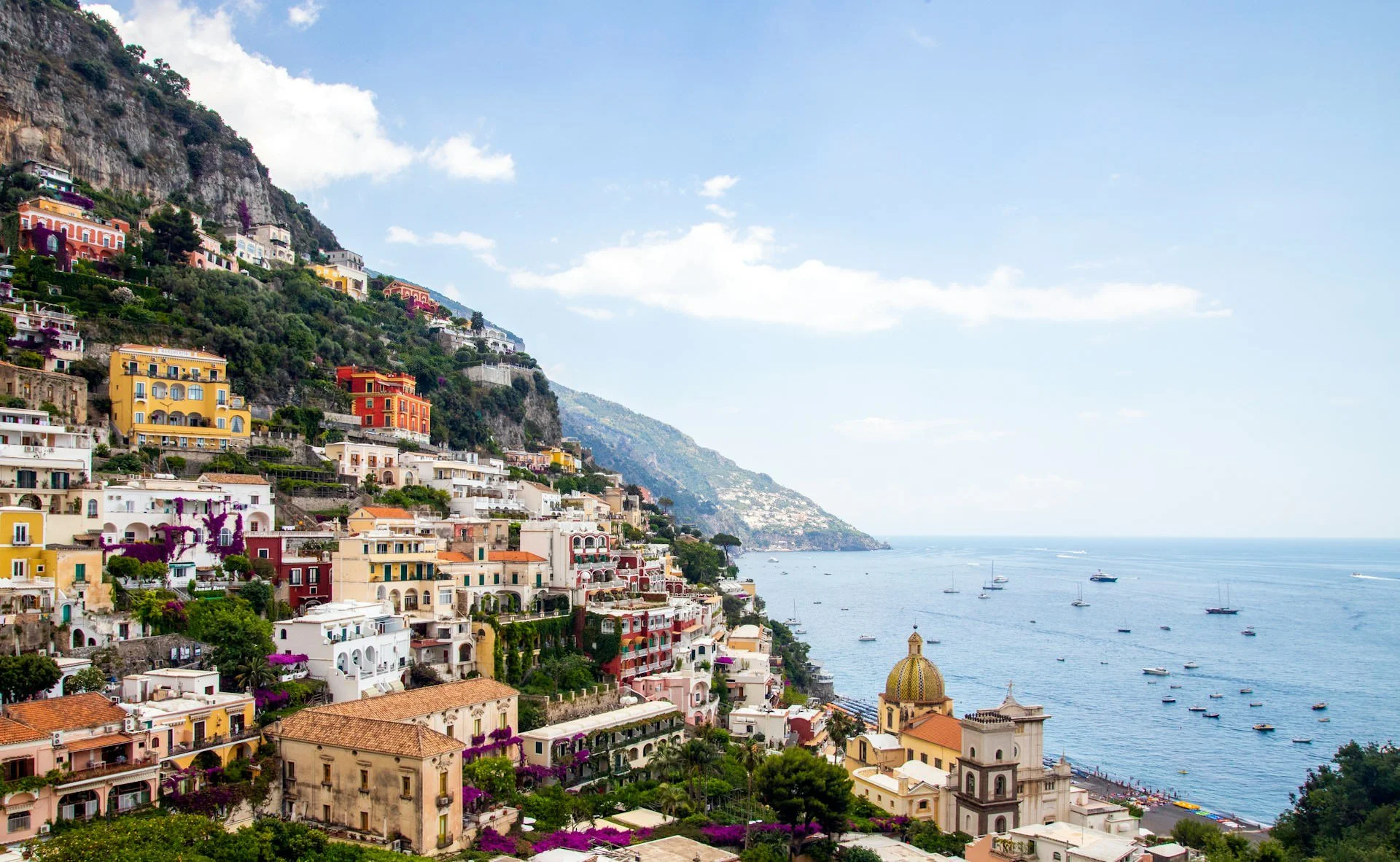
Positano is the postcard. Pastel houses stacked up a cliffside, lemon trees leaning over stone terraces, the Tyrrhenian Sea so blue it looks corrected in an app. It is, without question, one of the most beautiful places in Italy. It is also, without question, one of the busiest. Both of those things are true at once, and any honest guide to Positano has to hold them together instead of pretending one cancels out the other.
This is the guide we give our own clients. It covers what makes Positano worth the hype, what to actually do while you are there, how to get in and out of a town with no train station and barely any parking, what it really costs, and our honest read on when (and whether) it belongs on your itinerary.
Why People Fall in Love With Positano
There is a reason Positano became shorthand for the entire Amalfi Coast. The town does not sit near the cliffs, it is built into them, a cascade of lemon-colored, coral-colored, and whitewashed buildings tumbling nearly 300 vertical feet down to a pebble beach and a harbor full of wooden fishing boats. There is no bad angle. Every terrace, every church dome, every switchback staircase frames the sea in a slightly different way.
It is also a town that rewards slowness in a way that surprises people. Yes, it is busy. But early mornings before the day-trippers arrive, or evenings after the tour buses pull out, Positano quiets into something closer to the fishing village it was a century ago, when Steinbeck famously wrote that it was a dream place that isn't quite real when you are there and becomes beautifully real after you have gone. Add genuinely excellent Campanian food, some of the best boutique shopping on the coast (linen, leather sandals, hand-painted ceramics), and a coastline made for slow boat rides, and the appeal is not manufactured. It is earned.
Top Attractions and Activities
Spiaggia Grande and Fornillo Beach
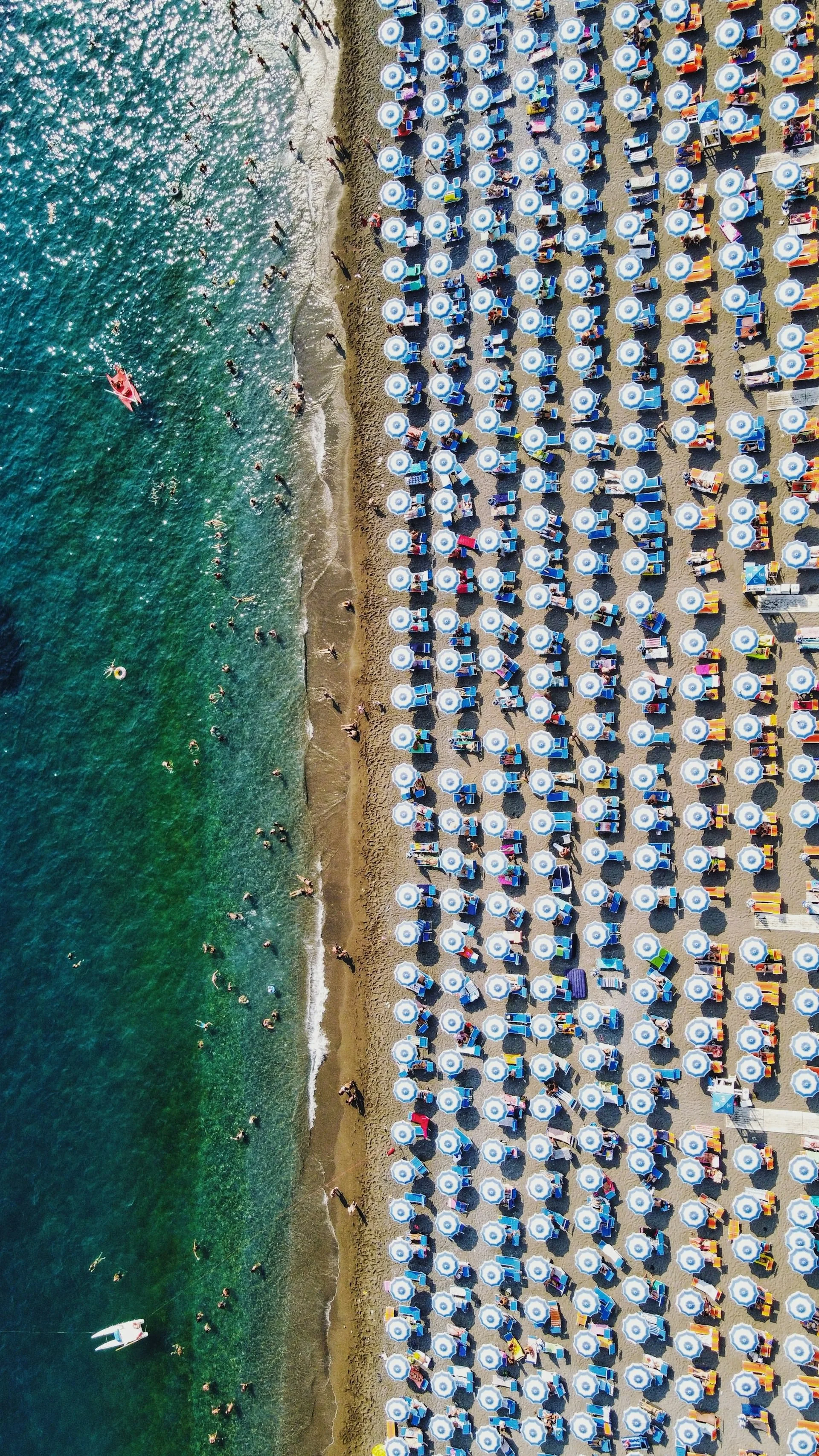
Spiaggia Grande is the main beach, the one in every photo, lined with beach clubs and a small free public section. It is where most people start their day. Fornillo, about a ten-minute walk along a scenic footpath, is quieter, more local, and a good escape valve when Spiaggia Grande fills in by mid-morning.
The Path of the Gods (Sentiero degli Dei)
This is the single best active thing to do from Positano, and one of the great day hikes in Italy. The classic route runs between Bomerano and the hilltop hamlet of Nocelle, about 4.5 miles with roughly 800 feet of elevation change, tracing the cliffside with uninterrupted views over the coast, Capri, and the Li Galli islets. Most hikers start in Bomerano and walk toward Nocelle, then either walk down the roughly 1,700 steps into Positano or take the local bus. Good shoes are non-negotiable, and this is a trail to do early, not at midday in August.
Boat Tours Along the Coast
Positano is genuinely better seen from the water than from the road. A private boat along the coast to Praiano, the Li Galli islets, or Capri gets you away from the crowds on land and shows you grottoes and coves that no road ever reaches. This is consistently one of the highest-rated experiences we book for clients here.
Church of Santa Maria Assunta
The majolica-tiled dome you see from every viewpoint in town belongs to this 13th-century church in the main piazza. Inside is a Byzantine icon of a black Madonna that, according to local legend, arrived here after a ship carrying it was becalmed offshore. Ten minutes inside is enough, but it is a worthwhile ten minutes.
Shopping: Linen, Leather, and Ceramics
Positano has its own fashion legacy, moda positano, the breezy linen and cotton resort wear that became a signature look in the 1960s. The boutiques along Via Positanesi d'America and the winding staircase streets are worth a slow browse, along with the leather sandal makers who will craft a pair to your foot while you wait, and the hand-painted ceramics that Campania is known for.
Day Trip to Nocelle or Montepertuso
These two hillside hamlets sit above Positano proper and see a fraction of the crowds. Both offer some of the best photographic views of Positano from above, and Montepertuso's natural rock arch is a nice, uncrowded stop if you want a break from the density of the main town.
IWB Tip: Skip the crowded viewpoint photo-ops in the piazza around midday. The same views from Nocelle or Montepertuso, an hour earlier or later in the day, are just as stunning and nearly empty.
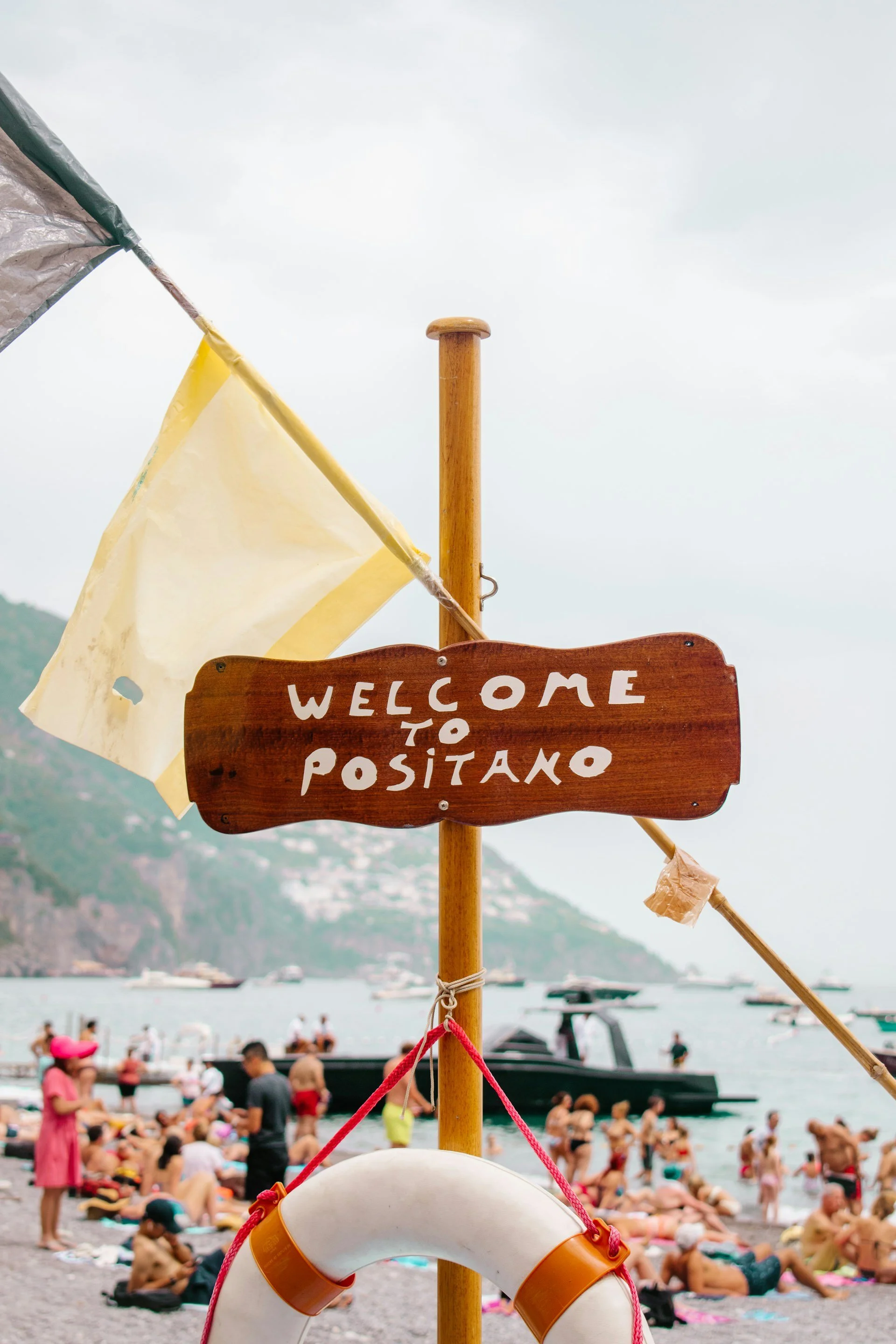
Travel and Logistics
There Is No Train Station
This surprises a lot of first-time visitors. Positano has no railway. The nearest stations are in Sorrento or Salerno, and from either one you connect by SITA bus or ferry along the coast road. Build that connection time into your plans, especially on arrival day.
Getting In: Ferry, Bus, or Private Transfer
Ferry service runs seasonally, roughly April through October, from Naples, Sorrento, Amalfi, and Salerno, and it is our preferred way in and out whenever the season and the weather allow it. Arriving by sea gives you the classic first view of the town rising out of the cliffs, and it skips the coast road traffic entirely. The SITA bus along the SS163 is the budget option and runs year-round, but seats fill quickly in summer and the road itself is narrow, winding, and slow during peak hours. For groups, luggage, or simply comfort, a private driver is worth the cost, particularly for the transfer in from Naples airport.
Driving In: Think Twice
We do not recommend a self-drive car for a Positano stay, and most of our clients agree once they see the roads. Positano enforces a ZTL (restricted traffic zone) in the town center; only residents and hotel guests with a permit can drive in during the day, and violations are camera-enforced with fines that can run well over 100 euros. Parking, where it exists, is scarce and expensive, often 5 euros an hour or more, and most hotels do not have their own lots. If a car is part of your broader Italy itinerary, the better move is to park in Sorrento or Praiano and finish the trip into Positano by bus or ferry.
Getting Around Once You Are There
Positano is a town of stairs. There is one main road, and almost everything else is a staircase or a footpath connecting one level of the hillside to the next. A small orange local bus loops through town and up to Nocelle and Montepertuso, which is useful if stairs are a concern, but walking is how most people actually experience Positano. Pack shoes that can handle several hundred steps a day, because you will take them.
IWB Tip: Do not book a hotel in Positano based on the map alone. "A five-minute walk to the beach" can mean five minutes downhill and twenty-five minutes back up in the heat. Ask about stair count, not just distance, before you book.
Is Positano Expensive? An Honest Answer
Yes. Positano is one of the more expensive towns on the Amalfi Coast, and it is worth going in with clear eyes rather than sticker shock on day one.
Beach clubs: A pair of sunbeds at a mid-range club typically runs 70 to 150 euros a day depending on season and row placement, with front-row spots at the well-known clubs starting well above that. Premium setups at the most in-demand clubs can run several hundred euros.
Spiaggia Grande itself has a free public section if you bring your own towel, though it fills early in high season.
Restaurants: A casual seafood lunch runs 25 to 40 euros per person; a proper dinner with wine at a well-regarded restaurant is comfortably 70 to 120 euros per person, more at the well-known cliffside spots.
Hotels: Positano does not really have a budget tier. Simple three-star properties in high season can still run 300 to 400 euros a night, and the well-known cliffside properties run considerably higher.
Everyday costs: Parking, water taxis, and even a coffee in the main piazza carry a premium simply for the location.
None of this makes Positano not worth it. It makes it a town where a little planning protects both your budget and your experience: booking beach club reservations in advance, eating one meal a day at a local, less-photographed spot away from the piazza, and choosing a home base that fits how much walking (and paying) you actually want to do.
Our Honest Take: Positano Is Busy
We are not going to tell you Positano is a hidden gem. It is not. It is one of the most photographed towns in the world, and from late morning through late afternoon in the summer months, the main pedestrian street, the beach, and the boat dock can feel closer to a theme park than a fishing village. Cruise ship day-trippers and tour groups from Naples and Sorrento pour in for a few hours in the middle of the day, and that is when the town is at its most crowded and least charming.
Here is what we actually recommend to clients. If Positano is on your list, stay overnight rather than visiting as a day trip. The town transforms after the day-trippers leave on the late afternoon buses and boats. Morning light on the cliffs before 9am and evening light after the crowds thin out are, honestly, the best of Positano, and a day-tripper never sees either one. If your schedule allows only a day visit, arrive as early as the first ferry or bus allows and plan to be back on the water or the road out before early afternoon.
We also frequently steer clients toward basing themselves in a quieter neighbor, Praiano is a favorite, and treating Positano as a half-day or full-day visit rather than a home base. You get the views, the beach, and the boat ride, without paying Positano prices for a hotel room you are barely in.
IWB Tip: If overwhelming crowds are your biggest concern, ask us about the shoulder season. Late April to early June and mid-September through October give you the same coastline, the same light, and a fraction of the July and August crowds and prices.
Best Time to Visit
May, June, September, and early October offer the best balance of warm weather, manageable crowds, and reasonable pricing. July and August are hot, packed, and the most expensive months to book, though also when the town is at its liveliest if you do not mind sharing it. Winter is genuinely quiet, many hotels, restaurants, and the ferry service itself close for the season, and Positano trades its summer energy for a slower, more residential feel that not every traveler is looking for.
Practical Tips Before You Go
Book beach club sunbeds, popular restaurants, and any boat tours in advance, especially June through September.
Pack real walking shoes. Sandals are fine for the beach, not for the hundreds of stairs you will climb daily.
If you are prone to motion sickness, take something before the coast road bus or transfer. The switchbacks are dramatic.
Carry cash. Many smaller shops, boat operators, and beach clubs still prefer it.
Confirm your hotel's stair count and proximity to the main road before booking. This affects your daily experience more than almost anything else.
Should Positano Be on Your Itinerary?
For most first-time Italy travelers, the answer is maybe, if you have a plan. Positano earns its reputation. It also demands a strategy: the right season, the right length of stay, the right home base, and realistic expectations about crowds and cost. That is exactly the kind of planning we do for every client, region by region, so that a place this beautiful does not become a place you remember mostly for the crowds.
At Italy With Bella, we build fully custom, private itineraries across all 20 Italian regions, including the Amalfi Coast. We have been to Positano ourselves, we know when to go, where to stay, and how to see the other 99 percent of the coast most visitors never find.