The Traveler's Guide to Italy's Top Museums
Every trip to Italy eventually leads to a museum. It might be the marble hush of a Roman gallery, the golden ceilings of a Venetian palace, or a single sculpture that stops you mid-step in Florence. But walking into these places without a plan is one of the most common ways travelers shortchange themselves. Italy's great museums reward preparation. They punish improvisation with hour-long lines, sold-out time slots, and a rushed, sweaty scramble through rooms that deserve far more of your attention.
We have walked these galleries more times than we can count, and we have learned that the difference between a forgettable museum visit and one our clients still talk about years later almost never comes down to the art itself. It comes down to timing, booking, and knowing what to actually look for once you are inside. This guide covers the museums we send our own clients to most often, where to find them, what to expect, and exactly what you need to know before you go.
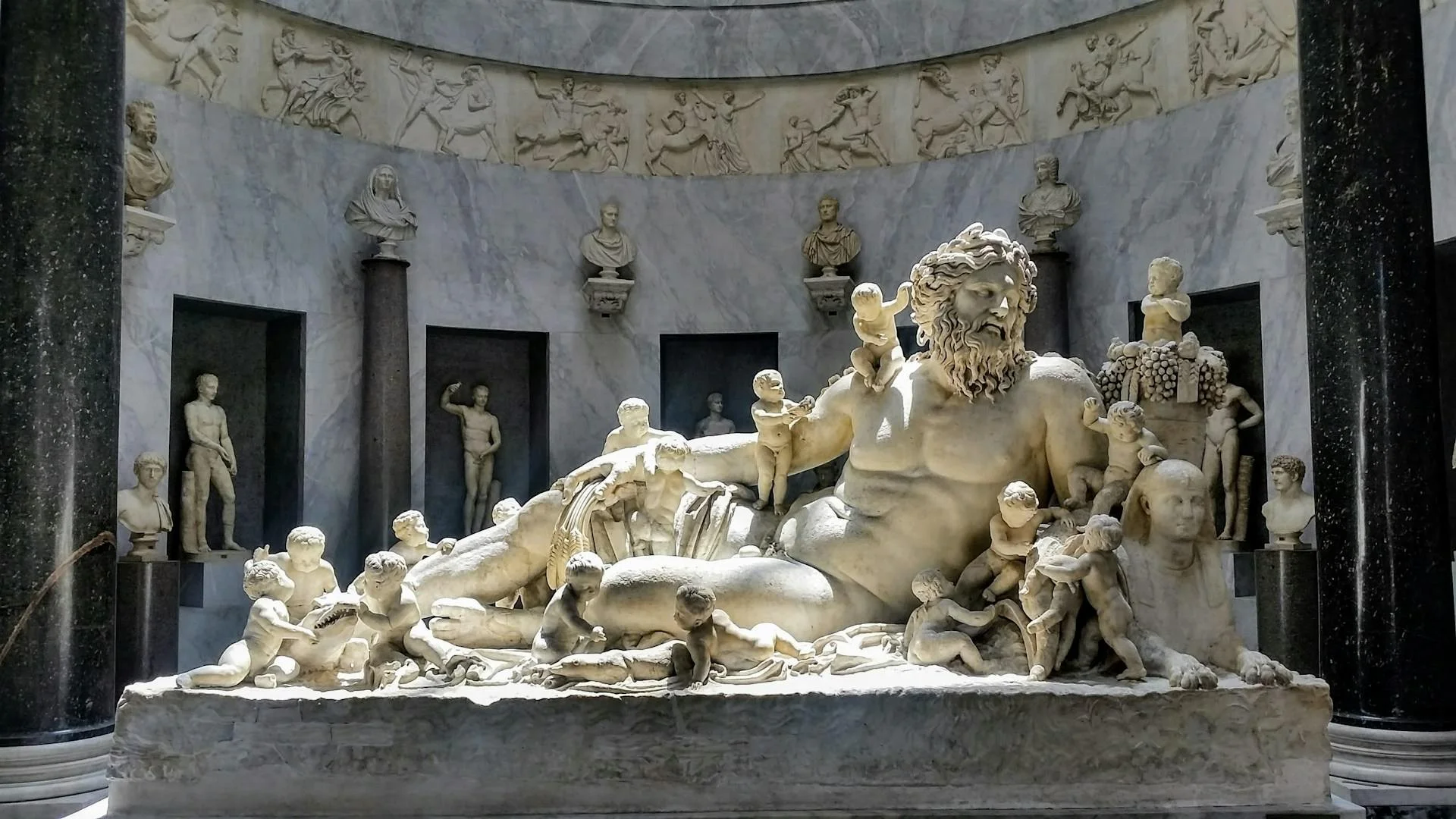
The Vatican Museums and the Sistine Chapel (Vatican City, Rome)
The Vatican Museums are less a single museum than a small country's worth of galleries strung together across nine miles of corridors, all leading toward one room. That room is the Sistine Chapel, where Michelangelo spent four years on his back painting the ceiling and, decades later, returned to paint The Last Judgment on the altar wall. Along the way you will pass the Gallery of Maps, the Raphael Rooms, and an Egyptian and Etruscan collection most visitors never slow down for.
The Vatican Museums sit inside Vatican City, on the northwest edge of Rome, and the entrance is a short walk from the Ottaviano Metro stop. This is the one museum on this list where we tell every client the same thing without exception: book your entry time online, weeks ahead if you can. Walk-up lines regularly stretch well over an hour, and during peak season, from spring through early fall, timed slots can sell out days in advance. The museum is closed on Sundays except for the last Sunday of the month, when entry is free and the crowds are heaviest of the entire week.
IWB Tip: Go first thing at opening or book one of the early access slots that let you into the Sistine Chapel before the general crowd arrives. The difference between an 8am ceiling and a 1pm ceiling is the difference between quiet reflection and being carried along by a river of people. Shoulders and knees must be covered to enter, no exceptions, so plan your outfit accordingly.
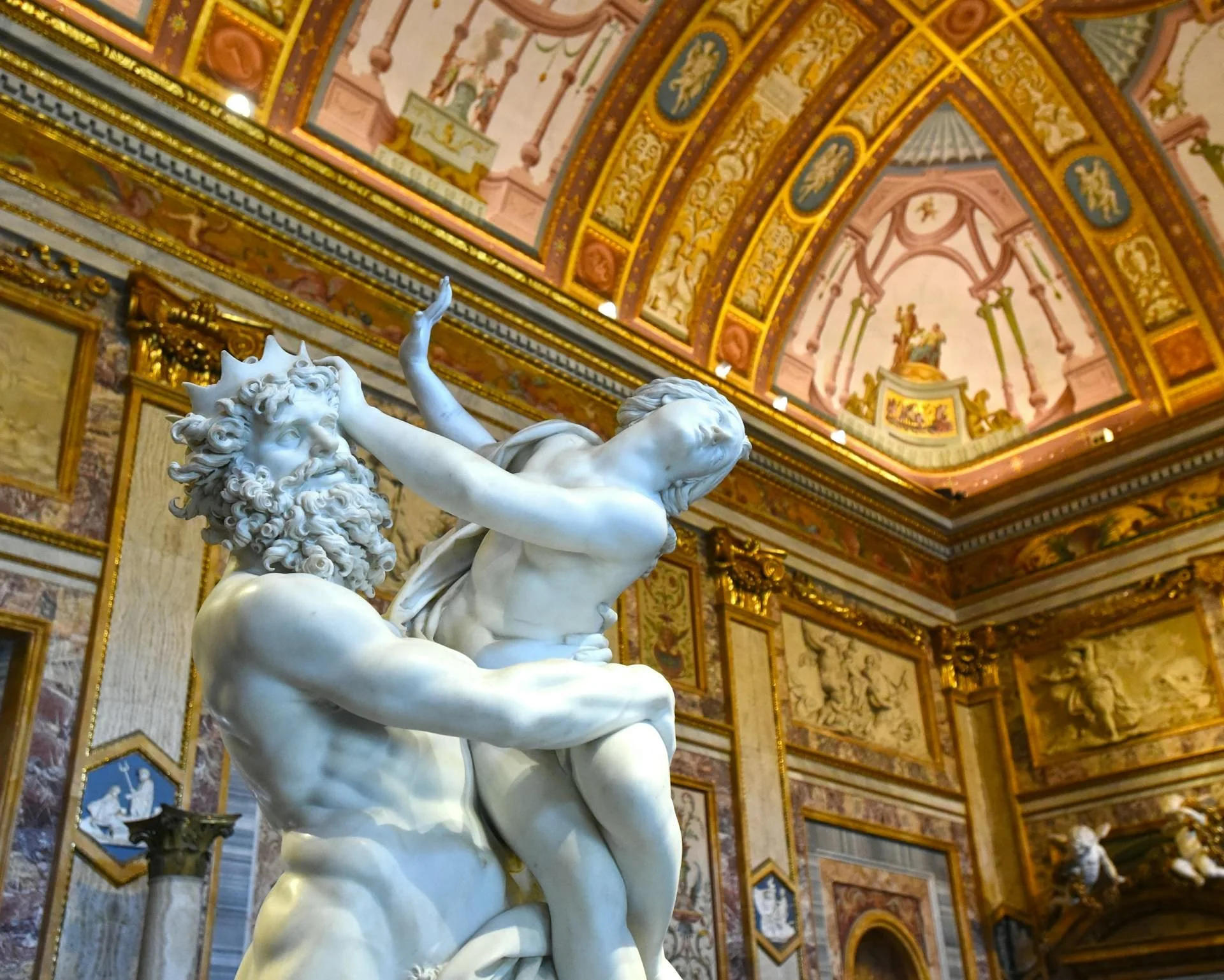
Galleria Borghese (Villa Borghese, Rome)
If the Vatican Museums are a marathon, the Borghese Gallery is a sprint, and it might be the single museum we recommend most often to clients who tell us they do not usually like museums. Inside a seventeenth century villa tucked into the Villa Borghese park, Cardinal Scipione Borghese's private collection packs an extraordinary amount of genius into twenty rooms. Six sculptures by Gian Lorenzo Bernini live here, including Apollo and Daphne and The Rape of Proserpina, both carved from single blocks of marble with a softness that makes the stone look like it could still move. Six paintings by Caravaggio hang in the same building, along with work by Raphael, Titian, and Canova's reclining Pauline Bonaparte.
The gallery sits inside the Villa Borghese park north of the historic center, an easy walk from the Spanish Steps through the Pincio terrace, or a short ride to the Flaminio metro stop. Entry works on a strict two hour timed slot with a hard cap on visitors, which means there is no walking in without a reservation, ever, under any circumstance, even on the free-entry first Sunday of the month. Slots open roughly a month in advance and the earliest morning times go first.
IWB Tip: Book the moment your travel dates are confirmed. This is the one museum on our list where showing up without a reservation simply will not work, no matter how empty the doorway looks. Arrive thirty minutes before your slot to collect your ticket and clear the entrance, since late arrivals lose their spot with no exceptions.
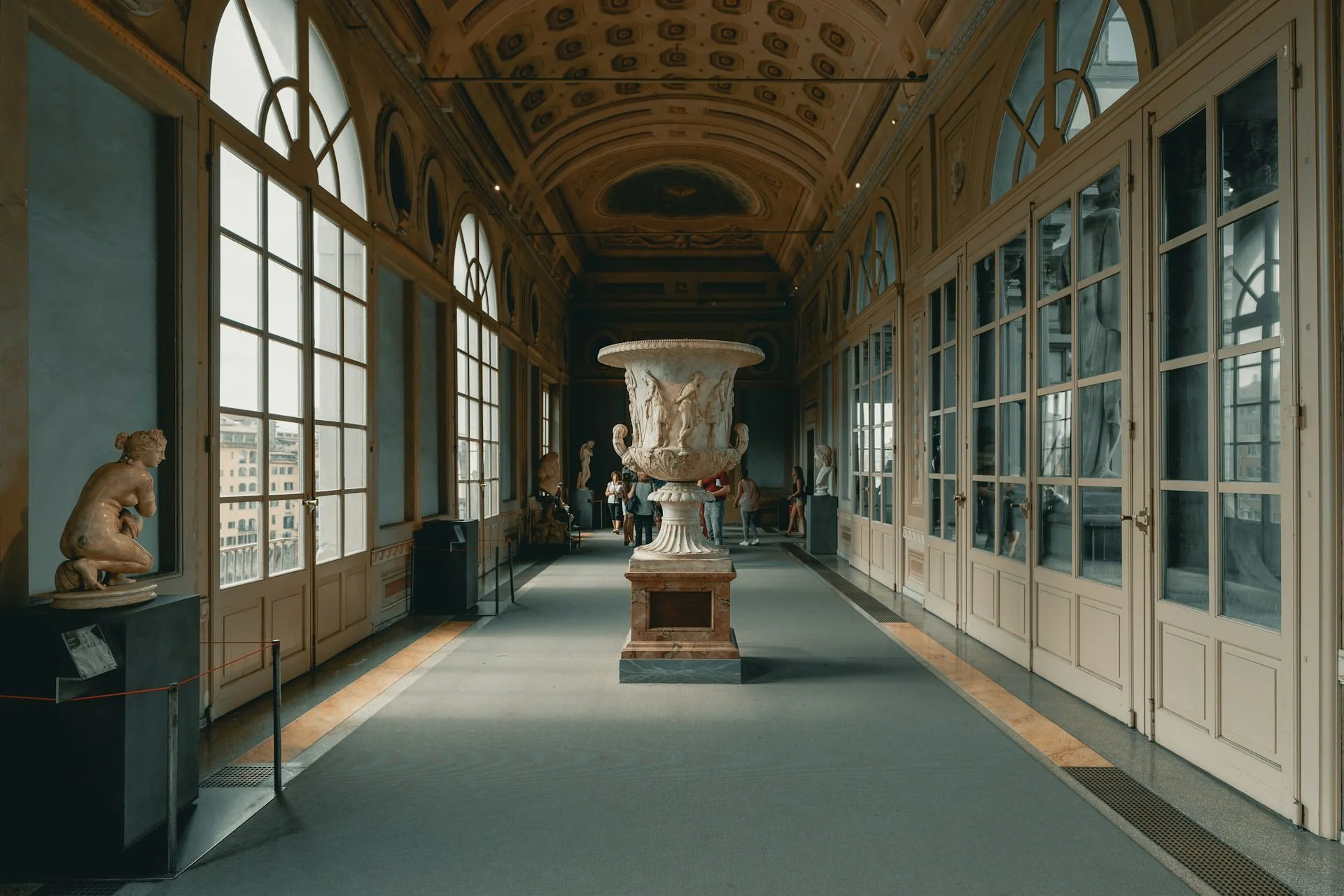
The Uffizi Gallery (Florence)
The Uffizi holds the deepest collection of Italian Renaissance painting anywhere in the world, and it is the reason so many travelers fall in love with Florence before they have even left the museum. Botticelli's Birth of Venus and Primavera anchor the collection, but the gallery's real gift is the sense of walking through the story of the Renaissance in order, room by room, from Giotto through to Caravaggio. Leonardo's Annunciation, Michelangelo's Doni Tondo, and Raphael's Madonna of the Goldfinch are all here, along with a long corridor of ancient Roman busts that most visitors walk straight past without a glance.
The Uffizi sits along the Arno in central Florence, just steps from Piazza della Signoria, and it is open every day except Monday. Booking ahead is close to mandatory in the warmer months. Walk-up tickets exist but frequently sell out by mid-morning between April and October, and the line without a reservation can run well over an hour. A lesser-known trick worth knowing is that a discounted late-afternoon ticket is often available if you arrive after four in the afternoon in peak season, once the day's crowds have thinned.
IWB Tip: Head straight for the Botticelli rooms before 9:30am, ahead of the first tour groups, then let yourself wander in reverse. Most visitors move room to room in chronological order and hit fatigue right around the paintings they came to see. Going backward means you see Botticelli fresh and finish, rather than start, at the museum's quieter, earlier galleries.
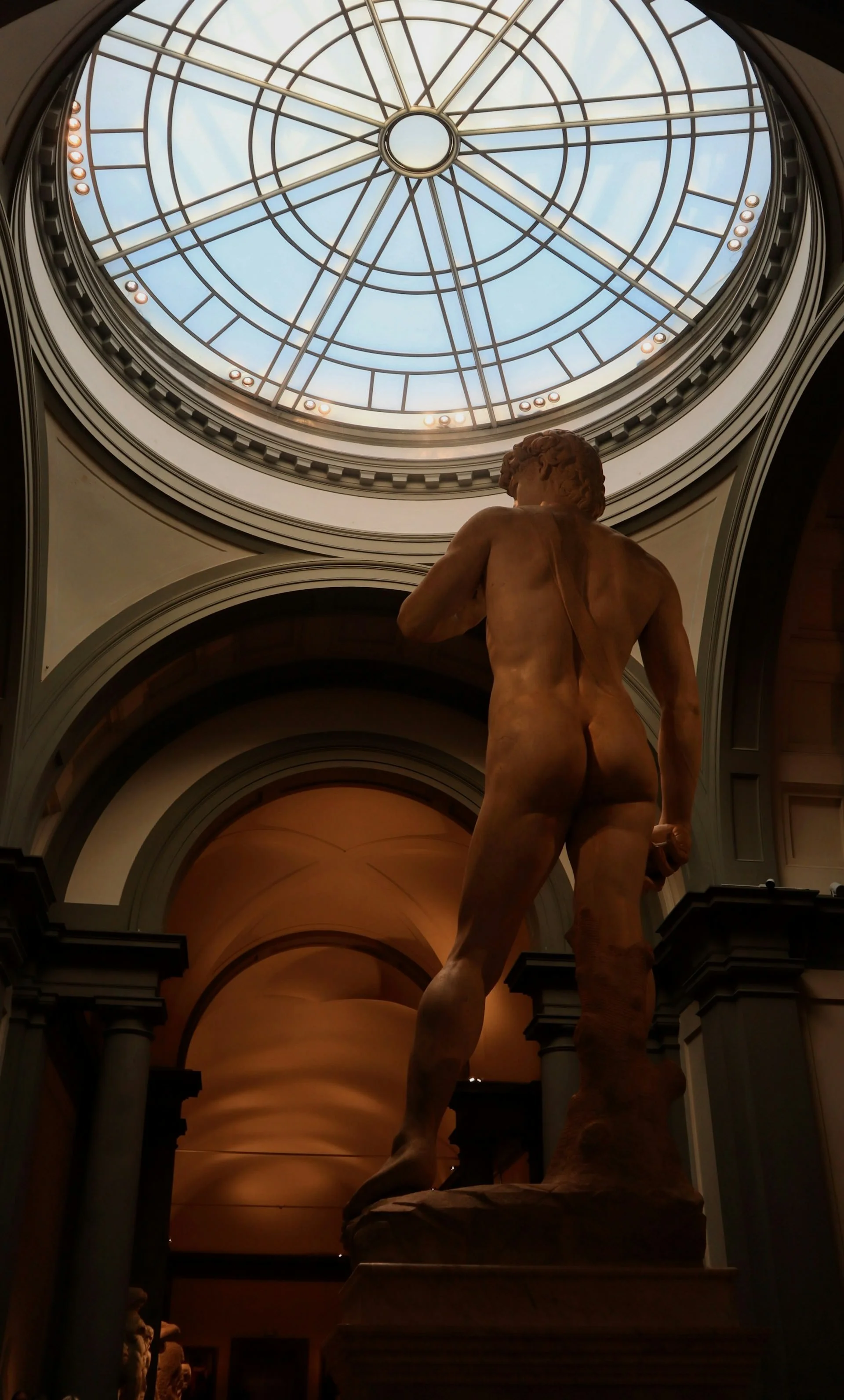
The Accademia Gallery (Florence)
The Accademia exists, in the minds of most visitors, for one reason: Michelangelo's David. And it delivers. Standing seventeen feet tall under a skylight built specifically to showcase him, David is more commanding in person than any photograph prepares you for, carved from a block of marble that two earlier sculptors had already given up on. What most visitors miss is the corridor leading up to him, lined with Michelangelo's unfinished Prisoners, figures straining to emerge from blocks of raw stone that the artist deliberately left incomplete. Seeing the Prisoners first changes how you look at David when you finally reach him.
The gallery is a short walk from the Duomo in central Florence and is considerably smaller than the Uffizi, which means a focused visit can take as little as forty-five minutes to an hour, or closer to ninety if you take in the full collection of Renaissance paintings and musical instruments. Timed entry tickets are required, and Wednesday and Thursday mornings right at opening tend to be the quietest window of the week.
IWB Tip: Book directly for the Accademia rather than relying on a combined ticket bundle. A combined ticket now covers the Accademia along with the nearby Bargello, home to Donatello's bronze David, which is one of Florence's most underrated stops and pairs beautifully with an Accademia morning if your schedule allows a second hour.
Doge's Palace (Venice)
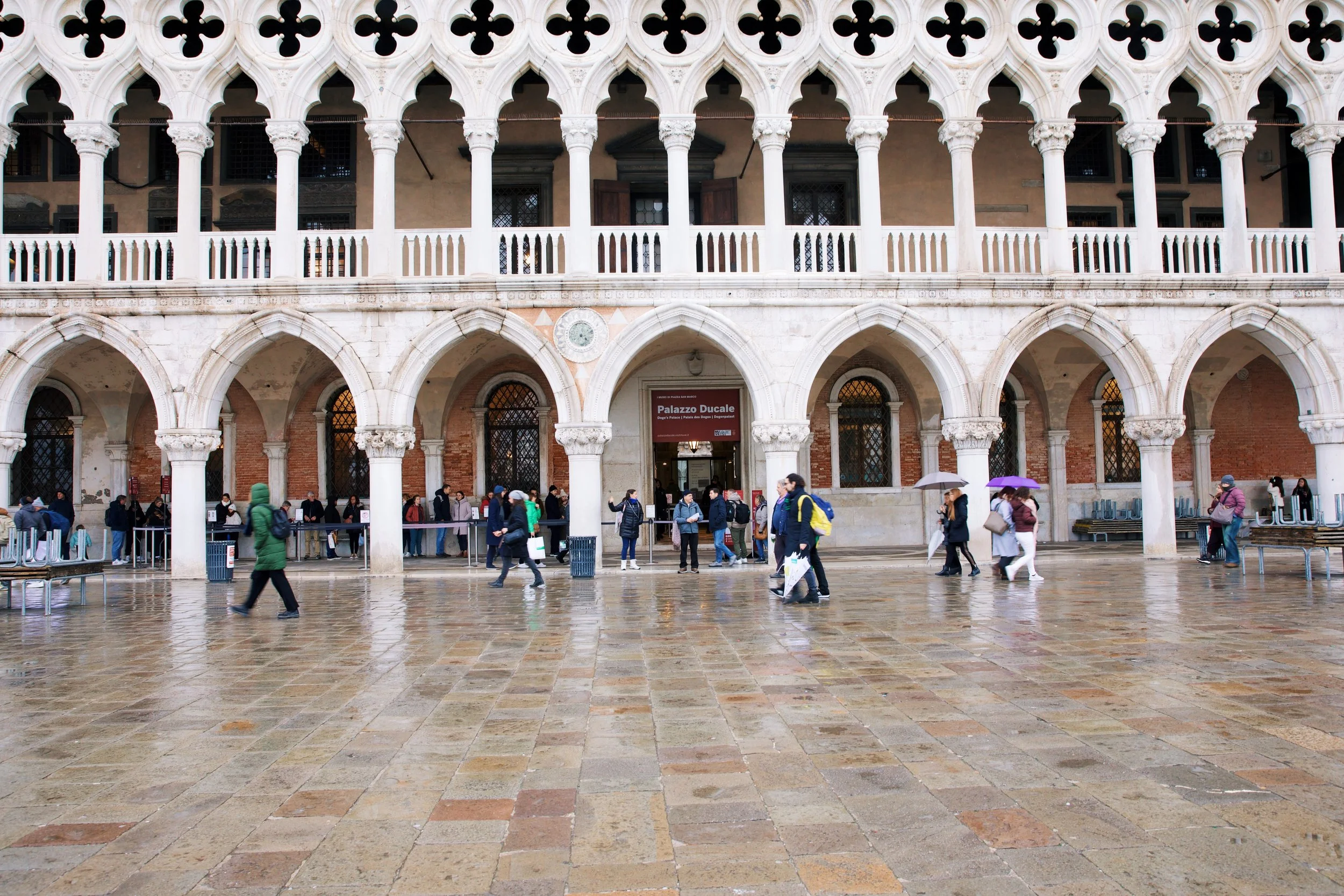
The Doge's Palace was the political heart of the Venetian Republic for centuries, and walking through its gilded council chambers makes clear just how much wealth and power once ran through this city. The Sala del Maggior Consiglio, the Great Council Chamber, holds one of the largest oil paintings in the world, Tintoretto's Paradise, covering an entire wall. From there, the route crosses the Bridge of Sighs into the palace's old prisons, a genuinely striking transition from opulence to stone cells within the space of a few footsteps.
The palace sits directly on St. Mark's Square, and a standard ticket typically includes entry to several connected sites, among them the Correr Museum and the Marciana Library's monumental rooms. Venice's museums do not require the same razor-sharp booking windows as Rome's Borghese, but reserving ahead online is still the right move, since walk-up lines at the ticket counters in St. Mark's Square can run past an hour in high season.
IWB Tip: Come in the very first hour after opening if you can. St. Mark's Square fills quickly, and the palace's grandest rooms feel entirely different with a handful of people in them instead of a crowd. If your schedule allows it, pair the visit with an early look at the Basilica next door before the day trippers arrive by train and cruise tender.
The National Archaeological Museum of Naples (MANN)
If Pompeii and Herculaneum are on your itinerary, and for most of our clients visiting Campania they are, this museum is not optional. The finest frescoes, mosaics, and sculptures excavated from those two buried cities were brought here rather than left on site, which means the National Archaeological Museum of Naples holds pieces you simply will not see anywhere near Vesuvius itself. The Alexander Mosaic, an extraordinarily detailed depiction of Alexander the Great in battle originally from the House of the Faun in Pompeii, is the centerpiece. The Farnese collection of colossal Roman sculpture, including the Farnese Bull, carved from a single block of marble and among the largest surviving sculptures from antiquity, fills an entire wing.
The museum sits at Piazza Museo in central Naples, a short walk from the Museo stop on Metro Line 1. It is closed on Tuesdays. Because it pairs so naturally with a day at the excavations, we usually recommend visiting the museum either the morning before or the afternoon after Pompeii or Herculaneum, while the context is still fresh.
IWB Tip: See this museum before you see Pompeii, not after. Understanding what daily Roman life actually looked like through the frescoes and household objects here gives the ruins themselves far more meaning once you are standing among them.
The Egyptian Museum of Turin
Turin is not on most first-time Italy itineraries, which is part of why this museum tends to surprise our clients the most. The Museo Egizio holds the largest collection of Egyptian antiquities outside of Cairo itself, more than 30,000 artifacts spanning over five thousand years, and it was here, using the museum's own papyri, that Jean-François Champollion made key breakthroughs in deciphering hieroglyphics in the 1820s. The tomb of the architect Kha and his wife Merit is one of the most complete, undisturbed Egyptian tombs ever discovered, filled with everyday objects that were never looted. The Temple of Ellesyia, an entire rock-cut temple relocated here to save it from being submerged by a dam, anchors one of the museum's most striking rooms.
The museum sits in central Turin on Via Accademia delle Scienze, an easy walk from Piazza Castello. Entry is timed, and while it does not sell out with the same speed as Rome's biggest sites, mid-morning and weekend slots are the first to go, particularly in spring and fall.
IWB Tip: Give this museum at least two hours, and go into it with an open mind if Turin was not originally part of your plan. Clients who add a night here for the Egyptian Museum alone consistently tell us it was one of the most memorable stops of their entire trip, precisely because they did not expect it.
How We Plan Museum Visits for Our Clients
The mistake we see most often is travelers trying to fit too many museums into a single day, arriving exhausted at the third one with nothing left to give it. We build breathing room into every itinerary instead. A morning at one great museum, a long lunch, and an afternoon that is deliberately unplanned tends to produce a far better memory than a checklist of four museums crammed into eight hours. The paintings and sculptures do not change. Your capacity to actually see them does.
We also book every timed entry ourselves, well ahead of arrival, so our clients are never standing in a ticket line while their vacation clock ticks away. That is a small thing on paper and an enormous thing in practice, especially in a country where the best museums increasingly run on strict, sold-out time slots rather than first-come, first-served lines.
Ready to Plan Your Italy Trip?
Whichever museums make your list, the way you experience them should feel like part of the story of your trip, not a logistical hurdle before lunch. At Italy With Bella, we build fully custom, private itineraries across all twenty Italian regions, timed entries and all, so every gallery, every palace, and every quiet corner you walk into is one we have walked into ourselves.
Start with a free consultation at italywithbella.com/schedule. No generic packages. No group tours. Just Italy, done the right way.