Milan and Lake Como: How to Pair Them Into One Unforgettable Trip
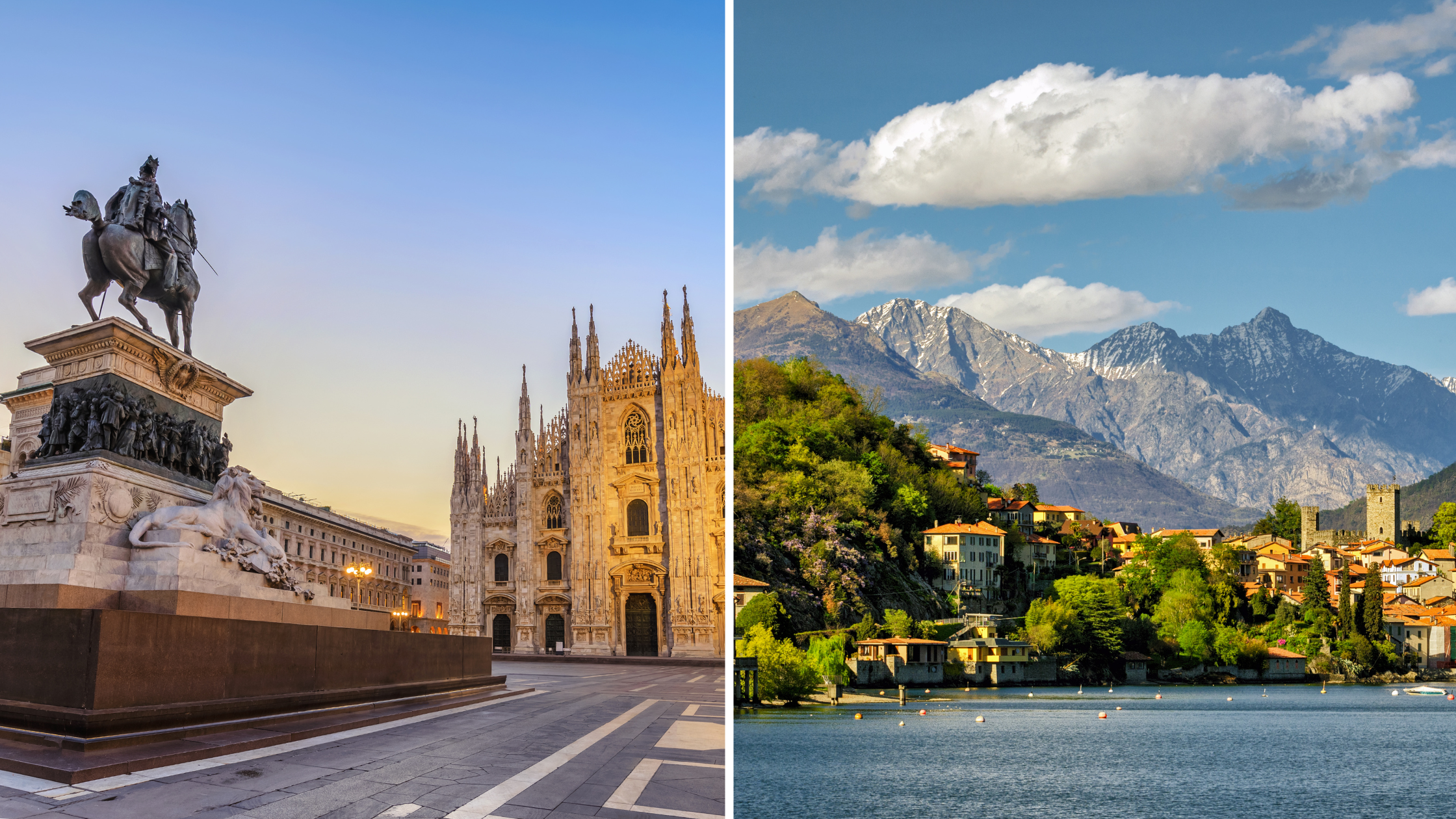
Many travelers treat Milan as a layover. They land, spend a frantic morning at the Duomo, and rush to the train station before noon, suitcase in hand, convinced the real Italy begins somewhere else.
They are missing the point. And they are also missing something better.
Milan and Lake Como are natural partners. Together, they give you the best of northern Italy in a single, unhurried arc: the energy of a great, busy European city and the quiet beauty of one of the most dramatic lakescapes in the world. Paired the right way, they do not compete. They complete each other.
Below, we walk you through how we might build this itinerary for our clients, including a less-traveled alternative route that trades the crowds of Como for the vineyards, medieval towers, and sparkling wine of Franciacorta.
Why Milan and Lake Como Belong Together
The logic is simple and the geography makes it easy. Lake Como is roughly an hour from Milan by train, which means you can use Milan as your base for the first portion of a northern Italy trip and then move to the lake with almost no friction.
But the real reason these two destinations work together is the contrast. Milan is all forward motion: fashion, finance, world-class museums, aperitivo culture, the buzz of a city that takes itself seriously. The lake is the opposite. Time slows. The water reflects the mountains. Ferries drift between villages that have barely changed in a century. After a few days in Milan, that pace shift does not just feel nice. It feels necessary.
The Itinerary: How We Build It for Our Clients
We recommend 7 to 10 nights for this pairing. A week is the minimum to do both destinations properly; 10 days allows you to move at the pace Italy actually rewards. The framework below is built around 4 nights in Milan and 4 to 5 nights on the lake, with room to adjust based on your travel style and how much of each place you want to absorb.
Day 1: Arrive in Milan
Arrival day is never planned. You have crossed an ocean. Check in, walk the neighborhood, find a cafe, and let your body remember what it feels like to be still. If you happen upon something wonderful, follow it. If you do not, that is fine too. Tomorrow begins the real thing.
Days 2 and 3: Milan in Full
Day two is when Milan begins in earnest. Start with the Duomo, but do it right: book your tickets in advance at duomomilano.it, go early when the piazza is still quiet, and make time for the rooftop. Walking among the spires at eye level with a thousand marble saints is one of those travel experiences that does not photograph well and does not need to. You simply have to be there.
Spend the afternoon in the Brera neighborhood. The Pinacoteca di Brera is one of the great art museums in Italy. The streets around it are full of small galleries, decent restaurants, and the particular energy of a neighborhood that has stayed itself despite everything around it changing.
Day three is for Leonardo. Book your Last Supper tickets the moment your travel dates are confirmed. Santa Maria delle Grazie operates on timed entry with very limited capacity, and slots disappear weeks or months in advance. The experience itself is brief, fifteen minutes in the refectory, but the painting stops you cold. You are not just looking at a masterpiece. You are looking at something that has been in slow dialogue with time for five centuries.
The afternoon of day three is yours. The Navigli district, Milan's canal neighborhood in the south of the city, is excellent for wandering. The Sforzesco Castle is worth an hour, particularly if you want to see Michelangelo's final, unfinished Pieta Rondanini, which he was still working on three days before his death.
Both evenings: aperitivo. Milan invented the ritual and does it better than anywhere. A Campari spritz, small bites, a piazza or a rooftop bar. This is not drinking. This is a cultural institution.
Day 4: A Day Trip to Bergamo
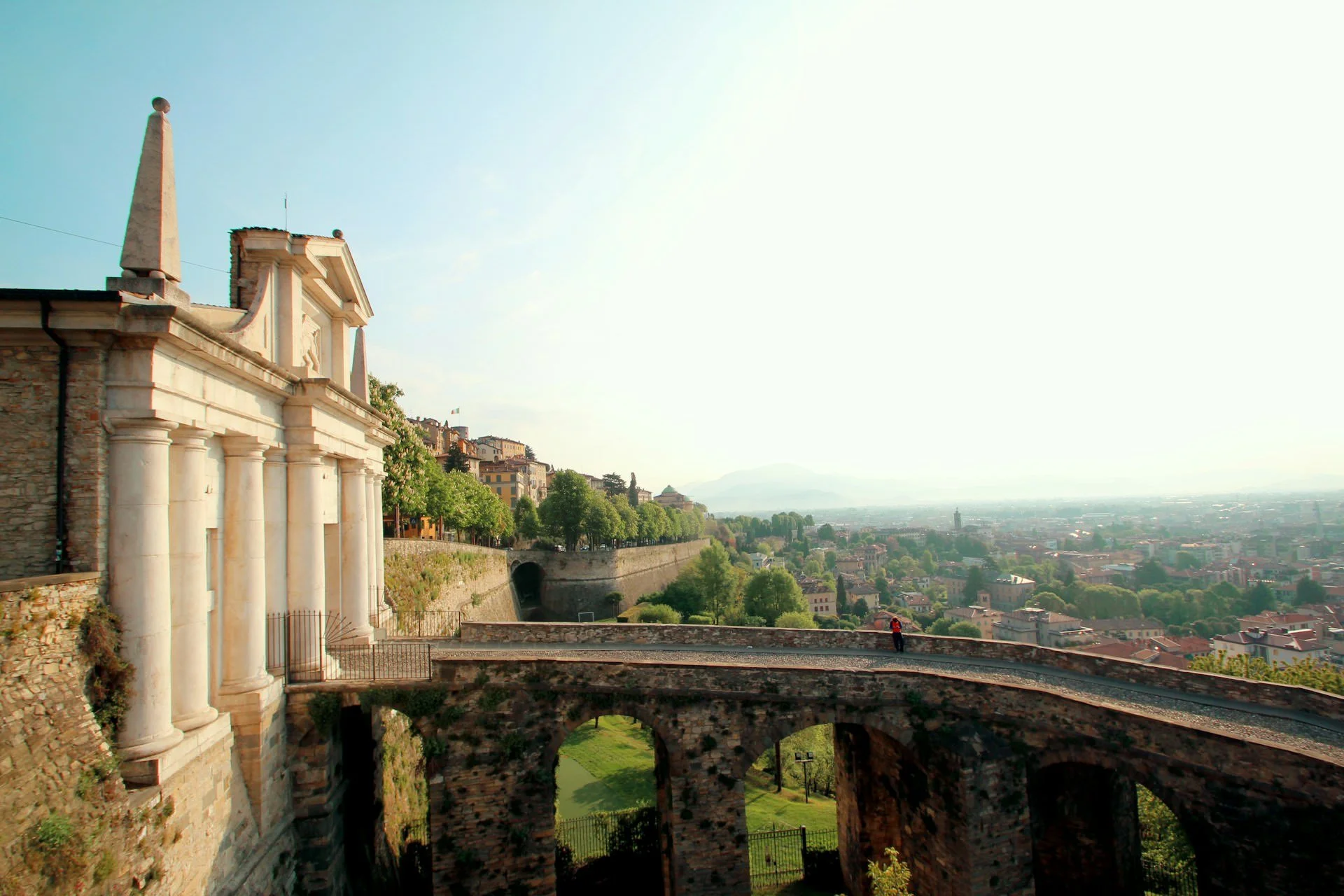
Bergamo is 45 minutes by train from Milan and belongs on every northern Italy trip. The lower city is pleasant and walkable, but it is the Citta Alta, the upper city behind its Venetian walls, that will stay with you. Take the funicular from the lower city, walk through the medieval gates, and spend a morning in the Piazza Vecchia. The Basilica di Santa Maria Maggiore, with its extraordinary inlaid woodwork, is one of the most underappreciated interiors in Lombardy. Almost no one is looking at it. Return to Milan in the evening, or use this as your transition day and continue directly to the lake the following morning.
Day 5: Move to Lake Como
Take the morning train from Milan Centrale to Varenna. We recommend Varenna over the more visited Como city center for most of our clients. It is quieter, more genuinely Italian in feeling, and positioned beautifully on the eastern shore with views across the water to the Bellagio peninsula.
One important note: taxis are scarce at Varenna station and essentially nonexistent at Como city. If you are not traveling light, arrange a private transfer in advance.
Arrive, check in, and do nothing productive for the rest of the day. Walk the lakefront path. Sit at a cafe with a view of the water. Let the lake do what the lake does.
Days 6, 7, and 8: The Lake at Your Own Speed
The ferry is your transportation and your entertainment. The public ferry system connects all the major villages on Lake Como, and a multi-stop ferry pass is the most pleasurable way we know to spend a day in northern Italy.
Bellagio is beautiful and popular. If you go, go early. The village is best in the morning before the day-trippers arrive from Milan. Menaggio, on the western shore, is worth a stop for lunch and a wander. Less photographed than Bellagio but just as lovely.
Spread your lake days across different tempos. One day for ferrying between villages with no agenda. One day for something more active: the Sentiero del Viandante is a historic walking path along the eastern shore, connecting villages through chestnut forests and above the water, with views that reward every step of effort. One day for a private boat tour, which puts you on the water in a way the public ferry cannot.
The funicular from Como city up to Brunate takes eight minutes and rewards you with panoramic views of the lake and, on a clear day, the Swiss Alps.
If your schedule allows a day trip from the lake, the train to Lugano crosses into Switzerland in under an hour. A different country, a different currency, a different pace, and you are back for dinner.
Evenings on the lake are for dinner at something local. Ask your accommodation for what is small, unreserved, and worth finding. Those recommendations are always better than anything online.
Days 9 and 10: Linger, Then Depart
Build your final days around what you have not yet done rather than what you feel you should do. A second morning in a village you loved. A cooking class at one of the lake's private villas. A long lunch somewhere with no view of water and every view of the people who live here year-round.
Departure is easy from either the lake or Milan. If your flight is from Malpensa or Linate, Varenna or Como both connect back to Milan by train in under ninety minutes. Leave enough buffer. Italian trains run reliably; Italian airports have their own logic.
Practical Notes for This Itinerary
7 to 10 nights is the right range: 4 nights in Milan gives you the city without rushing it; 4 to 5 nights on the lake lets the pace actually settle.
The train from Milan Centrale to Varenna takes roughly an hour. Regional trains are fine. No high-speed required.
Avoid driving on the lake roads unless you have done it before. They are narrow, winding, and shared with buses and cyclists. A car is more stressful than freedom here.
Lake Como can feel crowded in July and August, particularly around Bellagio. May, June, September, and early October offer the same beauty with significantly fewer people.
Always book the Last Supper first, before you book anything else in Milan.
The Bergamo day trip on day 4 is optional but strongly encouraged. It adds almost no logistical complexity and is one of the most rewarding days in Lombardy.
The Alternative Route: Milan to Bergamo, Brescia, and Franciacorta
If Lake Como feels too familiar, or if you have already done it and want something that most Italy travelers never consider, there is another direction from Milan that rewards the curious traveler in ways that are harder to put into words and easier to remember for the rest of your life.
Head east instead of north. Bergamo, Brescia, and Franciacorta form a triangle of extraordinary experiences that almost no one outside of Italy knows to visit. They are not on most itineraries. They are not in most guidebooks. That is exactly the point.
This route deserves at least 10 days. The destinations are close enough together that a rushed version is technically possible, and we will never build that version for you. What makes this route extraordinary is the chance to go deep rather than wide: to spend real time in a city before moving on, to return to the same enoteca two nights in a row, to feel like a person passing through rather than a tourist checking boxes.
Bergamo is 45 minutes from Milan by train and deserves more than a day trip. On this itinerary, it gets two nights, which changes the experience entirely. You are not a visitor passing through. You are staying.
Evening in Bergamo is for the local restaurants in the Citta Alta, where the cooking is Lombard and the portions are serious. Casoncelli, the local stuffed pasta, is what you order first.
Brescia
We have been saying this for years and we will keep saying it: Brescia is one of the most underrated cities in Italy. It is a working Lombard city with a Roman forum still sitting in its center, a medieval castle on the hill above it, a Pinacoteca with a Raphael and a Titian that visitors almost have to themselves, and a restaurant scene that cooks for locals, not tourists.
The Roman Capitolium, the temple complex at the heart of the ancient Brixia, is genuinely stunning and genuinely quiet. No timed entry. No queues. Just you and two thousand years of history. The Museo di Santa Giulia, a UNESCO World Heritage Site, contains one of the most extraordinary collections of Roman artifacts, medieval art, and Lombard goldwork in northern Italy. It is consistently undervisited.
Two nights in Brescia gives you time to eat well and slowly. The city has a sophisticated food culture built around local products: Franciacorta wine, local cheeses, lake fish, and a Lombard tradition of cooking that has nothing to prove to anyone. Walk the Contrada del Carmine in the evening. That neighborhood alone is a reason to add Brescia to an itinerary.
Franciacorta and Lake Iseo
South of Lake Iseo and east of Brescia, Franciacorta is a wine region that produces Italy's finest method-traditional sparkling wine. The name refers both to the wine and the territory: rolling hills covered in vineyards, manor houses converted to tasting rooms, small family estates where the winemaker will personally pour your glass if you call ahead.

Franciacorta wine has been gaining international recognition for decades, but the region itself remains wonderfully calm. There are no tour buses. There are no gift shops selling refrigerator magnets. There is very good wine, very good food, and the kind of Italian countryside that reminds you why you came in the first place.
Spread your Franciacorta days across different rhythms. One day for winery visits, ideally two or three small producers rather than one large estate. One day for Lake Iseo, which sits at the heart of the region and has a warmth and authenticity that the more famous Lake Como has partly surrendered to tourism. The town of Iseo itself is worth a morning. Monte Isola, the lake island accessible by ferry, is one of the largest lake islands in Europe and has no cars. People get around by bicycle and foot. It is immediately and completely wonderful.
If you have a 10th day before departure, use it slowly. Return to a winery that moved you. Walk a vineyard trail in the early morning before the day heats up. Find a market. Buy something to carry home that will taste like this when you open it.
Our Honest Take
Lake Como is beautiful. It is also one of the most visited destinations in northern Italy, and during peak season it shows. If you have seen Como before, or if you are someone who instinctively moves toward the road less traveled, the Bergamo-Brescia-Franciacorta route is not the consolation prize. In many ways, it is the upgrade. You get better food, fewer tourists, more authentic encounters, and a sparkling wine region that will make you question every assumption you had about Italian wine. The clients who do this route almost always say the same thing when they return: I had no idea. That is exactly the point.
Practical Notes for the Alternative Route
Plan for 10 nights minimum on this itinerary.
All three destinations are connected by regional train from Milan. No car is required until Franciacorta, where having a vehicle makes winery visits considerably easier.
Franciacorta wineries vary widely in how they receive visitors. Some welcome walk-ins; most of the best ones require advance reservations. We handle all of this for our clients so the experience is seamless.
Lake Iseo and Monte Isola are best visited on a weekday. Weekend ferry lines can surprise you.
The Last Supper booking in Milan applies here too. Book it before anything else.
Ready to Build Your Northern Italy Itinerary?
At Italy With Bella, we build fully custom, privately guided itineraries across all 20 Italian regions. We have been to every place we recommend. We know the right hotel in Varenna, the right winery in Franciacorta, and the small trattoria in Brescia that does not appear on any food blog. If northern Italy is calling, we are ready to answer.
Start with a free consultation at italywithbella.com/schedule. No generic packages. No group tours. Just Italy, done the right way.