What to Wear in Italy (So You Don’t Feel Like a Tourist)

There is a moment many travelers experience the first time they arrive in Italy.
You step off the plane feeling prepared. Your itinerary is organized, your hotel is booked, and your suitcase is packed with everything you thought you would need. Then you sit down at a café in Rome, Florence, or Milan and immediately notice something.
The Italians look effortless.
Not overly dressed. Not flashy. Just… put together in a way that feels natural. Relaxed. Intentional.
Meanwhile, many American travelers realize they packed almost entirely for comfort and convenience without thinking much about how clothing shapes the experience of travel itself.
The truth is, what you wear in Italy matters more than many people expect. Not because Italians are judging you harshly, but because style is deeply woven into everyday life and culture. Italians tend to dress with care, even casually. Clothing is often seen as a form of respect for yourself, for others, and for the places you are visiting.
The good news? You do not need to reinvent your wardrobe or dress formally every day to fit in.
You simply need to understand the rhythm of how Italians dress and how travelers often stand out without realizing it.
Here is how to pack for Italy in a way that feels comfortable, elevated, and culturally aware so you can enjoy your trip without feeling immediately identifiable as a tourist.
The Biggest Difference Between Tourists and Italians
The difference is rarely about wearing expensive clothes.
It is usually about intention.
Many American tourists prioritize maximum comfort above all else. Athletic wear, oversized t-shirts, bulky sneakers, baseball caps, and large backpacks are common travel staples in the U.S., especially for sightseeing-heavy days.
In Italy, even casual clothing tends to look polished.
You will notice:
Neutral color palettes
Well-fitted clothing
Simple, elevated basics
Stylish but practical shoes
Lightweight layers
Smaller bags and accessories
Minimal visible logos
Italians often dress for the environment they are in. Cities like Florence, Rome, Milan, and Venice have a naturally elegant atmosphere, and locals tend to reflect that in subtle ways.
You do not need to dress formally, but you will likely feel more comfortable and confident if you lean slightly more polished than you might on a typical vacation.
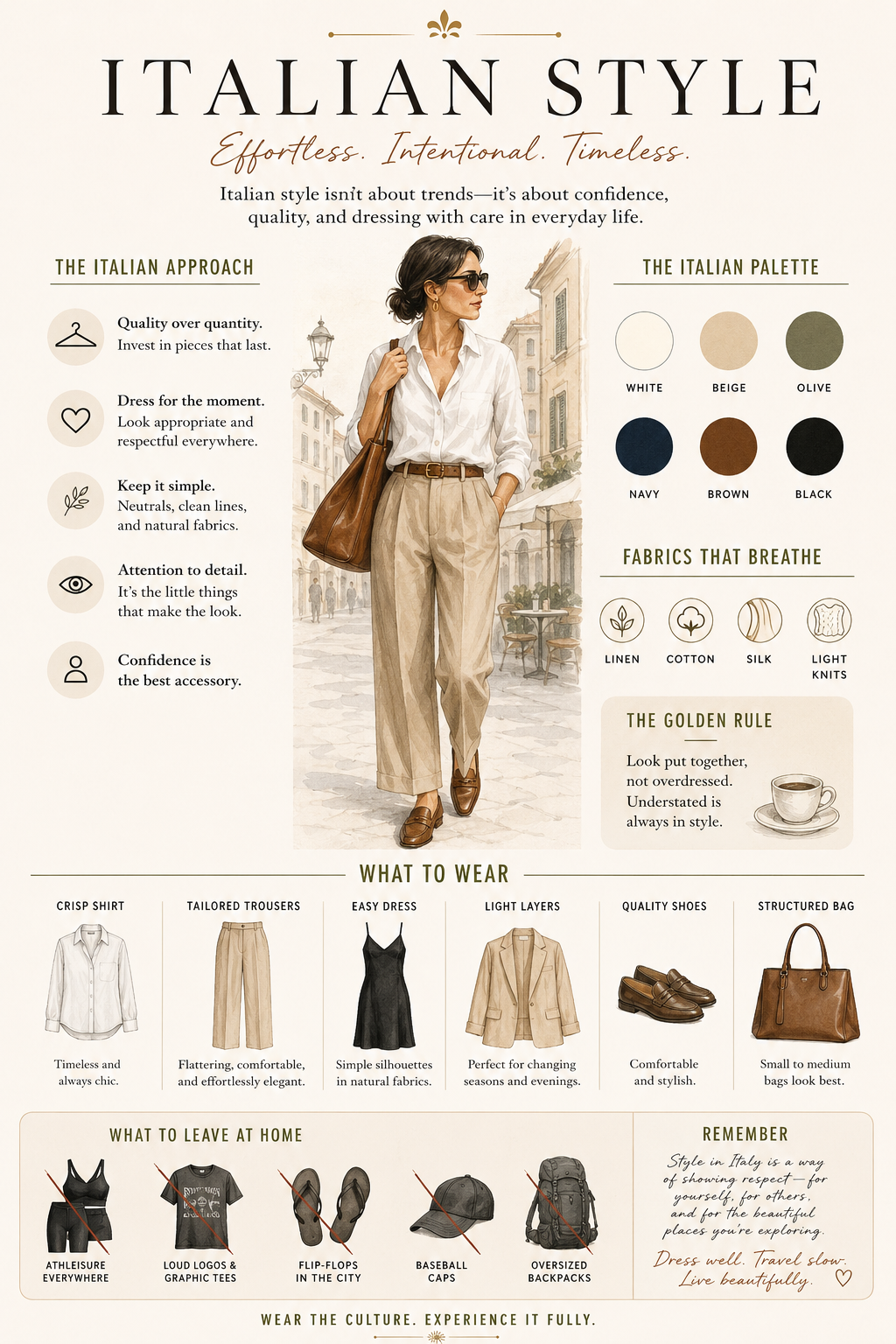
What NOT to Wear in Italy
There are no strict rules, and no one is expecting perfection. But there are a few things that instantly read as “American tourist.”
Athletic Wear Everywhere
Workout leggings, running shorts, moisture-wicking athletic shirts, and gym sneakers are far less common for everyday wear in Italy unless someone is actively exercising.
A matching linen set or relaxed trousers with a simple top will almost always feel more aligned with the atmosphere than full athleisure.
Oversized Graphic T-Shirts
Large logos, sports teams, fraternity shirts, and loud graphic tees tend to stand out quickly.
Instead, opt for timeless basics in solid colors.
Flip-Flops in Cities
While flip-flops are common at beaches and pools, they are not ideal for walking historic cities with uneven cobblestone streets. They also tend to feel overly casual in restaurants, piazzas, and churches.
Giant Backpacks
Large hiking backpacks can immediately make you look like a traveler navigating Europe for the first time. Crossbody bags, leather backpacks, or smaller day bags tend to feel more natural in Italian cities.
Overpacking
One of the fastest ways to feel stressed in Italy is dragging massive luggage through train stations, staircases, narrow streets, and historic hotels without elevators.
Italy rewards lighter packing.
What Italians Actually Wear
Italian style is often less about trends and more about refinement.
Think:
Crisp white or black shirts
Relaxed linen
Tailored trousers
Neutral dresses
Light jackets
Elevated basics
Comfortable but stylish shoes
Simple jewelry
Sunglasses
Structured bags
The overall feeling is clean, intentional, and understated.
Even in relaxed coastal areas, people tend to look thoughtfully dressed rather than overly casual.
One of the easiest ways to blend in more comfortably is to pack versatile pieces that can mix and match easily.
The Best Shoes for Italy
If there is one thing to prioritize, it is shoes.
Italy involves far more walking than many travelers expect. Cobblestone streets, hills, stairs, train stations, and long city days can quickly become exhausting in the wrong footwear.
The ideal shoe for Italy is:
Comfortable enough for long walking days
Stylish enough for restaurants and evenings
Supportive on uneven streets
Easy to pair with multiple outfits
Good options include:
Clean white leather sneakers
Stylish walking sandals
Loafers
Comfortable ankle boots in cooler months
Minimalist fashion sneakers
Shoes that scream “gym” tend to stand out more than almost anything else.
How to Dress for Churches and Religious Sites
This is one of the biggest mistakes travelers make unintentionally.
Many churches in Italy, including places like the Vatican, require modest clothing for entry.
Generally, this means:
Shoulders covered
No extremely short shorts or skirts
No revealing tops
A lightweight scarf or linen button-down can solve this easily and takes up almost no room in your bag.
What to Wear in Italy by Season
Spring (March through May)
Spring in Italy can vary dramatically depending on region and elevation. Mornings and evenings are often cool, while afternoons may feel warm and sunny.
Pack:
Lightweight jackets
Layers
Comfortable trousers
Dresses with sweaters
White sneakers or loafers
Scarves
Spring is one of the most beautiful times to dress in Italy because layering feels natural and elegant.
Summer (June through August)
Summer in Italy can be intensely hot, especially in cities like Rome, Florence, and Naples.
The key is breathable fabrics.
Pack:
Linen shirts and dresses
Relaxed skirts
Lightweight trousers
Sandals with support
Sunglasses
Breathable cotton basics
Avoid heavy fabrics and overly tight clothing.
You will also notice that many Italians still dress elegantly even during heat waves. Flowing silhouettes and breathable materials matter more than wearing less clothing.
Fall (September through November)
Fall is arguably one of the best-dressed seasons in Italy.
The weather is often beautiful, crowds begin thinning slightly, and layering becomes part of the atmosphere again.
Pack:
Lightweight sweaters
Trousers
Midi dresses
Jackets
Boots or sneakers
Neutral layers
September and October are especially lovely because you can still dress lightly while incorporating richer textures and tones.
Winter (December through February)
Winter in Italy varies by region, but cities like Milan, Florence, and Rome can feel cold and damp.
Pack:
Wool coats
Sweaters
Boots
Dark denim or trousers
Scarves
Layers
Italians tend to dress beautifully in winter, and outerwear becomes a major part of the overall look.
The Secret to Looking Comfortable and Stylish in Italy
The goal is not to “pass” as Italian.
The goal is to travel in a way that feels respectful, aware, and connected to the atmosphere around you.
One of the most beautiful things about Italy is that everyday life itself feels elevated:
Morning espresso at the café
Evening passeggiatas through town
Long dinners outdoors
Fresh markets
Beautiful architecture
Carefully prepared meals
When you dress with a little intention, you often participate in that rhythm more fully.
You slow down.You feel more confident.You enjoy your photos more.You feel less out of place.
And perhaps most importantly, you begin to understand that in Italy, style is rarely about impressing people.
It is about appreciating life enough to show up thoughtfully for it.
Final Packing Advice
Before your trip, ask yourself:“Would I wear this to a nice lunch or evening walk at home?”
If the answer is no, reconsider packing it.
Italy is one of the rare places where people still genuinely enjoy dressing for daily life, and leaning into that spirit can become part of the experience itself.
Pack lighter.Choose quality over quantity.Prioritize versatility.Wear comfortable shoes.Leave room in your suitcase for treasures you will inevitably find along the way.
And remember: the best outfit in Italy is one that allows you to feel present enough to enjoy where you are.