Sicily vs. Sardinia: Which Italian Island Is Right for Your Summer Trip?
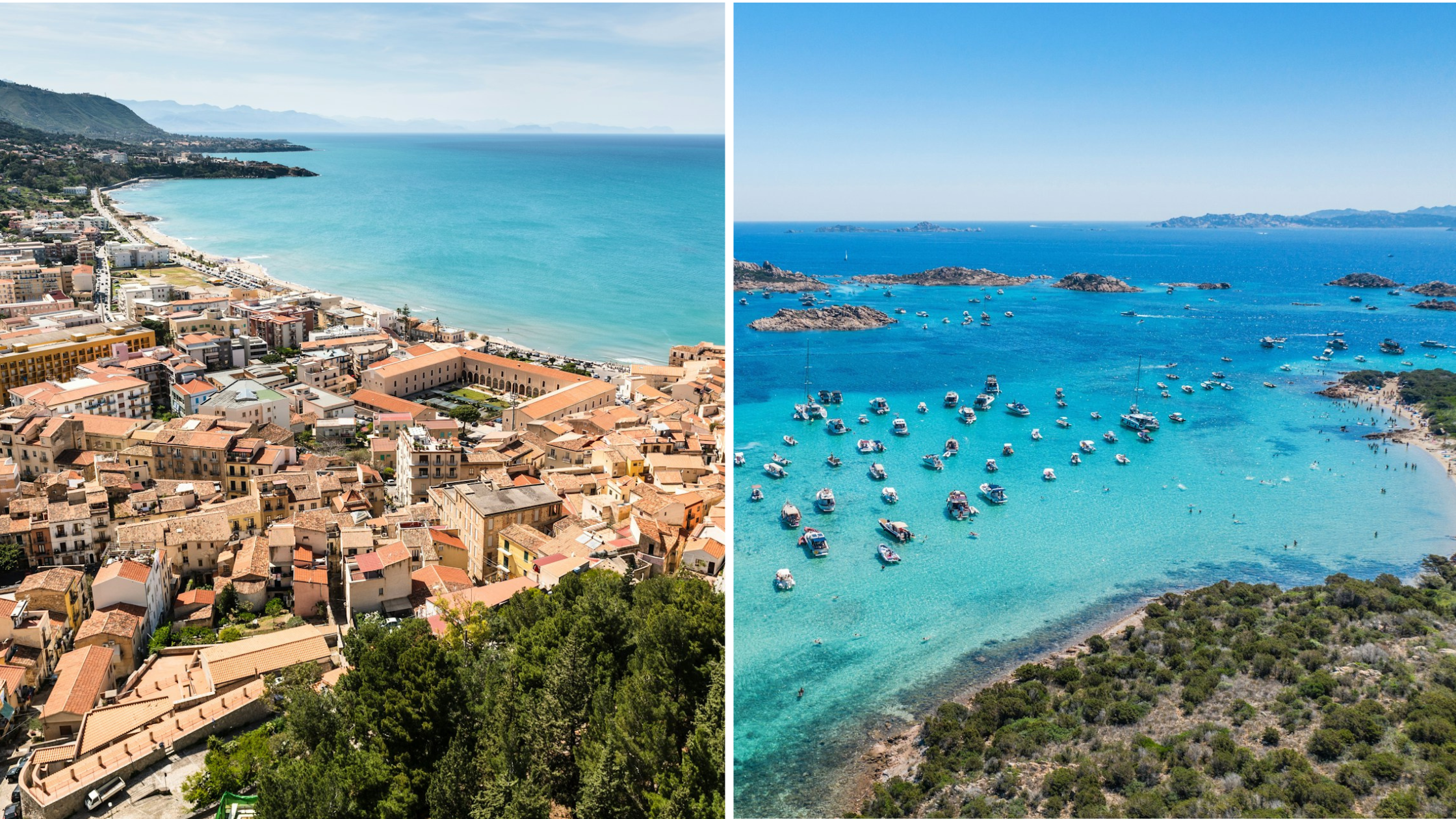
Two islands. One country. Completely different experiences.
When our clients start dreaming about an island escape in Italy, Sicily and Sardinia are almost always the two names that come up. And for good reason. Both offer brilliant turquoise water, extraordinary food, and a pace of life that feels like the antidote to everything modern. But the similarities mostly end there.
Choosing between them is not really about which island is better. It is about which island is better for you. This guide will walk you through the key differences so you can make the call with confidence. (And if you prefer to listen, we just released a podcst covering this very thing as well)
Size: How Big Are These Islands, Really?
Sicily is the largest island in the Mediterranean Sea, covering roughly 9,900 square miles. To put that in perspective, it is larger than the entire country of Slovenia. It has more than 5 million residents, a dense network of cities, towns, and hilltop villages, and enough regional variety to fill two or three entirely separate trips.
Sardinia is the second largest island in the Mediterranean at about 9,300 square miles, close in size but notably less populated with around 1.6 million residents. It feels more open, quieter, and in many places, genuinely wild. There are stretches of coastline in Sardinia where you could walk for an hour and not see another person. That is not a complaint.
In practical travel terms, both islands require a car and proper planning. You cannot see either one from a single base. That said, Sicily has more internal variety crammed into a smaller framework, while Sardinia rewards travelers who are willing to slow down and let the landscape come to them.
The Experience: What to Expect on Each Island
Sicily
Sicily is one of the most layered destinations in all of Italy. This is a place that has been conquered, shaped, and left with fingerprints by the Greeks, Romans, Arabs, Normans, and Spanish. That history is everywhere: in the street food, in the architecture, in the dialects, and in the food traditions that bear almost no resemblance to what most Americans picture when they think of Italian cooking.
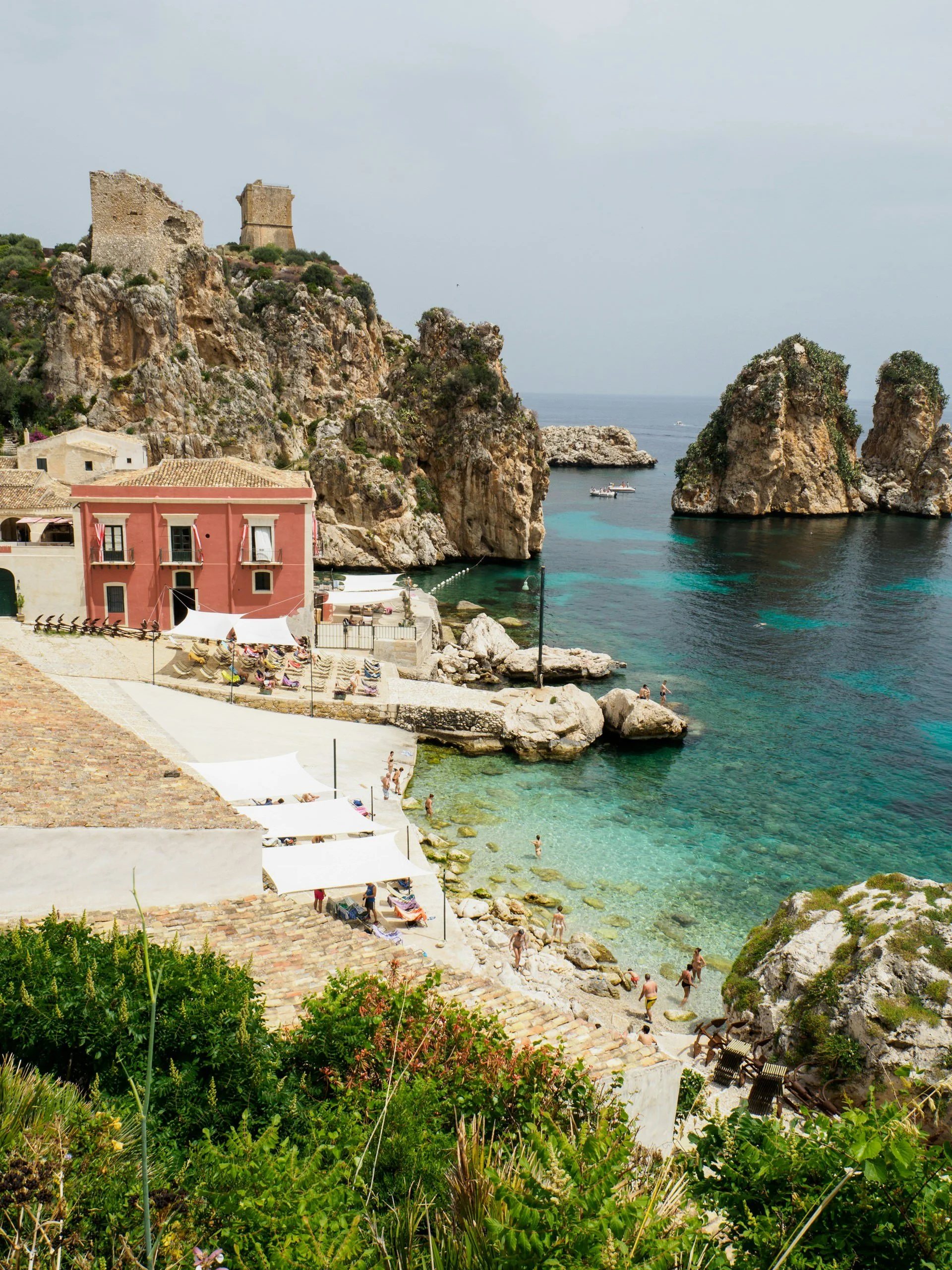
Palermo alone is worth a week. The Ballaró market is chaotic and brilliant. Street food like arancini, panelle, and pani ca meusa (spleen sandwiches, genuinely delicious if you let yourself try one) are eaten standing up, from a vendor who has been doing this for decades. The Norman cathedral at Monreale, the Valley of the Temples near Agrigento, and the volcanic drama of Mount Etna all belong to a completely different category of sightseeing than a museum or a landmark. These places feel ancient in a way that reorganizes your sense of time.
For a first-time visitor to Sicily, we recommend starting in Cefalu, which is relaxed, walkable, and a beautiful introduction to the island. Then move to Palermo for the urban depth. Finish in one of the hilltop towns in the interior, like Erice or Ragusa or Noto, where Sicily shows you a completely different side of itself. The baroque architecture of the southeast is a UNESCO World Heritage Site and one of the most underappreciated things in all of Italy.
The coastline is gorgeous, but Sicily is not primarily a beach destination. It is a culture destination with beaches. That distinction matters when you are planning.
Sardinia
Sardinia is a completely different kind of Italy. If you have someone in your group who says they are not really a museum person, this is their island. The main draw here is the natural environment, and it is extraordinary.
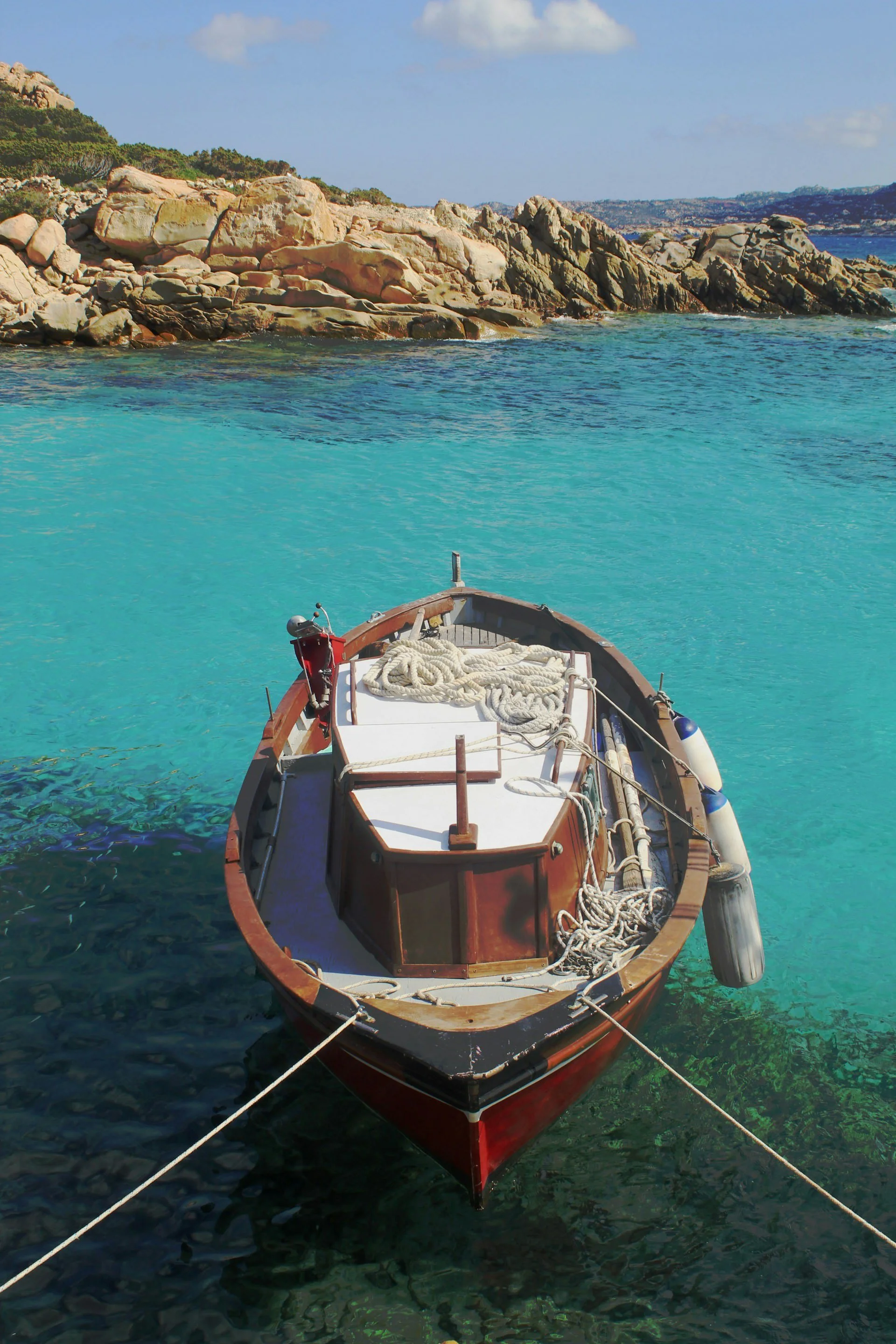
The Costa Smeralda in the northeast is among the most celebrated coastline in Europe. The water ranges from pale aqua to deep sapphire and the beaches, particularly at Cala Brandinchi and La Pelosa, genuinely compete with anything in the Caribbean. This is the part of Sardinia that draws the superyacht crowd, and it shows in pricing and crowds during peak season, particularly July and August.
But Sardinia has a wild interior that most tourists never see. The Barbagia region in the heart of the island is home to some of Italy's oldest and most intact folk traditions. The local dialect, Sardo, is closer to Latin than modern Italian. Nuraghi, the mysterious prehistoric stone towers that dot the island, number in the thousands and have no real parallel anywhere else in the world. Sardinia has been inhabited continuously for over 11,000 years, and that depth is palpable if you venture beyond the beach resorts.
Cagliari, the capital in the south, is an underrated city with a beautiful historic quarter, excellent seafood, and a market culture that holds its own against anything on the mainland. Alghero in the northwest has a distinct Catalan heritage and a charming old town. The Gulf of Orosei on the east coast, accessible only by sea or by foot, is one of the most dramatic stretches of coastline in Italy.
Which Island Is Better?
This is the question everyone asks, and the honest answer is: neither. They are excellent for entirely different travelers.
Choose Sicily if you want depth. If history excites you. If you want to eat your way through a cuisine that will surprise and challenge you. If you want to walk through ruins that predate Rome, stand at the edge of an active volcano, and end your day in a baroque piazza with a glass of Nero d'Avola and a cannolo. Sicily rewards curiosity and suits travelers who want their trip to feel like it changed something in them.
Choose Sardinia if you want beauty and space. If you want to disconnect entirely. If you want to spend mornings in water so clear you can see the bottom from 20 feet up, afternoons wandering a village where very few tourists have found their way, and evenings eating fresh-caught seafood at a table that looks out over the Mediterranean. Sardinia is for travelers who want to be restored rather than stimulated.
For what it is worth, we see clients who return to Sicily again and again because they feel like they barely scratched the surface. And we see clients who did Sardinia once and say it was the best trip of their lives for exactly that reason: they were present, unhurried, and completely absorbed. Both of those are correct.
Cost Comparison: What to Expect on Each Island
Sicily is the more affordable of the two islands, and genuinely so. As part of southern Italy, the cost of accommodation, food, and everyday life runs meaningfully lower than in the north or in Italy's more prominent resort areas. A spectacular meal in Palermo or Catania will cost a fraction of what the same quality would run you in Florence or Rome. Agriturismi and family-run bed and breakfasts offer authentic, high-quality stays at very reasonable prices, and a street food lunch in Sicily might be the single best bargain in all of Italian travel.
Sardinia is more variable. The island's interior and southern reaches can be quite affordable. But the Costa Smeralda in peak season operates in an entirely different economic universe. Porto Cervo is one of the most exclusive resort areas in Europe, and if your Sardinia trip is anchored there in July or August, expect premium pricing across the board: accommodation, dining, beach clubs, and beyond.
The good news is that Sardinia's most extraordinary experiences do not require the Costa Smeralda. Basing yourself in Cagliari, exploring the south, or timing your visit for June or September rather than the peak summer weeks transforms the island into a far more accessible destination. Timing matters on both islands, but it matters more on Sardinia.
Our general guidance: Sicily offers better overall value for most travelers. Sardinia is absolutely doable on a reasonable budget with smart planning, but it requires more intentionality about where you go and when.
Traveling with Kids: Which Island Is the Better Fit?
Both islands can work beautifully for families. The question is what kind of family experience you are after.
Sardinia tends to be the stronger choice for families with younger children, particularly because of the beaches. The water on the west and south coasts is often calm and shallow, ideal for kids who want to swim and play in the sea for hours. The pace is slower, the crowds in most areas are manageable, and the environment itself, open, natural, and expansive, gives children (and their parents) room to breathe. Sardinia is a sensory trip for kids even if they are not remotely interested in history: the color of the water, the prehistoric nuraghi dotting the hillsides, the goats wandering the roads.
Sicily works very well for families with older kids and teenagers who have some intellectual curiosity. Mount Etna is genuinely thrilling for young people. The Valley of the Temples is the kind of place that makes ancient history feel real rather than like a classroom exercise. The food culture on Sicily is interactive and adventurous, and kids who are open to trying things will have experiences they talk about for years. The street food markets in Palermo are exciting for any age, but particularly for teenagers who appreciate the sensory intensity of it.
One practical note: Sicily's interior towns and archaeological sites involve a fair amount of walking, steps, and uneven terrain. That is fine for most families but worth factoring in if you are traveling with very young children or strollers. Sardinia's beach-forward itinerary tends to be logistically simpler for families with toddlers or young kids.
Our take: Sardinia for families with younger children who want a nature-and-beach-focused trip. Sicily for families with older kids and teenagers who are ready to engage with one of the most historically rich places on earth.
A Note on Food: Because This Is Italy and It Matters
One of our core beliefs at Italy With Bella is that you should eat what the region is known for, in the region where it originates. Both islands take that principle seriously.
Sicilian cuisine is one of the most distinctive in Italy, shaped by thousands of years of Arab, Greek, and North African influence. Arancini, pasta con le sarde (pasta with sardines, pine nuts, and raisins), caponata, granita with brioche for breakfast, cannoli filled to order and eaten immediately: these are not variations on Italian food. They are their own category. The street food culture alone is worth the trip.
Sardinian cuisine is quieter but equally distinct. Culurgiones, the stuffed pasta parcels of the Ogliastra region, are unlike anything else in Italy. Porceddu, the traditional slow-roasted suckling pig, is an event in itself. The cheeses, particularly Pecorino Sardo, are exceptional. Seafood along the coasts, particularly the bottarga (cured fish roe) from Cabras, is world-class. And the Cannonau wine, a robust red grown on the island, is increasingly recognized as one of Italy's most interesting indigenous varietals.
On both islands, the best meals you will eat are not in tourist-facing restaurants. They are in the places that do not have English menus and do not show up on any app. That is exactly the kind of experience we build for our clients.
How Italy With Bella Plans Island Trips
Both Sicily and Sardinia require more advance planning than most mainland Italian destinations. Accommodations in the places worth staying fill up well ahead of the summer season. The private guides and local partners who know the island at a deeper level are booked early. Transportation logistics, particularly on Sardinia where distances between the best spots can be significant, require real thought.
We have personal relationships on both islands. We know which hilltop agriturismi in the Sicilian interior is worth every logistical hurdle to reach. We know which stretches of Sardinian coastline deliver extraordinary beauty without the peak-season crowds. We know when to plan buffer days (always), how to sequence the bases (never more than three in two weeks), and how to make sure the trip has room for the unexpected.
Most importantly, before we recommend Sicily or Sardinia, we have a real conversation. We want to understand what you actually want from this trip: not the version you think you should want, but the one that would make you feel like you finally, deeply, got somewhere. That conversation changes the planning entirely.
Because the truth is, most travelers come back from both islands saying the same thing: we wish we had more time and did less. The islands that reward slowness most are exactly the ones that tempt you to cram in the most. We help you resist that temptation. And the result is a trip that actually stays with you.
Ready to figure out which island is calling you?
Let's talk through your trip. We'll ask you the questions that help us understand what you're really looking for, and then we'll build something around that. No checklists. No tourist traps. Just Italy, the way it's meant to be experienced.