Is Milan Worth Visiting? An Honest Guide
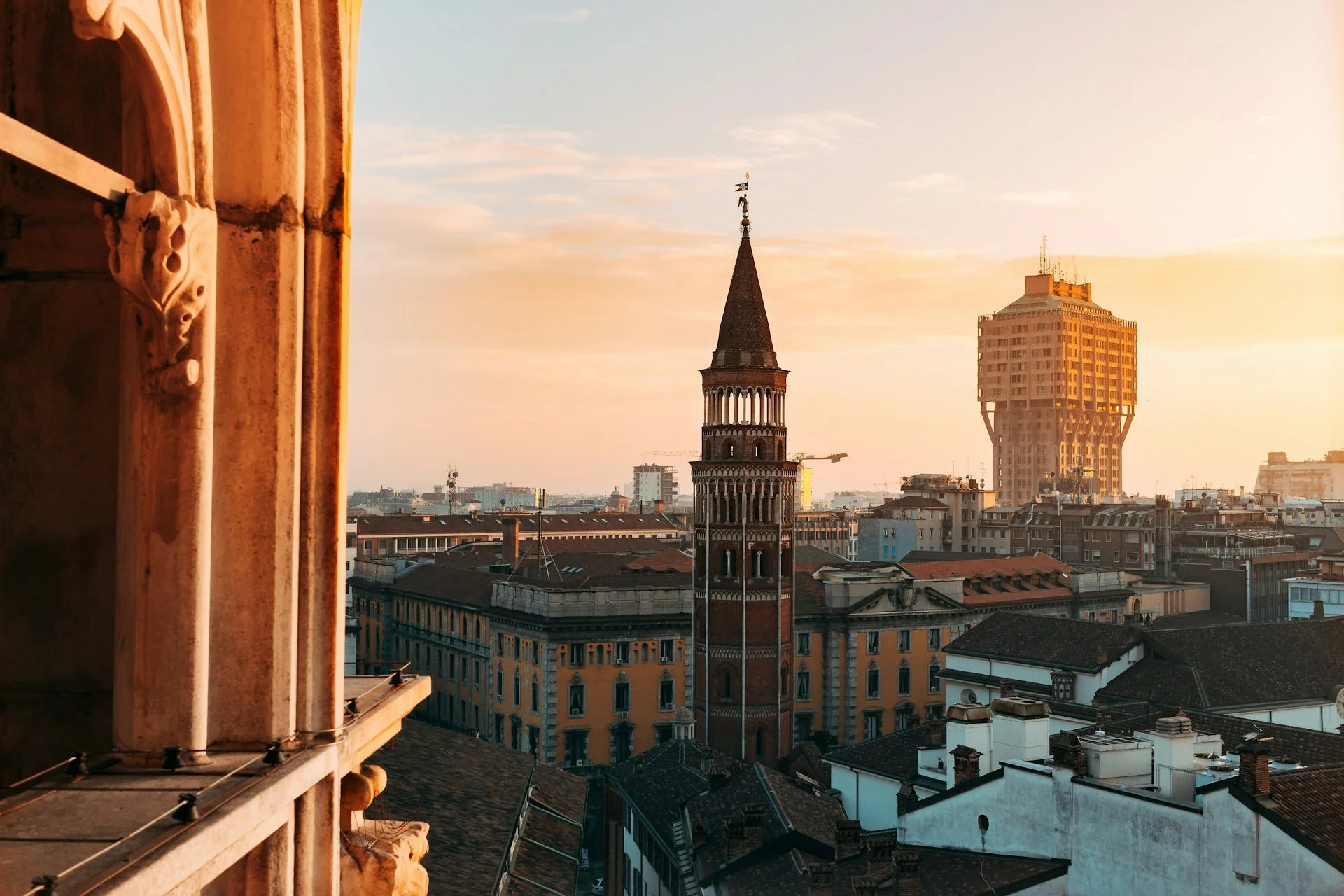
When most people picture Italy, they picture sun-drenched piazzas, rolling Tuscan hills, ancient ruins, and the smell of fresh basil drifting through a narrow alley. Milan rarely stars in that daydream. And honestly? That's exactly what makes it so worth your time.
Milan is Italy's most misunderstood city. It gets dismissed as a business hub, a fashion stop, a place to change trains. Travelers fly into Malpensa and immediately head south toward Rome or Tuscany, barely glancing out the taxi window. But those who slow down and actually settle into Milan discover something most guidebooks gloss over: a city of extraordinary depth, one that rewards the curious traveler in ways few places in Italy can.
Here's the honest guide to what Milan offers, what sets it apart, and whether it deserves a real spot on your itinerary.
What Milan Actually Is
Milan is the capital of Lombardy and Italy's second-largest city. It is the country's financial and fashion capital, home to the Borsa Italiana (Italy's stock exchange), the global headquarters of brands like Prada, Versace, Gucci, and Armani, and one of the four pillars of international Fashion Week alongside Paris, London, and New York.
But strip away the boardrooms and runway shows and you find a city with over 2,000 years of history. Milan was once the capital of the Western Roman Empire (from 286 to 402 AD), later a center of Renaissance patronage under the Visconti and Sforza dynasties, and then the city that effectively bankrolled Italy's industrial revolution. Every layer of that history is still visible if you know where to look.
What Sets Milan Apart from Other Italian Cities
Most Italian cities wear their history on the outside. In Rome, you trip over ancient ruins on the way to the grocery store. In Florence, the Renaissance is the view from nearly every window. In Venice, the architecture itself is the spectacle.
Milan is different. It keeps its treasures closer to the chest.
The Last Supper. Leonardo da Vinci's The Last Supper (Il Cenacolo Vinciano) is not a painting in the conventional sense. It is a mural painted directly onto the refectory wall of Santa Maria delle Grazie, completed around 1498. Because Leonardo experimented with tempera and oil on dry plaster rather than traditional fresco technique, it began deteriorating within his own lifetime. That fragility is part of what makes it so arresting. Visits are strictly timed and capped at approximately 15 people at a time, for 15 minutes only. Tickets sell out weeks, sometimes months, in advance. You cannot simply walk in. This is not the Colosseum. It is a singular, intimate encounter with a work that has been obsessed over, copied, analyzed, and restored for over 500 years.
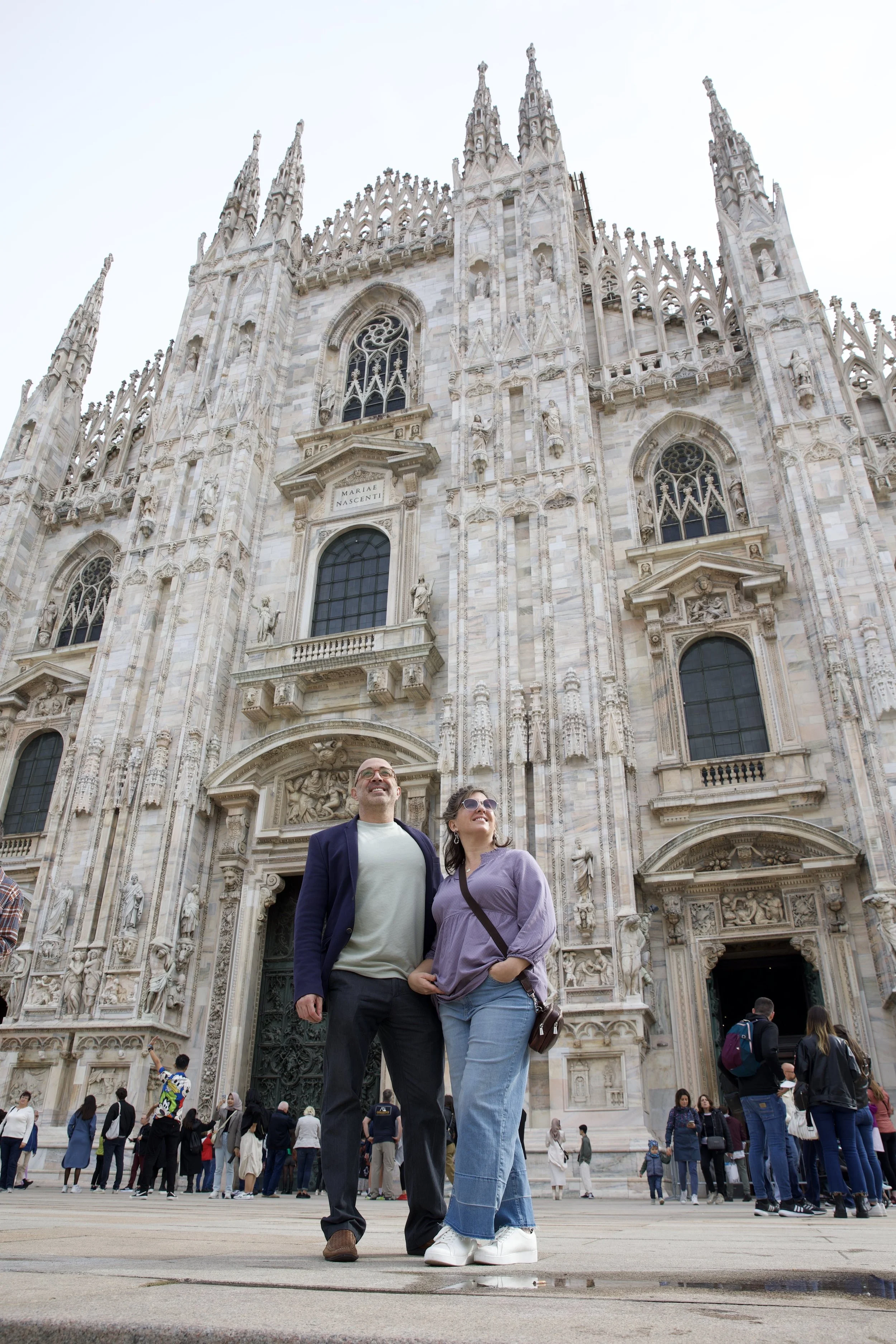
The Duomo. The Milan Cathedral (Duomo di Milano) is one of the largest Gothic cathedrals in the world and one of the most ornate structures on earth. Construction began in 1386 and wasn't officially completed until 1965, nearly 600 years later. It has 3,400 statues, 135 spires, and a rooftop terrace that puts you face to face with those spires and, on a clear day, offers views all the way to the Alps. Walking on the roof of the Duomo is one of the genuinely unexpected experiences in Italian travel.
The Brera District. While the fashion world gravitates toward the Quadrilatero della Moda (Milan's famous fashion quadrilateral), the Brera neighborhood tells a quieter, more layered story. It's home to the Pinacoteca di Brera, one of Italy's most important art galleries, housing works by Raphael, Caravaggio, and Mantegna. But more than the gallery, Brera itself is a neighborhood worth wandering: cobblestone streets, independent bookshops, aperitivo bars, and a Saturday antiques market that attracts serious collectors.
Navigli. Milan was once a city of canals, a hydraulic network largely designed by Leonardo da Vinci in the late 15th century to connect the city to surrounding waterways. Most were filled in during the 20th century, but the Navigli district preserves two of the original canals, now lined with restaurants, bars, and independent shops. On summer evenings, this stretch of Milan feels like a different city entirely, something closer to Amsterdam than what most people expect from northern Italy.
Teatro alla Scala. La Scala is not merely a famous opera house. It is the opera house, widely considered the most prestigious lyric theater in the world. Inaugurated in 1778, its stage has seen the premieres of operas by Verdi, Puccini, and Bellini. Even if opera isn't on your radar, the attached museum (Museo Teatrale alla Scala) offers an extraordinary window into the history of opera, ballet, and theatrical performance. And if you can secure tickets to a performance, it is the kind of evening that reshapes how you think about live performance entirely.
What Milan Does Differently: Food and Design
Milan's food culture is understated but exceptional. This is Lombardy, which means risotto alla Milanese (saffron risotto finished with bone marrow), ossobuco (braised veal shank traditionally served alongside that saffron risotto), cotoletta alla Milanese (a breaded veal cutlet that predates the Viennese schnitzel, regardless of what Vienna will tell you), and panettone, which originated here and bears almost no resemblance to the plastic-wrapped loaves that appear in American grocery stores every December.
The aperitivo culture in Milan is also worth calling out specifically. Milan essentially invented the modern aperitivo hour. At most bars, ordering a Campari Spritz, a Negroni, or a glass of Franciacorta (the excellent sparkling wine produced just east of the city in Lombardy's lake district) comes with a spread of small bites that can constitute a full meal. This is not a gimmick. It is a genuine local ritual, and doing it right, at the right bar, at the right hour, is one of Milan's quiet pleasures.
On the design front, Milan is in a category entirely its own. The Triennale di Milano is one of Europe's leading design museums. The furniture and design district (Zona Tortona and the broader Fuorisalone area) comes alive every April during Milan Design Week, when the city becomes a living laboratory for contemporary design. But even outside of that week, Milan's relationship to architecture, furniture, and visual culture is visible in ways that feel genuinely different from the rest of Italy.
How Many Days Do You Need in Milan?
Two to three days is the honest answer for most travelers.
Two full days is enough to cover the must-sees without rushing: the Duomo and its rooftop on day one, The Last Supper (pre-booked, non-negotiable), Brera, and a proper aperitivo in Navigli. On day two, La Scala, the fashion district if that's your interest, and a long lunch in one of the trattorias near the Mercato Metropolitano or another experience from our curated list of partners.
Three days opens up the surrounding region considerably. Day trips to Lake Como, Lake Maggiore, or the wine estates of Franciacorta are all within easy reach. Bergamo, a beautifully preserved upper city (città alta) perched above its modern lower town, is 45 minutes from Milan by train and one of the most underrated day trips in northern Italy.
If you're building a broader northern Italy itinerary, Milan works beautifully as both a gateway and a destination. It pairs naturally with the Italian Lakes, with Piedmont, or with the Veneto.
Milan vs. Rome: An Honest Comparison
This is a question worth answering directly, because many travelers assume these two cities are interchangeable, or that Rome is simply the obvious choice.
They are not the same city, and the choice between them depends entirely on what kind of traveler you are.
Milan vs. Rome: Which Italian City Is Right for You?
Milan and Rome offer very different experiences for travelers. Milan is known for design, fashion, opera, and northern Italian elegance, while Rome is famous for ancient history, iconic monuments, and classic Roman food culture.
| Category | Milan | Rome |
|---|---|---|
| History | Roman, Renaissance, Industrial | Ancient Roman, Papal, Imperial |
| Art | The Last Supper, Brera Gallery, La Scala | Vatican Museums, Colosseum, Sistine Chapel, Borghese Gallery |
| Food | Risotto, ossobuco, aperitivo culture, Lombardian wines | Carbonara, cacio e pepe, supplì, Roman street food |
| Pace | Efficient, northern European in tempo | Slower, more chaotic, deeply Roman |
| Crowds | Busy but manageable | Heavily touristed in the center |
| Best for | Design, fashion, opera, northern Italian cuisine, lakes proximity | Ancient history, religious heritage, iconic monuments, la dolce vita |
Rome is overwhelming in the best possible way. It is two and a half millennia of civilization layered on top of itself, and no city in the world offers that particular kind of density. If you're visiting Italy for the first time, Rome earns its place on the itinerary.
But here's the truth that experienced Italy travelers understand: Rome is also one of the most saturated tourist destinations on earth. The areas around the Colosseum, the Trevi Fountain, and the Vatican are, to put it plainly, overrun. The experience of those places has been significantly diluted by sheer volume.
Milan, by contrast, gives you world-class culture, extraordinary food, and genuine encounters with Italian life, without that particular exhaustion. The Last Supper is an intimate experience. A Sunday morning in Brera feels like the city belongs to you. An evening aperitivo in Navigli has the texture of real life rather than performance.
This is the kind of Italy that Italy With Bella exists to find for our clients: the version that goes beyond the postcard. Milan is part of that Italy.
The Bottom Line
Milan is absolutely worth visiting. Not as a consolation prize when flights to Rome are full, but as a deliberate destination in its own right.
It won't give you sun-bleached ruins or rolling hillside views. It will give you Leonardo, Verdi, saffron risotto, rooftop cathedral walks, canal-side evenings, and a version of Italian urban life that most American travelers never encounter. That's not a lesser Italy. It's just a different one, and for the right traveler, it's the one that leaves the deepest impression.
If you're ready to build a northern Italy itinerary that includes Milan the way it deserves to be experienced, not as a layover but as a destination, let's start planning.