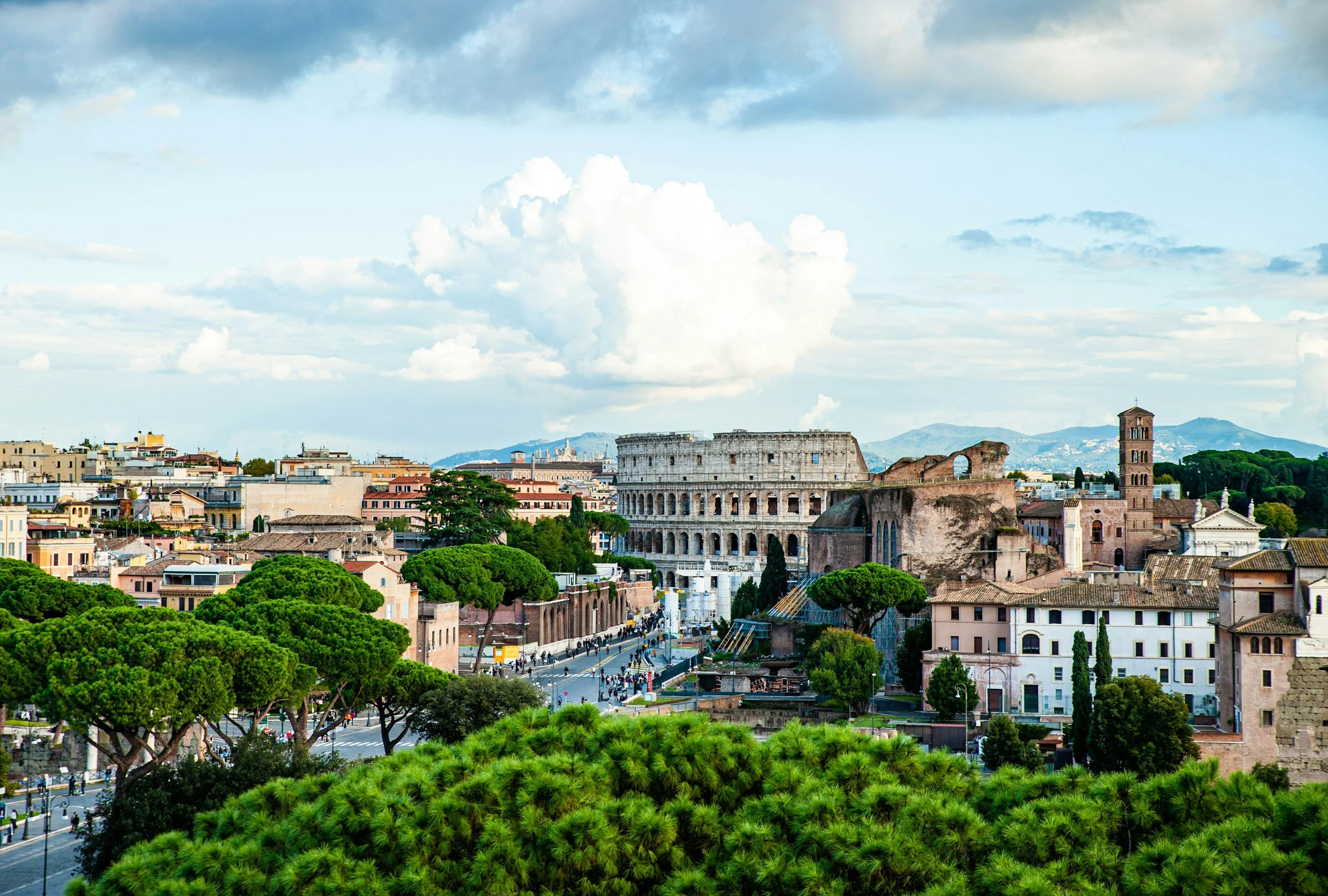
Let us be honest from the start: no one sees Rome in 48 hours. This is a city that has been layering itself for nearly 3,000 years, and even the people who live here are still discovering it. But here is the good news. You do not need to see everything to fall in love with Rome. You need the right plan, the right pace, and one truly memorable evening at the table.
Whether you have a long layover at Fiumicino, a quick weekend before a cruise, or two bonus days at the start of a bigger Italy trip, this is how we tell our own clients to spend a short window in the Eternal City. (Planning a longer stay? Start with our Rome destination guide.) Our philosophy is simple: hit the highlights efficiently, then slow down for a nice local dinner. That combination is what turns a rushed stopover into a story you tell for years.
First Things First: Is Your Layover Long Enough?
Rome's main airport, Fiumicino (FCO), sits roughly 30 kilometers southwest of the city center. The Leonardo Express train runs nonstop to Roma Termini in about 32 minutes, departing every 15 minutes for most of the day, with a standard fare of 14 euros. A private driver takes you door to door and is the more relaxed choice, especially with luggage.
The math matters, though. Once you add passport control, the ride in and out, and getting back through security for your onward flight, a layover disappears quickly. A good rule of thumb: if you have fewer than eight to ten hours on the ground, enjoy a long Italian lunch at the airport and save Rome for a proper visit. If you have a full day or an overnight, go. Rome is always worth it.
IWB Tip: On a short stay, every minute spent figuring out transport is a minute not spent in Rome. A pre-arranged private transfer means someone is waiting for you at arrivals and you are in the city center before you have finished your first thought about espresso.
The Smart Way to See the Highlights: Our Private Rome Sites Tour
Here is something first-time visitors rarely realize until they are standing on a street corner with sore feet and a dying phone: Rome's greatest sights are spread across the historic center, and getting from one to the next eats up far more of your day than you expect. Cobblestones, crowds, wrong turns, a detour for gelato that turns into a detour for shade. It adds up.
That is exactly why we love our private Rome sites tour for short stays. In just three hours, you hit all of the main sites around the city center without wasting time walking from one place to the next. You arrive, you see it, you hear the story behind it from someone who truly knows this city, and you move on to the next icon with your energy intact.
For a traveler with 24 or 48 hours, this changes everything:
You are done by lunch. The rest of your day is open for one deeper experience, a long meal, or simply wandering.
You get your bearings. After three hours with a local expert, the city map makes sense, and you know which corners you want to return to.
It is private. No group tours, no following a raised umbrella, no waiting on 40 strangers. Just you, your guide, and Rome.
IWB Tip: Book the sites tour for your first full morning. Rome's piazzas are at their quietest and most beautiful early in the day, and seeing the big picture first makes everything that follows more meaningful.
If You Have 24 Hours
Morning: The Highlights
Start with the private sites tour. Three hours, all the icons, zero wasted steps. This is the backbone of a 24-hour Rome visit.
Lunch: Keep It Roman
Find a simple trattoria and order one of the four classic Roman pastas: cacio e pepe, carbonara, amatriciana, or gricia. Rome is not a city for fussy lunches. It is a city for a plate of pasta, a glass of house wine, and nowhere urgent to be.
Afternoon: Choose One Thing, Not Five
This is where most short-stay visitors go wrong. They try to cram in the Colosseum interior, the Vatican, the Pantheon, and the Spanish Steps all in one afternoon, and they end the day exhausted and remembering none of it. Pick one deeper experience instead. Step inside the Pantheon (timed tickets are 7 euros as of July 2026), explore the Colosseum and Roman Forum with a private guide (our Colosseum guide covers tickets and tours), or wander a single neighborhood like Monti or Trastevere with no plan at all.
And yes, a rest at your hotel counts as a legitimate choice. Patience is one of our Three P's of Italy travel for a reason. You want energy for tonight.
Evening: Aperitivo, Then Dinner
Around 6:30 or 7pm, join the Romans for the passeggiata, the evening stroll, and settle in somewhere for an aperitivo. Then comes the most important reservation of your trip.
The Dinner That Makes the Trip
If our team could give you only one piece of advice for a short Rome visit, it would be this: do not let your one dinner in Rome be a tourist menu near a monument. (We have written more on spotting the difference in our guide to top attractions vs. tourist traps.) A nice local dinner is not a bonus on a short trip. It is the point.
Our favorite way to do this is with one of our most beloved partners in Trastevere. Michaela hosts dinners and cooking experiences in her home, blending the cooking of her Neapolitan roots with classic Roman cuisine. She shops the farmers market daily, opens every evening with an aperitivo, and won the Italian Star Chef competition for best home dinner. Guests can join a shared dinner table or book a private experience.
Here is what tells you everything: our clients consistently call their evening with Michaela a trip highlight, above the major monuments. When people fly home talking more about a dinner than the Colosseum, you know you have found something special.
If you are planning your own evening instead, a few signs you have found the real thing: a short, handwritten menu, no photos of the food out front, no one on the sidewalk inviting you in, and Italians at the tables around you. Book for 8pm or later. Romans do not rush dinner, and neither should you.
IWB Tip: Book your dinner before anything else. Experiences like Michaela's fill up, and on a 24-hour visit, your evening is the one thing you cannot reschedule to tomorrow.
If You Have 48 Hours
Two days gives you a little room to breathe, and breathing is exactly what we want you to do. We never recommend scheduling anything ambitious on an arrival day, so here is how we would structure a 48-hour stay:
Day One: Arrive and Ease In
Check in, shower, and take a slow walk to get your legs back. Have an aperitivo in a piazza, enjoy an early and easy dinner nearby, and go to bed. If you are still awake after 10pm, take a late walk to the Trevi Fountain (more on that below).
Day Two: Highlights and the Big Dinner
This is your 24-hour plan from above: private sites tour in the morning, a Roman lunch, one deeper experience in the afternoon, and your special local dinner in the evening.
Day Three Morning: One More Layer
Before you leave, add the experience that speaks to you most. For art and history lovers, that is the Vatican Museums and Sistine Chapel (see our guide to Italy's top museums), but plan for at least three hours and book well in advance. For food lovers, it is a morning market and a neighborhood wander. For everyone else, it is a cappuccino at a standing bar and one last look at a city you will already be planning to come back to.
IWB Tip: Visiting on a weekend? The Vatican Museums are closed on Sundays, with the exception of the last Sunday of the month, when entry is free and crowds are at their heaviest. If the Vatican is on your list, make Saturday your Vatican day.
What to Know Before You Go
Rome has introduced a few changes recently that affect short-stay visitors:
The Trevi Fountain now has a 2 euro fee to step down to the basin, in effect since February 2026, from 9am to 10pm. Viewing from the piazza above remains free, and access to the basin is free for everyone after 10pm. Our advice: go late, when the crowds thin and the fountain glows. Full details in Visiting the Trevi Fountain in 2026.
The Pantheon requires a timed ticket, now 7 euros for a standard adult entry. Book ahead on a short visit so you are not standing in line.
Dress for churches. Covered shoulders and knees are expected at St. Peter's and many of Rome's churches. A light scarf in your bag solves this in seconds.
Timing matters. Rome in July and August is hot and crowded. Our month-by-month guide helps you pick the right weekend.
Wear real walking shoes. Even with a private tour doing the heavy lifting, Rome's cobblestones are unforgiving.
Where to Stay on a Short Visit
On a short trip, location is everything. Stay in the historic center, near the Pantheon, Piazza Navona, or Campo de' Fiori, and almost everything you want to see is within walking distance. Trastevere is a wonderful choice for atmosphere and evenings, with cobbled lanes and ivy-covered trattorias right outside your door.
The area around Termini station is convenient for the airport train, but it does not offer the Rome you came for. On a 24 or 48-hour visit, we would rather you spend a few extra minutes in transit and wake up somewhere beautiful. For a deeper look, read Where to Stay in Rome: A Guide to the Best Neighborhoods.
What to Let Go (Without Guilt)
A short visit to Rome is not a test you have to pass. You will not see the Borghese Gallery, the Appian Way, the Aventine keyhole, and the Vatican in two days, and that is perfectly fine. Skip the day trips. Skip the checklist. Skip the second museum.
Our Rome partner puts it best: let go, let us guide you, put your phone away, and be present. It is the right mindset for any Rome visit, and especially a short one. (Read more in Let Go to Truly Experience Rome: A Conversation with Our Partner Eva.)
There is an old legend that if you toss a coin over your shoulder into the Trevi Fountain, you are guaranteed to return to Rome. On a short visit, consider it a promise. See the highlights, eat a dinner you will never forget, and leave a little of the city undiscovered on purpose.
Rome will be waiting for you. It has been waiting for almost 3,000 years.
Frequently Asked Questions About Visiting Rome in 24 to 48 Hours
Is my Rome Fiumicino (FCO) layover long enough to visit the city? If you have fewer than eight to ten hours on the ground, stay at the airport and enjoy a long Italian lunch. Between passport control, security, and the 30-kilometer trip into the center—about 32 minutes on the nonstop Leonardo Express train (€14) or via private transfer—a shorter window disappears fast. If you have a full day or an overnight layover, going into Rome is always worth it.
Does the Trevi Fountain require a ticket or fee in 2026? Yes. Since February 2026, stepping down to the Trevi Fountain basin costs €2 between 9am and 10pm. Viewing the fountain from the piazza above remains free, and access down to the basin is free for everyone after 10pm—which also happens to be when the crowds thin and the fountain glows.
How much are Pantheon tickets in Rome? Timed entry tickets for the Pantheon are €7 for standard adult admission. Book ahead on a short visit so you spend your afternoon inside rather than standing in line.
What days are the Vatican Museums closed? The Vatican Museums are closed on Sundays, except for the last Sunday of each month, when entry is free and crowds are at their heaviest. If you are visiting over a weekend and the Vatican is on your list, make Saturday your Vatican day and book well in advance.
Where is the best area to stay in Rome for 24 to 48 hours? Stay in the historic center near the Pantheon, Piazza Navona, or Campo de' Fiori so almost everything is within walking distance, or choose Trastevere for cobblestone atmosphere and great evening trattorias. Skip the area around Termini station—on a quick visit, waking up somewhere beautiful is worth a few extra minutes in transit.
Ready to Plan Your Rome Stay?
And when you are ready to come back for longer, we recommend three to four nights for a first proper visit. Our complete Italy With Bella Guide to Rome is the place to start.
Whether you have one day or one month, Italy With Bella builds fully custom, private Italy itineraries around how you actually want to travel. We will arrange your private transfer, your Rome sites tour, and a dinner table you will be talking about long after you are home.